
Pacific Ring of Fire
A broad arc of tectonic boundaries encircling the Pacific Ocean where most of the world’s volcanic eruptions and large earthquakes occur; shaped by subduction and plate interaction.
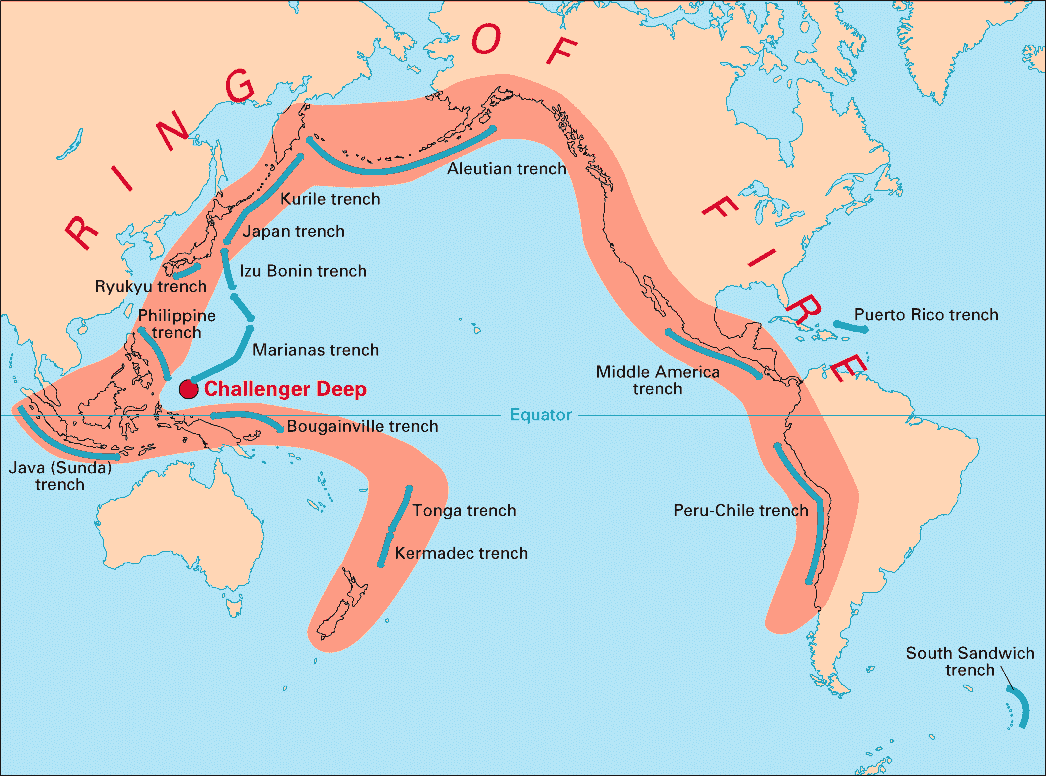
The Pacific Ring of Fire is a roughly horseshoe-shaped arc of tectonic activity that traces the margins of the Pacific Ocean. It is the planet's most seismically and volcanically active region, where plate movements produce frequent volcanic eruptions and strong earthquakes. The informal term “Pacific Rim” commonly refers to the coastal areas of countries bordering this zone.
Image gallery
10 Images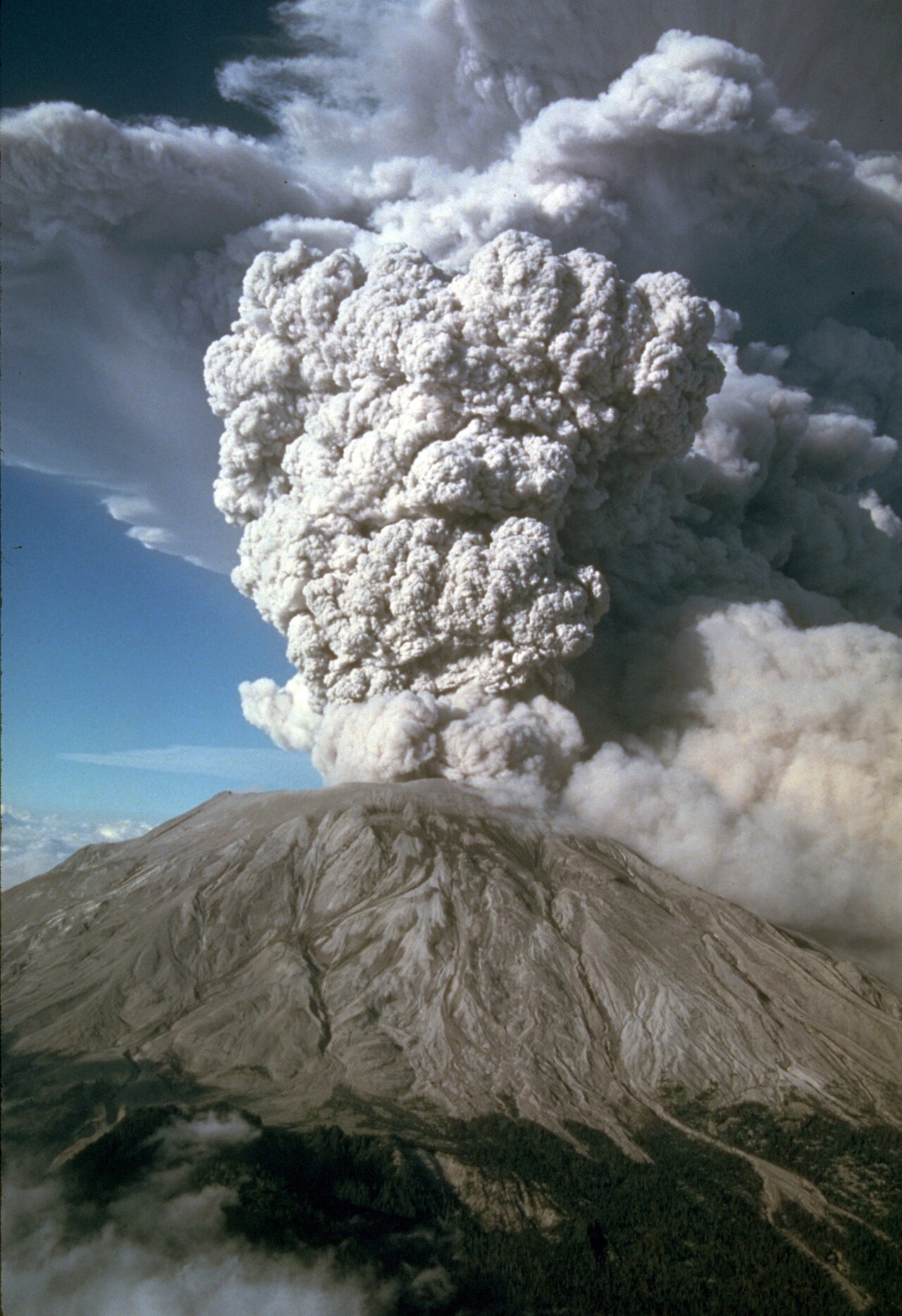


Geology and structure
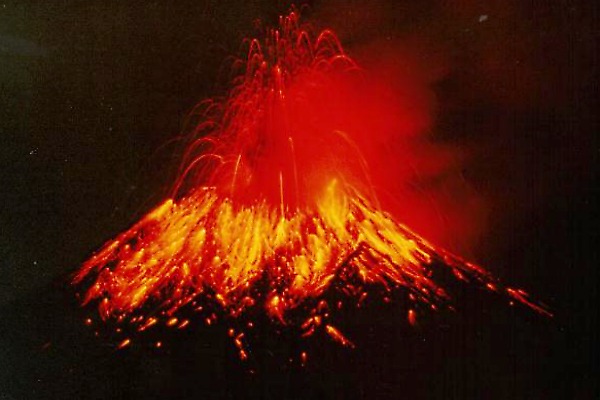
The Ring of Fire is a direct consequence of global plate tectonics. Along many stretches, oceanic plates converge and are forced beneath adjacent plates in subduction zones, producing deep ocean trenches and volcanic arcs. Elsewhere the boundaries include island arcs, continental volcanic chains and transform faults that accommodate lateral motion between plates. Melting of the subducted slab and mantle above it feeds magma that rises to form volcanoes; seismicity marks the movement and breakage of rock along these boundaries.
Distribution and activity
Roughly three quarters of the world’s active and dormant volcanoes are located in the Ring of Fire, which runs for about 40,000 km around the ocean basin and contains several hundred named volcanoes and many more vents. The region generates about 90% of the world’s earthquakes and approximately 81% of the largest recorded seismic events. Its belt follows the coasts of East Asia, Southeast Asia, Oceania and the western Americas.
Examples, impacts and benefits
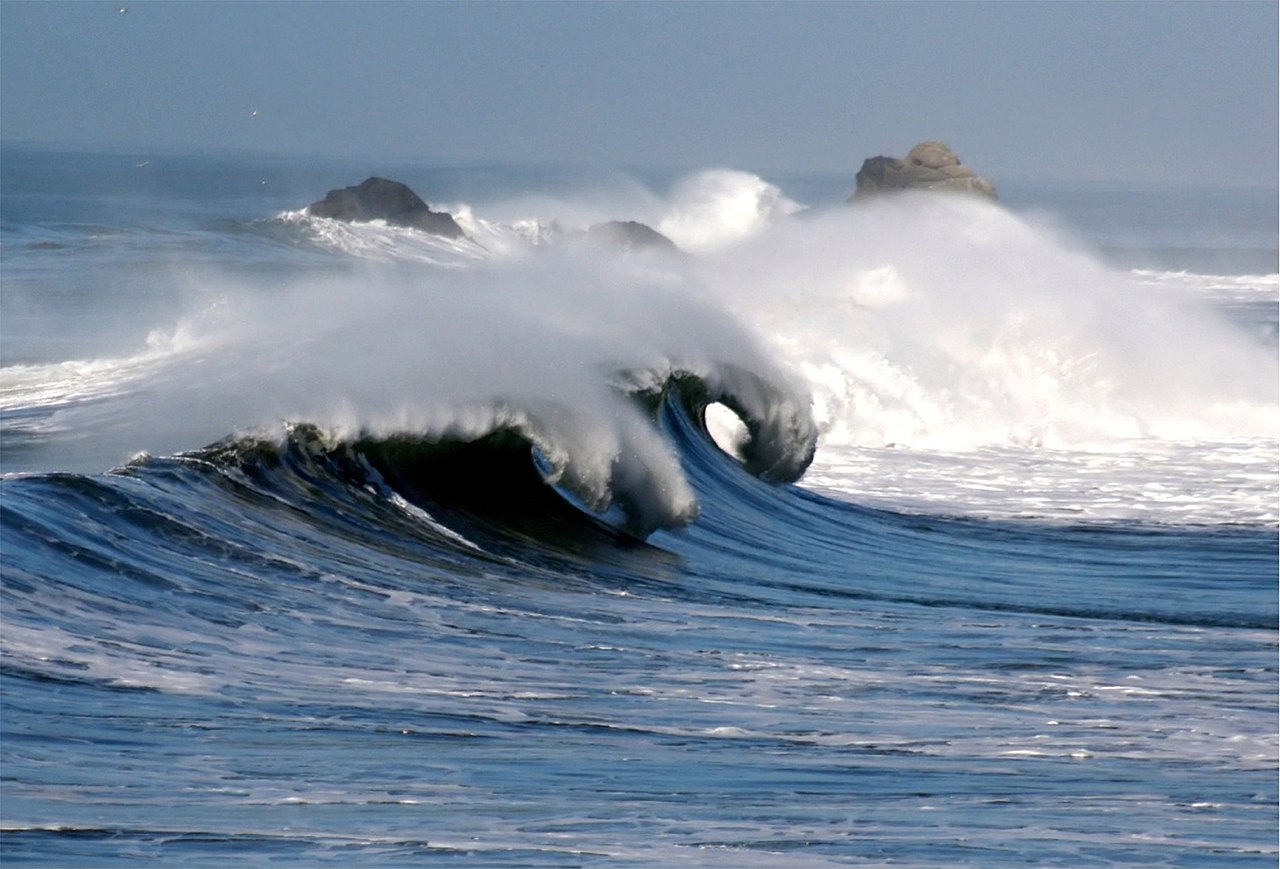
Countries on the Ring—including Japan, the Philippines, Indonesia, New Zealand, Chile and the western United States (including Alaska)—experience frequent eruptions and strong quakes. These events can trigger tsunamis, landslides and widespread damage, driving the development of monitoring networks and emergency planning. Volcanic areas also supply geothermal energy, enriched soils for agriculture and concentrations of minerals that are economically important.
Notable facts and distinctions
Although the Ring of Fire dominates global seismicity, other earthquake belts exist. The Alpide belt, stretching from Java to Sumatra through the Himalayas and into the Mediterranean, and onward toward the Atlantic, accounts for a smaller share of events. The Mid-Atlantic Ridge is another important seismic and volcanic zone. For regional maps, technical summaries and public resources see overview pages on the arc and Pacific basin portals such as regional arc summaries and Pacific basin resources.
Questions and answers
Q: What is the Pacific Ring of Fire?
A: The Pacific Ring of Fire is an arc around the Pacific Ocean where many volcanoes and earthquakes are formed.
Q: What is the Pacific Rim?
A: The Pacific Rim is a term which refers to the coastal areas of the countries round the Pacific.
Q: How many volcanoes are there in the Pacific Ring of Fire?
A: There are 452 volcanoes in the Pacific Ring of Fire.
Q: What percentage of the world's dormant and active volcanoes are in the Pacific Ring of Fire?
A: About three quarters (75%) of the world's dormant volcanos and active volcanos are in the Pacific Ring of Fire.
Q: What percentage of the world's earthquakes occur along the Ring of Fire?
A: About 90% of the world's earthquakes occur along the Ring of Fire.
Q: What is the second most seismic region after the Pacific Ring of Fire?
A: The Alpide belt, which extends from Java to Sumatra through the Himalayas, the Mediterranean, and out into the Atlantic, is the second most seismic region after the Pacific Ring of Fire.
Q: What is the cause of the Pacific Ring of Fire?
A: The Pacific Ring of Fire is a direct result of plate tectonics and the movement and collisions of crustal plates.
Related articles
Author
AlegsaOnline.com Pacific Ring of Fire Leandro Alegsa
URL: https://en.alegsaonline.com/art/73930
Sources
- thoughtco.com : "The Ring of Fire: home to the majority of the world's active volcanoes"
- ericdigests.org : "Teaching about the Pacific Rim. ERIC Digest No. 43"
- geography.about.com : "Ring of Fire - Pacific Ring of Fire"
- earthquake.usgs.gov : "Earthquake Glossary"
- earthquake.usgs.gov : "Earthquake Facts & Earthquake Fantasy"
- earthquake.usgs.gov : U.S. Geological Survey Earthquakes FAQ
- earthquake.usgs.gov : U.S. Geological Survey Earthquakes Visual Glossary
- pubs.usgs.gov : Moving slabs [This dynamic Earth, USGS]
- vulcan.wr.usgs.gov : "Decade Volcanoes"
- costarica-nationalparks.com : "Irazu Volcano National Park"
- vulcan.wr.usgs.gov : "Deadliest Volcanic Eruptions Since 1500 A.D." · webcitation.org
- oar.noaa.gov : "Loihi Submarine Volcano: A unique, natural extremophile laboratory," · webcitation.org
- pubs.usgs.gov : "Mount Baker—Living with an Active Volcano,"