
Opossum (Didelphimorphia): biology, behavior, and ecological role
An accessible overview of opossums: their classification, appearance, behavior, reproduction, ecological benefits (including tick control), differences from Australian possums, and conservation notes.
Overview
Opossums are members of the order Didelphimorphia, the largest group of marsupials native to the Western Hemisphere. The common English name "opossum" is often shortened to "possum," but that informal term more properly refers to unrelated Australian species within the suborder Phalangeriformes. The Virginia opossum (Didelphis virginiana) was the first North American animal widely called an opossum; the word derives from an Algonquian term often translated as "white beast." Many opossum species originated in South America and several participated in the faunal movements known as the Great American Interchange, which reshaped the mammal communities of both continents.
Image gallery
10 Images


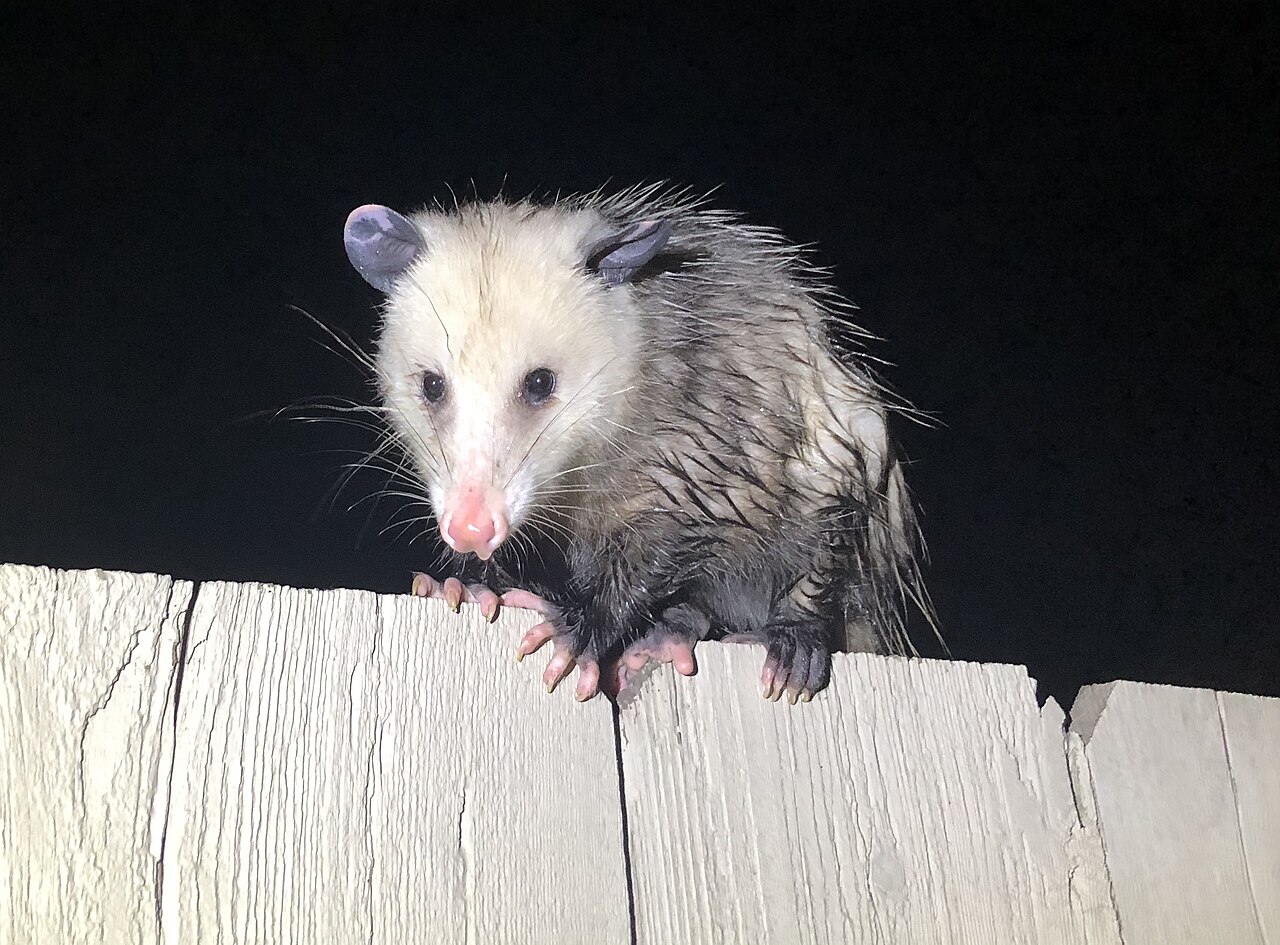


Physical characteristics and behavior
Opossums are medium-sized, typically nocturnal mammals with prehensile tails, opposable toes on the hind feet, and a generally coarse fur coat. They are adaptable climbers and foragers, and most are omnivorous—eating fruits, insects, small vertebrates, eggs, and carrion. A few behavioral traits are notable: many species exhibit thanatosis (the so-called "playing dead" response) when threatened, and they can be surprisingly dexterous when handling food or climbing.
Reproduction and development
Like all marsupials, opossums give birth to underdeveloped young that continue growth attached to the mother's nipples, often protected within a pouch or clinging to the mother's belly. Because newborn marsupials are born before some cranial and jaw structures are fully formed, they use temporary anatomical arrangements that allow nursing; researchers at King's College London and elsewhere have studied how tissues normally associated with the inner ear can function in early jaw support during this stage. The immature condition of newborn opossums contrasts with the more complete development of many placental mammals, and it shapes much of marsupial life history.
Diet, parasites, and ecological role
Opossums help control populations of invertebrate and small vertebrate pests. They commonly consume slugs, insects, and rodents, and they remove ticks from the environment by eating them during foraging and grooming. This behavior has ecological importance because ticks can carry pathogens that cause diseases such as Lyme disease and Rocky Mountain spotted fever; some studies estimate individual opossums may destroy thousands of ticks annually. They also prey on or scavenge animals that might otherwise spread parasites, for example small mammals like mice and rats, and can incidentally remove deer-associated ticks from local habitats.
Distinctions, myths, and common misunderstandings
- Term confusion: the words "opossum" and "possum" are related in casual speech, but the latter more properly names diverse Australian marsupials (Phalangeriformes), not New World opossums.
- Not all opossums are identical: species vary in size, tail prehensility, and habitat preference; many originated in South America and some expanded north into North America during historical range shifts.
- Physiology: their young are born before some jaw bones finish developing (jaw topics are central to marsupial neonatal biology).
Interactions with people and conservation
Opossums are often tolerated in suburban and rural areas because they reduce pests, yet they are sometimes persecuted due to misunderstandings about aggression or disease. They are generally nonaggressive and tend to flee or feign death rather than confront humans. Many opossum species are not currently threatened, but habitat loss, vehicle collisions, and local persecution can impact populations. Efforts to conserve them benefit broader ecosystem health because of their role in scavenging and pest control.
For further reading on classification, behavior, and conservation, see resources on vernacular naming, regional faunas like the South American assemblages, and comparative mammal biology that contrasts marsupial and placental strategies (cranial and jaw development, mammal life histories). Additional summaries and studies can be followed through institutional or conservation pages linked elsewhere (Didelphimorphia overview, Virginia opossum species, disease ecology, research institutions).
Common questions about care, relocation, or rehabilitation are best directed to local wildlife authorities or rehabilitation groups. Practical advice usually emphasizes nonlethal deterrence, safe handling by professionals, and conservation-minded coexistence with these often beneficial mammals.
Related articles
Author
AlegsaOnline.com Opossum (Didelphimorphia): biology, behavior, and ecological role Leandro Alegsa
URL: https://en.alegsaonline.com/art/72857