
Virginia opossum (Didelphis virginiana)
The Virginia opossum is the only marsupial native to North America. This nocturnal, adaptable omnivore is known for its pouch, prehensile tail, short lifespan, and its defensive "playing possum" behavior.
Overview
The Virginia opossum (Didelphis virginiana) is the sole marsupial species native to the continental North American fauna. Commonly called an opossum — and sometimes referred to colloquially as a "possum" — it is taxonomically and evolutionarily distinct from the Australian possums. Its range extends from southern Canada through the United States and into parts of Central America, where it occupies a variety of habitats including woods, farmlands, and urban edges.
Image gallery
10 Images






Physical characteristics
Adults are roughly the size of a domestic cat with a lean body, pointed snout, and a hairless, prehensile tail that aids balance and carrying nesting material. Key traits include:
- a pouch for rearing young, characteristic of marsupials;
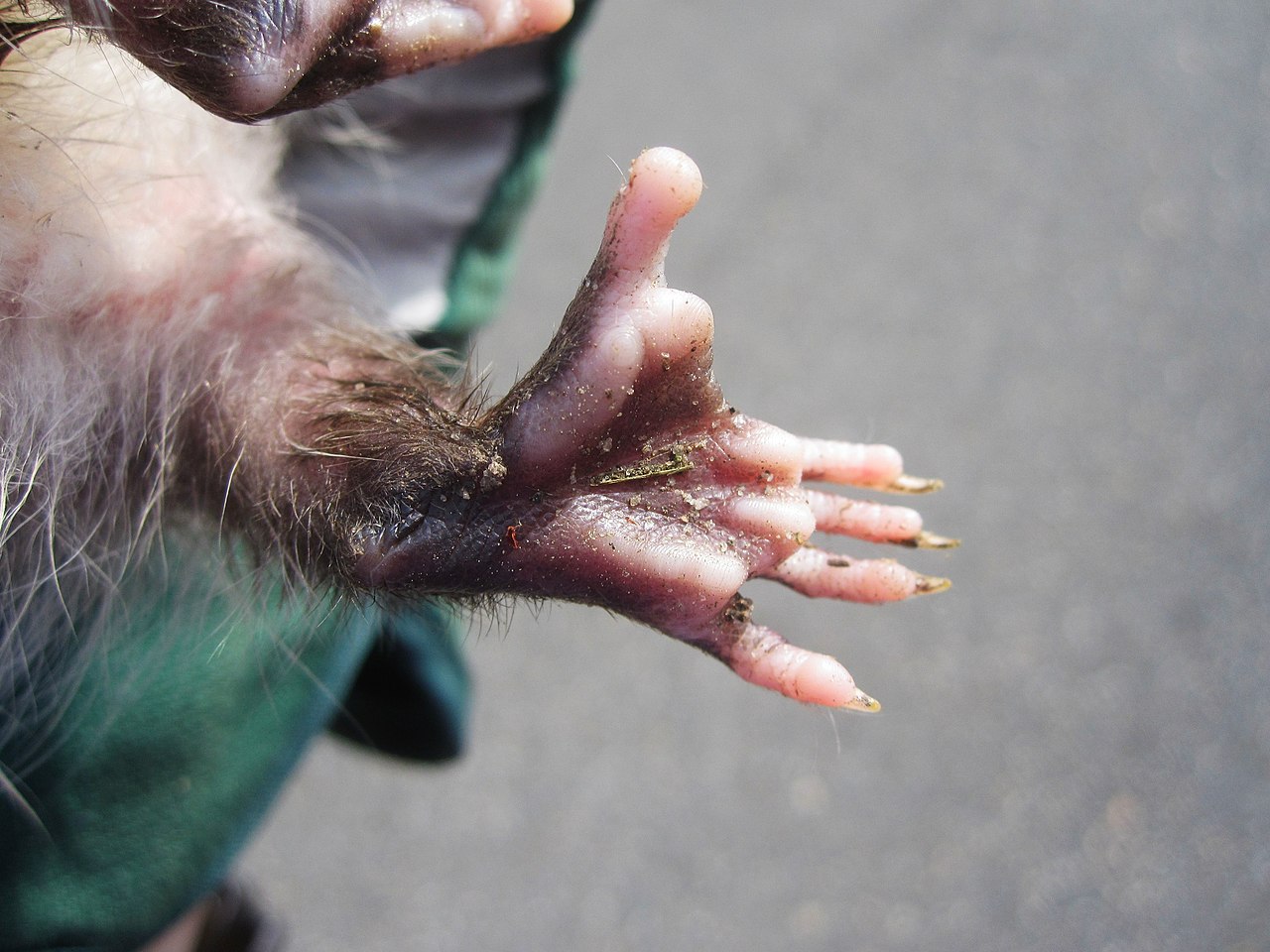
- fifth-digit opposability on the hind feet (a thumb-like hallux);
- a dental formula notable for a large number of sharp teeth used to process varied foods;
- coarse fur coloration that blends gray, white, and black for camouflage at night.
Behavior, diet, and ecology
Primarily nocturnal and solitary, the Virginia opossum is an opportunistic omnivore. It forages for fruits, insects, small vertebrates, carrion, and human refuse, and can adapt to suburban and agricultural environments. Opossums are often beneficial in gardens because they consume pest insects, snails, rodents and ticks. Their presence is also associated with scavenging dead animals and recycling nutrients.
Reproduction and life history
Breeding occurs seasonally in many parts of the range. After a very short gestation, tiny underdeveloped young, often called joeys, crawl into the maternal pouch and attach to a nipple until they are mature enough to leave the pouch. A typical female has multiple nipples arranged in a circle; only as many young as there are functional teats can be reared successfully. Juveniles disperse in late summer and autumn.
Human interactions and notable facts
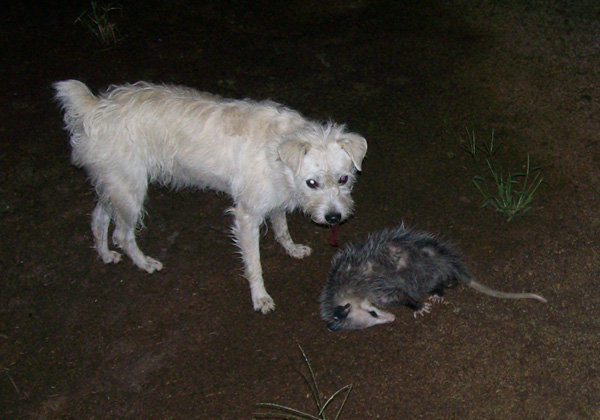
People commonly encounter opossums as roadkill victims or nocturnal visitors to yards. They are known for the involuntary defensive behavior called "playing possum," a temporary state of immobility and apparent death that can deter predators. Research and public health notes highlight that opossums have relatively low body temperatures compared with many mammals and a degree of resistance to some parasites and pathogens; nonetheless, they can carry fleas and other ectoparasites. Conservation status is generally secure due to their adaptability and wide range (additional information).
Distinctions and further reading
Although the terms "opossum" and "possum" are often used interchangeably in North America, the Virginia opossum belongs to the family Didelphidae and is not closely related to the arboreal possums of Australia. For taxonomy, distribution maps, and detailed species accounts see specialized wildlife guides and databases (taxonomic resources).
Related articles
Author
AlegsaOnline.com Virginia opossum (Didelphis virginiana) Leandro Alegsa
URL: https://en.alegsaonline.com/art/105543
Sources
- iucnredlist.org : "Didelphis virginiana"
- species.wikimedia.org : Didelphis virginiana
- commons.wikimedia.org : Didelphis virginiana