
King's College London
King's College London is a major public research university in central London, founded in 1829 and a founding college of the University of London, known for medical research, humanities and professional education.
King's College London (commonly called King's or KCL) is a leading public research university located in London. Chartered in 1829, it became one of the founding colleges of the University of London in 1836. The institution combines historic buildings and modern facilities across several campuses and offers a broad range of undergraduate, postgraduate and professional programmes.
Image gallery
10 Images

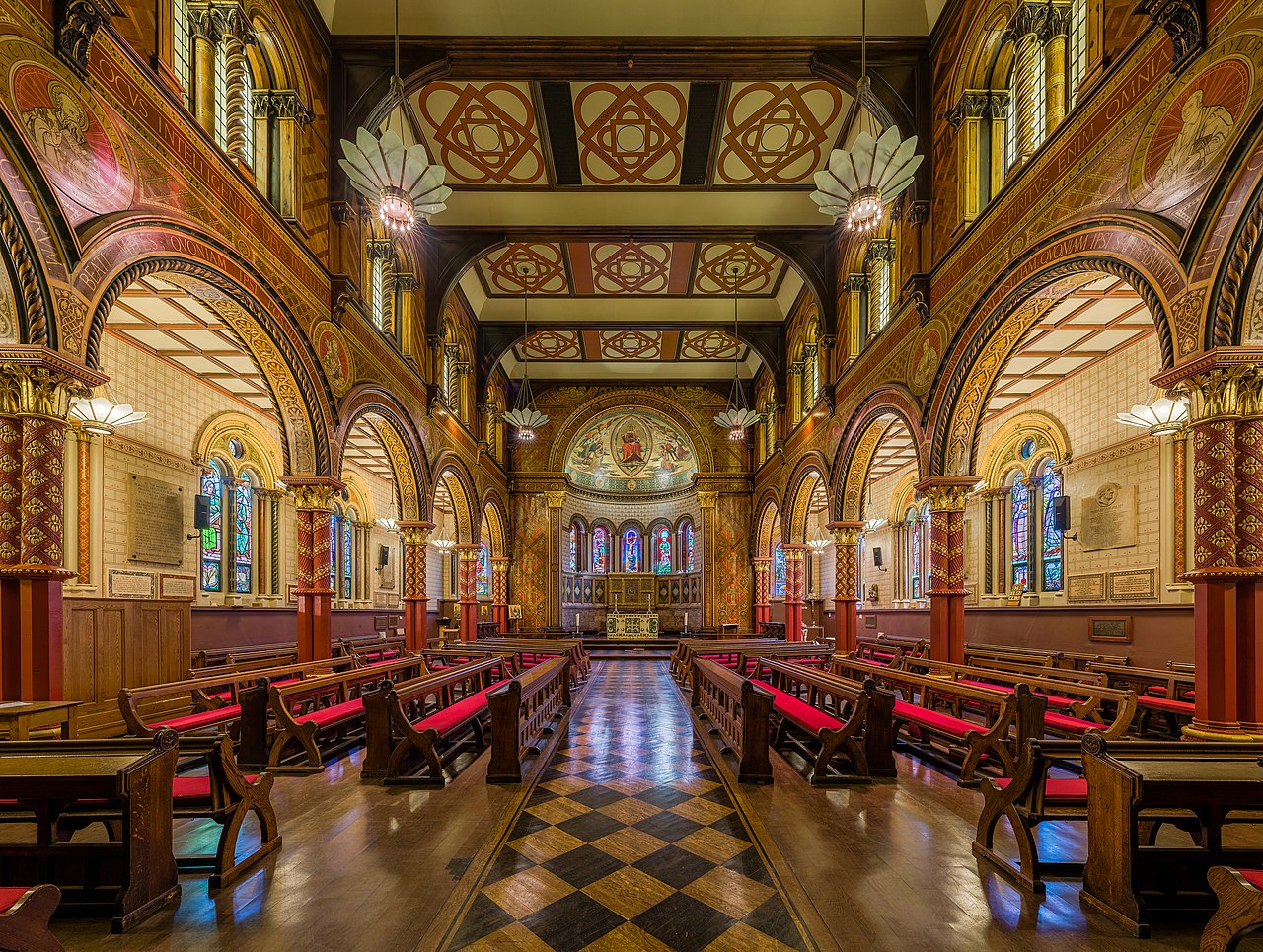


Overview and structure
King's is organised into multiple academic schools and departments that cover the humanities, social sciences, natural sciences, engineering, law, and health-related fields. Its facilities are concentrated on sites along the River Thames in central parts of the city and at a campus in South London. The college draws a diverse student body from the UK and around the world and maintains strong links with hospitals, cultural institutions and policy organisations.
Campuses and facilities
King's operates a group of campuses and specialist centres, many of which sit near the Thames. Notable locations include central teaching and administrative sites and a clinical and biomedical hub in South London. Typical campus features include lecture theatres, research laboratories, libraries and clinical training spaces. Key characteristics are:
- Multiple central campuses clustered close to government, legal and cultural institutions.
- Extensive clinical partnerships with NHS hospitals that support teaching and patient-centred research.
- Specialist research centres and interdisciplinary institutes focused on health, humanities and public policy.
For maps and visitor information see the college website and campus guides on the central London pages.
History and development
Founded with a royal charter in 1829, King's was established in a period of rapid expansion and reform in British higher education. It developed alongside institutions such as University College London, and together they shaped the formation of a federal university system in the capital. Over nearly two centuries King's has expanded its academic scope, research capacity and international partnerships while preserving parts of its historic estate.
Research, teaching and reputation
King's has a particular prominence in clinical medicine, biomedical research and related disciplines, and is recognised for bringing research into clinical practice. The college hosts multiple research centres and collaborates with national funders and international partners. Alumni and staff include laureates and widely cited scholars; the university counts recipients of the Nobel Prize among its former affiliates. King's is regularly placed among prominent national and global rankings, quoted by evaluations such as The Times and the Academic Ranking of World Universities, and is a member of major British and European higher education associations.
Role and notable facts
Beyond teaching and research, King's contributes to public life through policy engagement, legal and medical training, cultural outreach and international programmes. It is a major provider of clinical education to the National Health Service, an important centre for humanities scholarship, and a significant employer in central London. Visitors and prospective students are encouraged to consult official college materials for up-to-date details on courses, admissions and research initiatives.
For further information, official pages and more detailed histories, follow the college's links and its institutional publications.
Questions and answers
Q: What is King's College London?
A: King's College London (King's or KCL) is a large university in London, and a college of the federal University of London.
Q: When was it founded?
A: King's was founded in 1829, making it the third oldest university in England to receive its royal charter.
Q: How many campuses does it have?
A: King's has four Thames-side campuses located in central London and one campus located in Denmark Hill, South London.
Q: What kind of research does it specialize in?
A: King's is one of the largest centres for graduate and post-graduate medical teaching and biomedical research in Europe. It is home to six Medical Research Council centres, the most of any British university.
Q: How many students are enrolled at King's College London?
A: There are approximately 18,600 full-time students enrolled at King's College London.
Q: How much money did King’s make during 2009/10?
A: In 2009/10, King’s had a total income of £508 million with £144 million coming from research grants and contracts.
Q: Are there any Nobel Prize winners associated with KCL?
A: Yes, there are 12 Nobel Prize winners amongst KCL alumni and former faculty members.
Related articles
Author
AlegsaOnline.com King's College London Leandro Alegsa
URL: https://en.alegsaonline.com/art/53633
Sources
- commons.wikimedia.org : King's College London
- kcl.ac.uk : "Our history"
- kcl.ac.uk : "Financial Statements for the year to 31 July 2018"
- hesa.ac.uk : "2014/15 Staff by HE provider" · web.archive.org
- hesa.ac.uk : "2016/17 Students by HE provider, level, mode and domicile"
- internal.kcl.ac.uk : "Branding Essentials"
- timesonline.co.uk : "Profile: Durham University"
- independent.co.uk : Reference to UCL as third oldest univeersity in England.
- kcl.ac.uk : "About King's College London=King's College London"
- kcl.ac.uk : "Royal Charter of King's College London=King's College London"
- kcl.ac.uk : "King's College London: Campuses=King's College London"
- kcl.ac.uk : "Medical Research Council centres"
- kcl.ac.uk : "Tenth Nobel Prize Winner"