
Orangutan (genus Pongo)
Large reddish arboreal great apes of Southeast Asia (genus Pongo). Three species inhabit Borneo and Sumatra and face severe threats from habitat loss, hunting and trade.
Overview — Orangutans are large, tree-dwelling primates in the genus Pongo and are classified among the great apes. Native to Indonesia and Malaysia in Southeast Asia, modern accounts recognize three distinct species. All are under severe pressure in the wild and are widely regarded as critically endangered by conservation authorities.
Image gallery
10 Images






Physical characteristics
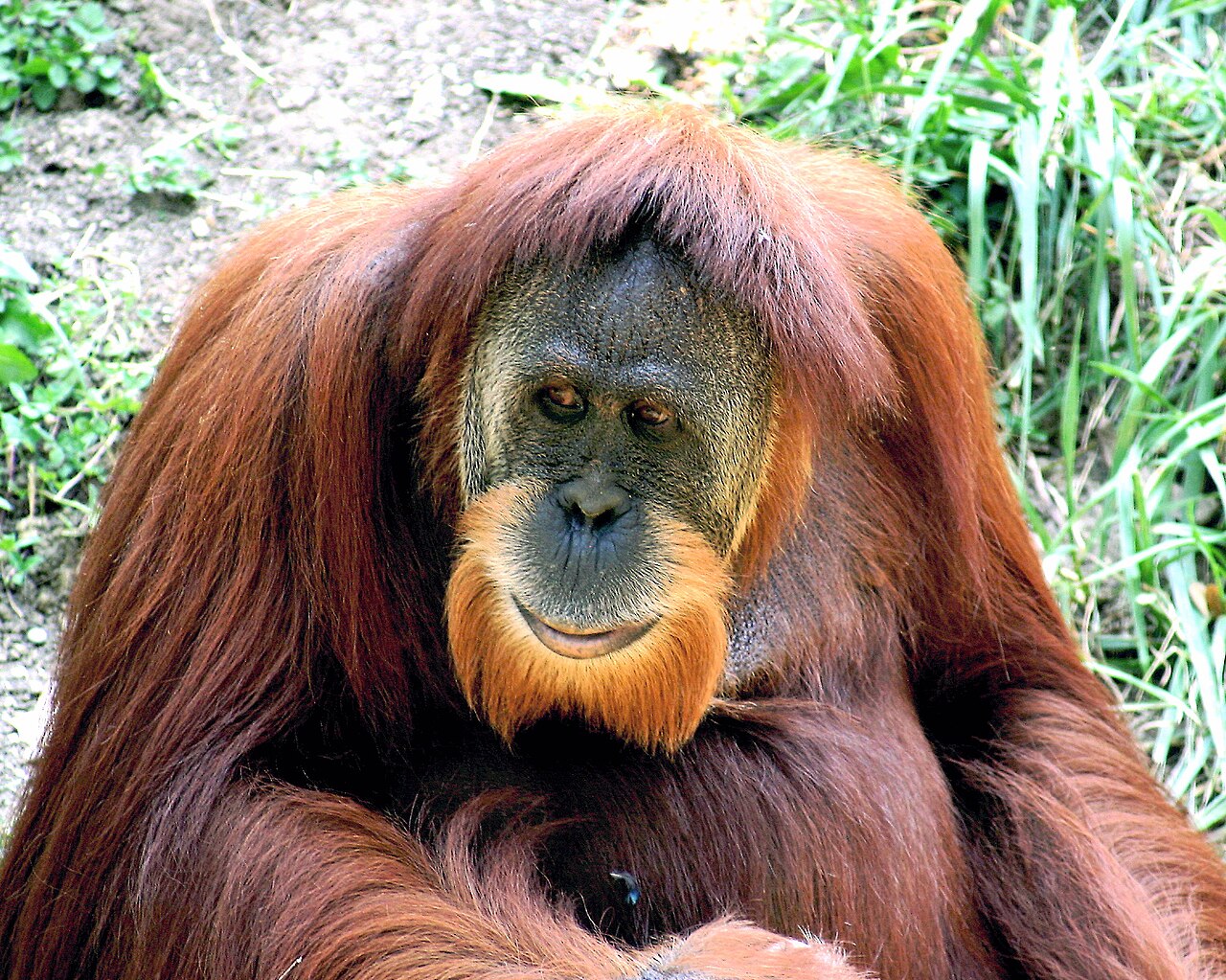
Orangutans are noted for their long arms, coarse reddish hair, grasping hands and feet, and high intelligence. Adult males often develop cheek flanges and larger body size, while females remain smaller and more subtle in appearance. Common traits include:
- Arboreal adaptations: very long forelimbs and curved fingers for climbing and brachiation.
- Dexterity and problem solving: frequent use of tools and complex foraging techniques.
- Slow life history: late maturity, long parental care and low reproductive rate.
Distribution, naming and taxonomy
Orangutans live primarily in the rainforests of Borneo and Sumatra. The English name derives from two Malay words: orang (person) and hutan (forest), literally "person of the forest." Their range has contracted sharply as forest has been converted to agriculture and plantations.
Behavior, diet and reproduction
Generally more solitary than other great apes, orangutans build sleeping nests nightly in trees, travel slowly through the canopy and feed mainly on ripe fruit, supplemented by leaves, bark, insects and occasional vertebrates. Females raise offspring for many years, producing few young during their lifetime.
Threats and conservation
The principal threat is loss and fragmentation of habitat from logging, agricultural expansion—especially oil palm—and fires. Illegal hunting and capture for the pet trade also take a toll. Conservation responses include protected areas, habitat restoration, rescue and rehabilitation centers, law enforcement and public awareness campaigns. Individuals can sometimes be seen in zoos and sanctuaries, for example the Singapore Zoo, where educational programs highlight their plight.
Notable facts
Orangutans stand out among apes for their intelligence, use of tools in the wild, and striking reddish coloration. Their slow reproduction and forest dependence make population recovery difficult, so sustained conservation action is necessary to secure their future.
Questions and answers
Q: What are orangutans?
A: Orangutans are great apes belonging to the rainforests of Indonesia and Malaysia.
Q: How many species of orangutan are there?
A: There are two species of orangutan.
Q: Where are orangutans from?
A: Orangutans are from Southeast Asia.
Q: Why are there very few orangutans left?
A: There are very few orangutans left because loss of the jungle has reduced their habitat.
Q: Where can orangutans be viewed?
A: Orangutans can be viewed at the Singapore zoo.
Q: What does the name orangutan mean?
A: The name orangutan comes from two Malay words, orang which means person, and hutan which means forest; so orangutan means person of the forest.
Q: How do orangutans get their name?
A: Orangutans get their name from the Malay words "orang" meaning person and "hutan" meaning forest.
Related articles
Author
AlegsaOnline.com Orangutan (genus Pongo) Leandro Alegsa
URL: https://en.alegsaonline.com/art/72963
Sources
- orangutans-sos.org : "Orangutan Facts –"
- orangutanrepublik.org : orangutanrepublik.org