
Orange-thighed frog (Litoria xanthomera)
A concise encyclopedia entry on the orange-thighed frog, an arboreal amphibian of north Queensland: appearance, habitat, behaviour, reproduction and conservation issues.
Overview
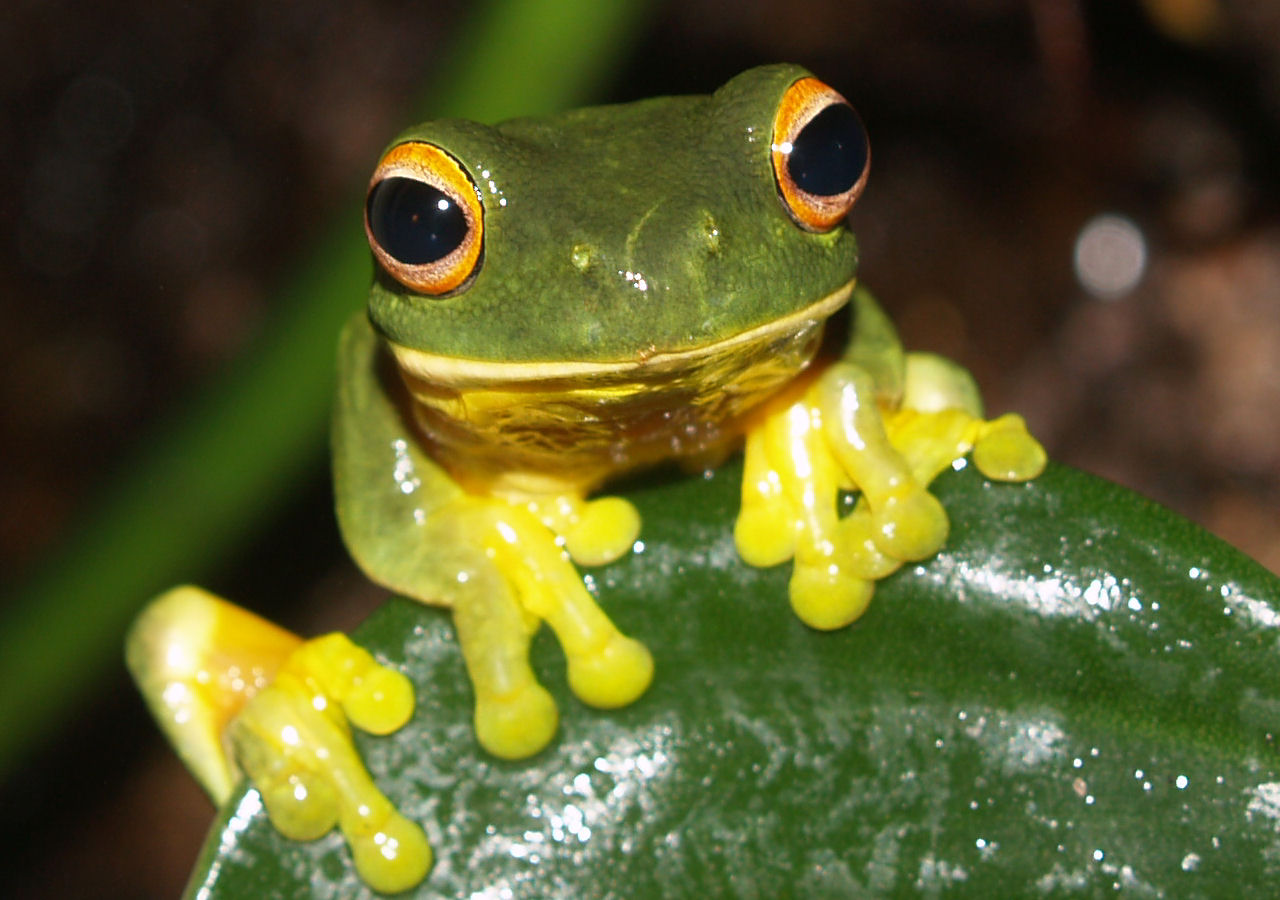
The orange-thighed frog (Litoria xanthomera), sometimes called the northern orange-eyed frog or lime tree frog, is an arboreal amphibian native to tropical parts of northern Queensland, Australia. It belongs to a group commonly referred to as species of tree frogs in the family Hylidae. The animal is best known for its bright orange eyes and the splash of colour on its thighs, traits that make it distinctive among regional frogs.
Image gallery
5 Images


Appearance and distinguishing features
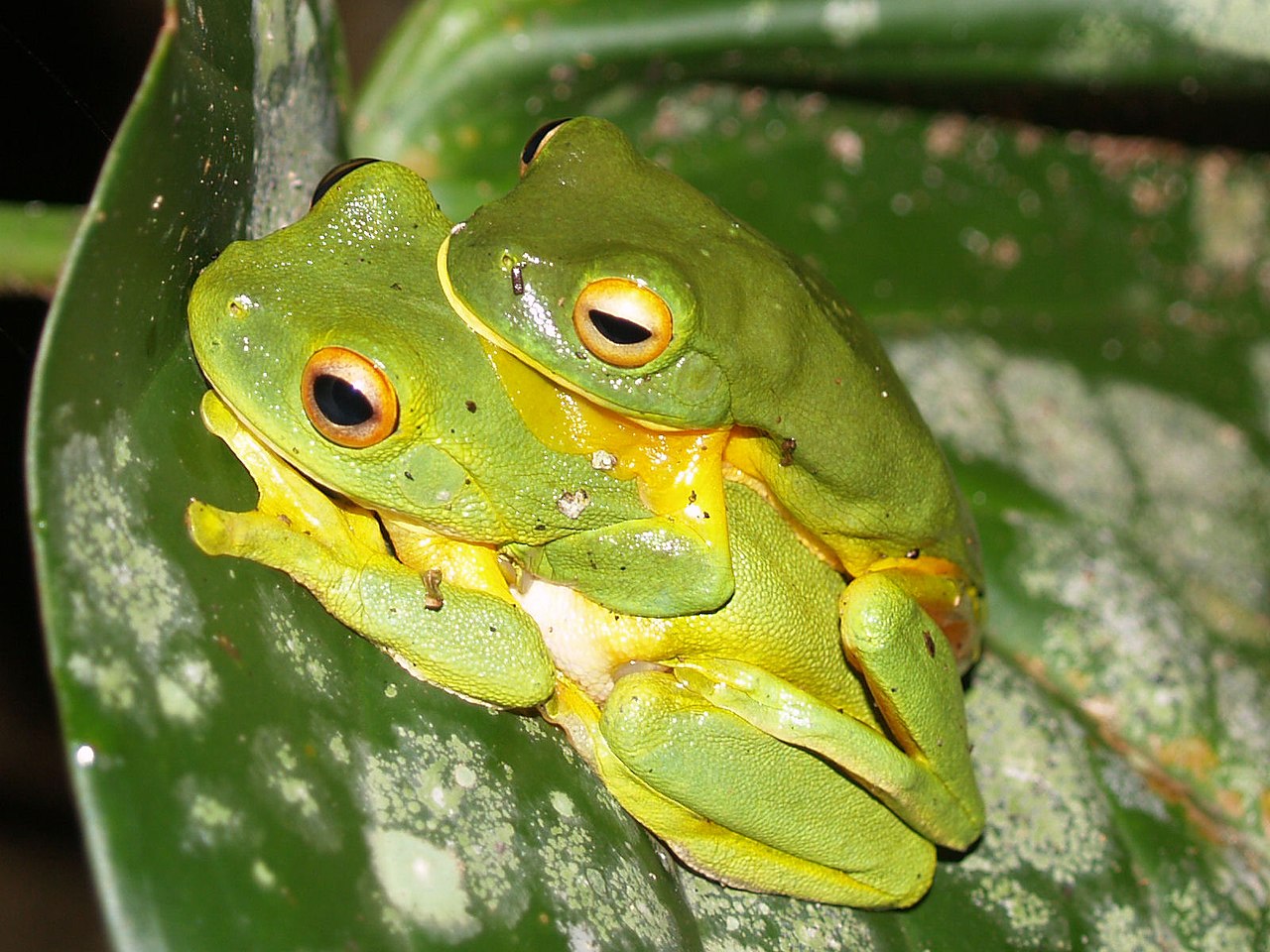
This species is a medium-sized tree frog, typically reaching lengths of around 5.5 cm. It has a slender body, a relatively flat head and long limbs adapted for climbing. The dorsal colour is usually vivid green, which provides camouflage among leaves, while the eyes and the inner surfaces of the thighs show orange to reddish tones. These colour features have led observers to compare its appearance to other vividly eyed tree frogs, such as the better-known red-eyed tree frog.
Habitat and behaviour
Orange-thighed frogs are strongly arboreal and spend much of their life in the canopy and understory of wet tropical forests. They favour dense rainforest where tree trunks and branches are close together, using foliage as shelter and hunting ground. At night they emerge to forage for insects and other small invertebrates. During the breeding season males gather near temporary pools and slow-moving water, calling from branches or perches at the water’s edge to attract females. The species’ calls are described as a drawn-out "aaa-rk" used to establish territories and find mates.
Reproduction and development
Breeding typically follows heavy rainfall, when ephemeral ponds and flooded depressions form in the forest. Males aggregate at these sites and call to receptive females; eggs are deposited in or near the water. Females may lay hundreds to over a thousand eggs in a single clutch, often laid in masses that sink or attach to submerged vegetation. Tadpoles develop in the aquatic environment and metamorphose into juvenile frogs; their appearance and life cycle resemble those of other tree frogs that breed in temporary water bodies.
Threats and conservation
Historically the primary threat to the orange-thighed frog has been loss and fragmentation of rainforest habitat due to clearing for agriculture and selective logging. Timber extraction and conversion of land reduced available canopy and breeding sites. More recently, disturbance from increasing human visitation—tracks, informal trails and noise in remote forest areas—has been noted as an additional pressure. Other general amphibian threats such as pollution, introduced predators and diseases can also affect local populations. Conservation measures focus on protecting rainforest habitat and the wetland sites used for breeding, and on managing visitor impacts in sensitive areas.
Notable facts and further resources
- The orange-thighed frog spends most of its life above ground in trees rather than on the forest floor.
- Breeding activity is strongly tied to seasonal rains and can be unpredictable from year to year.
- For taxonomy and species lists see references on tree frogs and regional field guides; for habitat information see resources on rainforests and freshwater ponds.
- Human impacts range from historic timber harvesting to modern recreational use of forest areas by visitors.
For further reading and species accounts consult regional amphibian guides and conservation listings: authoritative databases and field guides provide distribution maps, photographs and the most recent conservation assessments; see also taxonomic summaries and specialist literature for in-depth information.
Related articles
Author
AlegsaOnline.com Orange-thighed frog (Litoria xanthomera) Leandro Alegsa
URL: https://en.alegsaonline.com/art/72953
Sources
- jcu.edu.au : "Litoria xanthomera"