
Northwest Ordinance (1787): Structure, Rights, and Legacy
Federal law that created the Northwest Territory (1787), set rules for territorial government, banned slavery there, protected civil liberties, promoted education, and established the process for statehood.
Overview
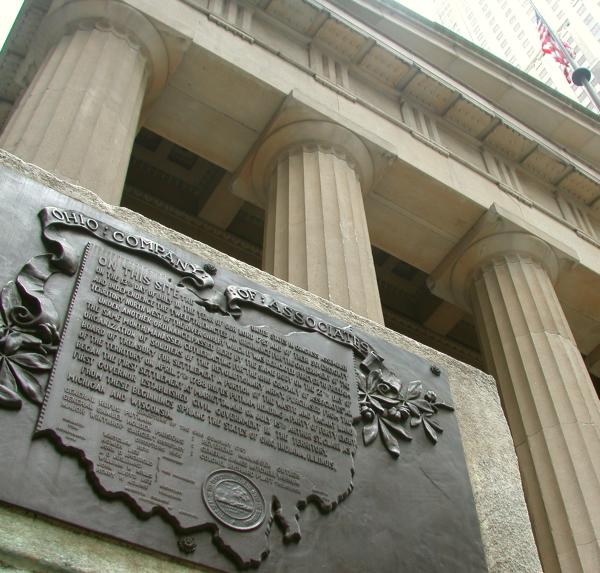
The Northwest Ordinance, adopted in 1787 by the Congress under the Articles of Confederation, organized the vast lands north of the Ohio River and east of the Mississippi River into a single political entity. It declared that this region would be incorporated into the United States as free and equal states and laid out principles to govern settlement, administration, and eventual admission to the Union. The Ordinance both encouraged migration to the western lands and sought to prevent the disorder and competing claims that had marked earlier frontier expansion. Its geographic boundaries are often described with reference to the Ohio River (Ohio River) and the Mississippi River (Mississippi River).
Image gallery
6 Images



Key provisions and governmental structure
The law established a three-stage model for territorial government. Initially, a governor and judges appointed by Congress oversaw the territory. After a territory attained a threshold population of free male inhabitants (5,000 commonly cited), settlers could elect a representative assembly. When the overall population reached about 60,000, the territory could apply for full statehood. These graduated steps provided a predictable route from colony-like administration to equal membership in the national union.
Rights, civil liberties, and social policy
The Ordinance included language that protected several individual rights that later influenced American constitutional development. It guaranteed freedom of religion, and it set down protections for accused persons such as the right to trial by jury. The act also encouraged education by asserting that schools and the means of education should be forever encouraged. In matters relating to indigenous peoples, the text called for fair dealings and recognized that native lands and property should not be taken without consent, although in practice the protection of Native American rights was often violated.
Slavery and legal distinctions
One of the most consequential clauses prohibited slavery in the Northwest Territory, making it a distinct region where chattel slavery was disallowed. That prohibition shaped the future political balance between free and slave states and set an early federal precedent for restricting slavery in new territories. The Ordinance also contained wording regarding the return of fugitive enslaved people, reflecting the contested and compromise-driven nature of national policy on slavery at the time.
Included lands and states
The Northwest Territory covered land that later became several states in whole or in part. Those future states include Ohio, Indiana, Illinois, Wisconsin, Michigan and portions of Minnesota. The orderly subdivision of this area and the clear route to statehood helped integrate these regions politically and economically into the United States.
Historical significance and legacy
The Northwest Ordinance is widely regarded as a foundational act of American territorial policy. Its combination of political structure, civil guarantees, and social measures influenced later territorial legislation and the framing of national institutions. Some of its principles—religious liberty, support for public education, limits on slavery in certain territories, and procedures for admitting new states on equal footing with the original states—resonated in later debates over westward expansion and constitutional development. Scholars and civic historians often cite the Ordinance as an early example of federal attempts to impose order, rights, and policy goals on frontier lands.
Notable distinctions and modern perspectives
Although the Ordinance articulated progressive-sounding protections and a clear route to statehood, historians emphasize that outcomes on the ground were mixed: enforcement varied, Native American dispossession continued, and political compromises around slavery persisted. Still, as an organized legal framework for the national growth of territory into states, the Northwest Ordinance represents a pivotal moment in early American governance and remains a frequent reference point in discussions about federal authority, territorial administration, and the expansion of rights.
For more detailed primary texts and scholarly treatments, consult collections of early American laws and constitutional history resources (United States documents, constitutional references). Additional regional histories and state archives provide focused accounts of how the Ordinance affected particular communities and lands.
Related articles
Author
AlegsaOnline.com Northwest Ordinance (1787): Structure, Rights, and Legacy Leandro Alegsa
URL: https://en.alegsaonline.com/art/71085