
Nitroglycerin (glyceryl trinitrate): properties, history, uses, and safety
Nitroglycerin (glyceryl trinitrate) is a colorless oily liquid used as a powerful explosive and as a medical vasodilator. This article outlines its chemistry, history, applications and safety considerations.
Nitroglycerin, also called nitroglycerine or glyceryl trinitrate, is a dense, colorless, oily liquid notable for its explosive power and for its controlled use in medicine. Chemically it is 1,2,3-trinitroxypropane (commonly written C3H5N3O9) and is produced by nitrating glycerol with a mixture of nitric and sulfuric acids. In its pure industrial form it is highly energetic and sensitive to heat, shock and friction; when detonated it converts rapidly to gases and heat.
Image gallery
5 Images


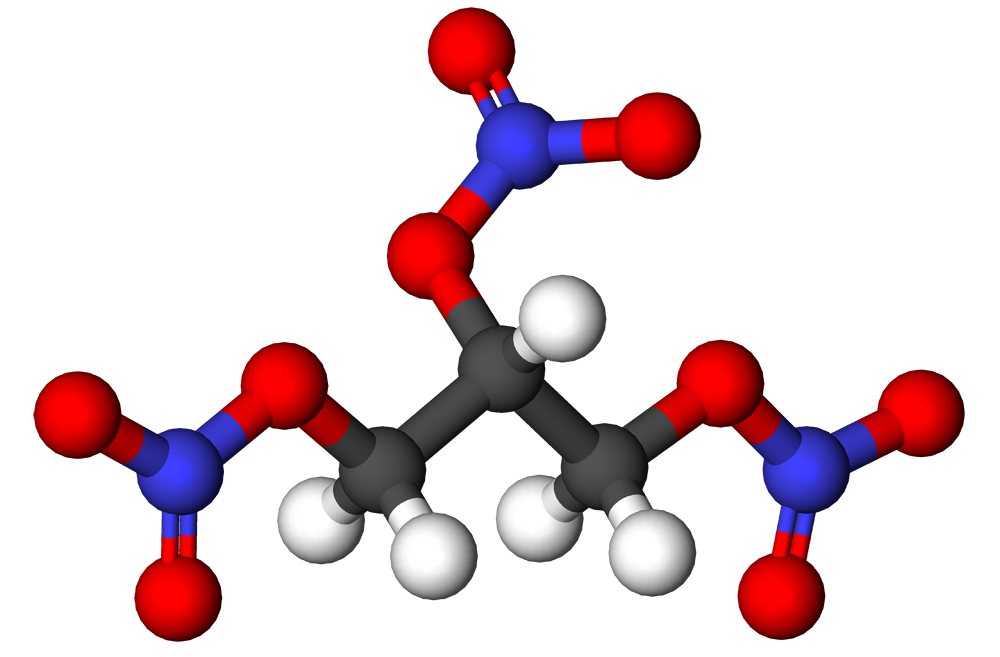

Characteristics and chemistry
Nitroglycerin is an organic nitrate ester: its energetic behavior stems from nitro groups attached to a three-carbon glycerol backbone. As a liquid it is heavier than water and has a syrupy texture. Its sensitivity makes plain nitroglycerin hazardous to handle, so commercial and historical applications often used stabilized or absorbed forms. Despite its volatility as an explosive, small, precisely dosed amounts are pharmacologically active and act as a source of nitric oxide in the body.
History and development
The compound was first synthesized in the mid-19th century. Early laboratory work identified both its destructive potential and its practical dangers. A major technological advance occurred when Alfred Nobel developed ways to render nitroglycerin safer to handle by mixing it with inert absorbents, producing dynamite and opening new possibilities in mining, tunneling and construction. Those developments transformed civil engineering while also prompting regulatory attention.
Uses and examples
Nitroglycerin's principal historic use was as a high-energy explosive or as a component of blasting agents for mining, quarrying and demolition. Military and industrial practices later favored less sensitive compounds for many roles, but nitroglycerin remains a reference explosive. In medicine the same molecule, commonly called glyceryl trinitrate, is used in low, controlled doses to relieve angina by dilating blood vessels. Pharmaceutical forms include sublingual tablets or sprays, transdermal patches and ointments; these are formulated to release predictable doses and are very different from industrial grades.
Safety, handling and regulation
Because of its sensitivity, nitroglycerin is subject to strict storage and transport controls. Typical safety measures include using stabilizers or absorbents, keeping material cool and away from impact, and regulating quantities in transit. Accidental detonation can be lethal and can damage surrounding infrastructure; medical preparations can produce side effects such as headache and low blood pressure when used therapeutically. Manufacturing and possession are regulated in most jurisdictions.
Notable distinctions and further reading
The names nitroglycerin and nitroglycerine are spelling variants; "glyceryl trinitrate" is the preferred pharmaceutical term. It should not be confused with nitrocellulose or TNT, which are different classes of explosives with distinct properties. For more detailed treatment of its chemistry, history, medical use and safety guidance, see these resources:
- Chemical properties and structure
- Industrial applications and explosives technology
- Pharmaceutical formulations and clinical use
- Historical accounts and Alfred Nobel's innovations
- Safety standards for handling energetic liquids
- Original synthesis and early laboratory records
- Dynamite and the development of blasting agents
- Regulation, transport and environmental considerations
Related articles
Author
AlegsaOnline.com Nitroglycerin (glyceryl trinitrate): properties, history, uses, and safety Leandro Alegsa
URL: https://en.alegsaonline.com/art/70384
Sources
- nlm.nih.gov : "Nitroglycerine Sublingual"