
Dynamite: invention, composition, risks, and historical role
Dynamite is a nitroglycerin‑based explosive absorbed into a porous material to reduce sensitivity. This article covers its invention, composition, development, hazards, uses and later alternatives.
Overview
Dynamite is a high explosive developed in the 19th century to make the powerful liquid explosive nitroglycerin safer to handle. It combined a sensitive energetic compound with an inert, porous absorbent so the energetic liquid would be less likely to detonate from shock, heat or friction during transport and use. The invention is most closely associated with Alfred Nobel, who promoted practical industrial and commercial uses of explosive materials.
Image gallery
4 Images


Invention and historical context
The development of dynamite responded to industrial needs for controlled, reliable blasting in mining, quarrying, tunneling and civil engineering. Early use of nitroglycerin alone proved hazardous because the compound is highly sensitive to movement and shock. The dynamite concept — immobilizing nitroglycerin in an absorbent medium — reduced many handling risks and opened widespread civilian applications for a powerful explosive. Later refinements, such as gelatinous forms, further aimed to retain nitroglycerin and resist leakage in damp conditions.
Composition and variants
Classic dynamite formulations contain three principal elements: the energetic ingredient, an absorbent support, and minor stabilizing additives. The energetic component is nitroglycerin, a dense, oxygen‑rich compound that releases energy rapidly when detonated. Common absorbents included diatomaceous earth, a soft sedimentary rock formed largely from fossilized diatoms, which soaks up the liquid nitroglycerin and reduces sensitivity. Small quantities of alkaline salts such as sodium carbonate were sometimes incorporated to help stabilize the mixture chemically and limit decomposition.
Variants of dynamite altered proportions or used different binders. Gelignite and blasting gelatin are examples of formulations that bind nitroglycerin in a gelatinous matrix so it is less prone to separation or to dissolve out in wet conditions. The name dynamite has also been used historically for a range of nitroglycerin‑containing products with varying strengths and handling characteristics.
How dynamite is used
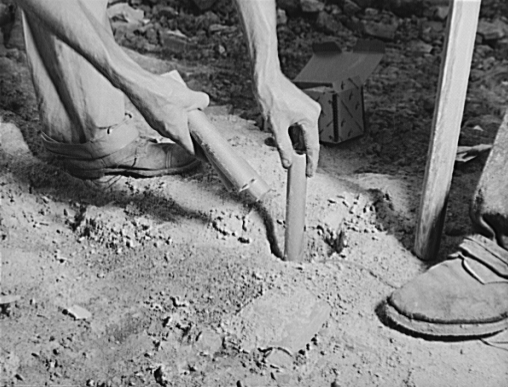
Dynamite is a detonative explosive and is normally initiated by a detonator or blasting cap rather than by simple fire. It was widely used where a compact, high‑order explosive effect was required: driven rock fracturing in mining, breaking bedrock for road construction, excavation for tunnels and canals, and controlled demolition. Operators relied on skillful placement, timing, and properly rated initiation devices to achieve desired breakage patterns while limiting flyrock and unintended damage.
Risks, stability and safety
Although the absorbent reduced sensitivity compared with free nitroglycerin, dynamite posed significant hazards. Over time, especially in humid or wet storage, free nitroglycerin could exude from the absorbent and collect as droplets on the surface of cartridges. This exuded nitroglycerin is extremely sensitive and can lead to accidental detonation. Temperature changes, prolonged storage and physical degradation of cartridges further increased risk. For these reasons strict storage, transport and handling regulations were developed for magazines, packaging and record‑keeping, and workers were trained to detect and manage exudation.
Decline and modern alternatives
By the mid‑20th century many industries shifted to other blast agents that offered lower cost or improved handling. Ammonium nitrate based products, including mixtures often referred to by the generic term ANFO (ammonium nitrate fuel oil) and related formulations, use ammonium nitrate as an oxidizer combined with fuels and sensitizers to provide effective blasting performance at lower cost. Such materials can be less sensitive to accidental initiation than nitroglycerin‑based dynamites and are widely used in modern surface mining and large‑scale excavation.
Legacy and further information
Dynamite played a formative role in industrial growth and major civil engineering projects in the 19th and early 20th centuries. It also prompted advances in explosive safety, regulation and initiation technology. For historical study or technical detail, consult inventor biographies and industrial safety guides; archival patents and period technical literature describe original formulations and practices in greater detail. Useful starting points include biographies of Alfred Nobel, chemical summaries of nitroglycerin, geological descriptions of diatomaceous earth, and sources on the biology of diatoms.
- Main energetic: Nitroglycerin — powerful but sensitive.
- Absorbent: Diatomaceous earth or other porous media to immobilize the liquid.
- Additives: small quantities of stabilizers such as sodium carbonate.
- Moisture control: formulations such as gelignite reduced the tendency to dissolve or leak in wet conditions.
- Modern alternatives: ammonium nitrate based mixtures such as ammonium nitrate fuel blends.
Technical detail, safety regulations and contemporary practice are available in industry manuals and safety standards; further reference materials include inventor biographies, chemical handbooks and geological surveys (inventor biographies, chemical summaries, geological descriptions, stability studies).
Related articles
Author
AlegsaOnline.com Dynamite: invention, composition, risks, and historical role Leandro Alegsa
URL: https://en.alegsaonline.com/art/29427