
Nobelium (element No, atomic number 102)
Nobelium is a synthetic, radioactive actinide element (No, Z=102). It has no stable isotopes, is produced in particle accelerators, and is studied for nuclear and chemical research. Named for Alfred Nobel.
Overview
Nobelium is a man-made chemical element with the symbol No and atomic number 102. It is radioactive and exists only in trace quantities produced in laboratories. As a member of the actinide series it is considered a transuranic element and has no natural, stable isotopes. The element was named in honor of the inventor and philanthropist Alfred Nobel.
Image gallery
3 Images

Physical and chemical characteristics
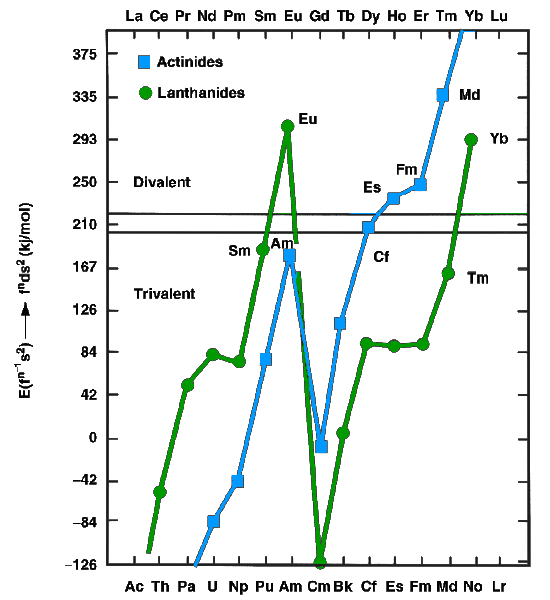
Nobelium is classified as a radioactive metal and shares many general features of the actinides: dense metallic bonding, complex electron configurations, and significant radioactivity. Its chemistry is unusual among the actinides because a divalent state is significant; nobelium commonly forms +2 and +3 oxidation states, and behavior of the +2 ion has been a subject of experimental study. Because of its radioactivity, macroscopic samples do not exist and measured properties rely on tiny, short-lived batches.
Isotopes and production
Twelve isotopes of nobelium have been identified; all are radioactive with half-lives ranging from fractions of a second to minutes or hours for the longest-lived species. Nobelium atoms are produced by bombarding target nuclei with lighter ions in particle accelerators or reactors. Laboratories use heavy-ion fusion reactions and specialized separators to isolate and study individual atoms.
History and discovery
Reports of nobelium emerged in the mid-20th century as accelerator technology advanced. Early work produced competing claims and required careful decay and chemical evidence to assign the new nuclide to atomic number 102. Over time, experimental confirmation and international review established the name and placement of nobelium in the periodic system. For context on classification and reports, see resources about synthetic and transuranic elements: synthetic elements overview and transuranic series.
Uses, handling, and significance
Nobelium has no commercial applications and is produced only for basic scientific research. Experiments with nobelium atoms help scientists test nuclear models, investigate electron shell effects in heavy atoms, and provide data relevant to the synthesis of heavier elements. Handling requires specialized facilities because of strong radioactivity and the tiny quantities involved. Research papers and databases that catalogue actinide chemistry and nuclear data are useful starting points: actinide series and periodic table resources.
Notable distinctions
- Nobelium is the tenth element in the sequence of transuranic elements, beyond uranium in the periodic table.
- All known isotopes are radioactive; none are stable.
- The element is named for Alfred Nobel and is investigated primarily for fundamental research rather than practical use. Further background reading is available in general references on nuclear chemistry: radioactive metals.
Related articles
Author
AlegsaOnline.com Nobelium (element No, atomic number 102) Leandro Alegsa
URL: https://en.alegsaonline.com/art/70487