
Noble gas compound
A compound that contains one or more atoms of a Group 18 (noble) element. Once considered inert, several noble gases form stable or metastable compounds under special conditions.
Overview
A chemical compound containing an atom from Group 18 of the periodic table is called a noble gas compound. These substances include covalent molecular species, ionic salts and weakly bound complexes. The behaviour of such compounds challenged the long-standing idea that the noble gases are completely inert.
Image gallery
3 Images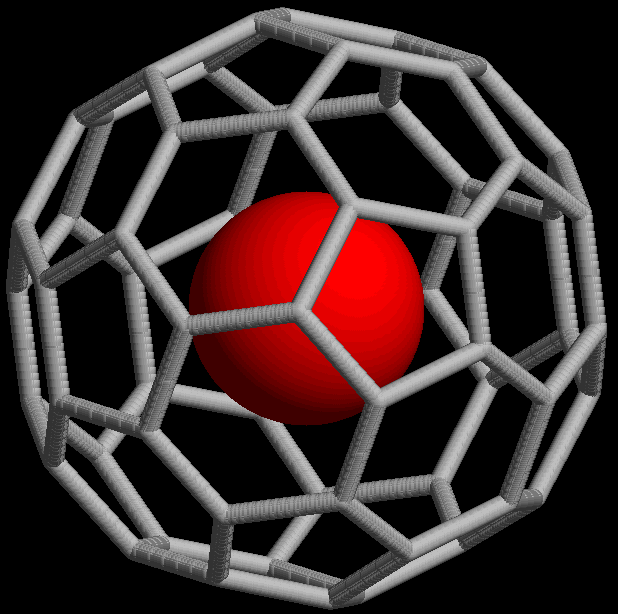

Characteristics
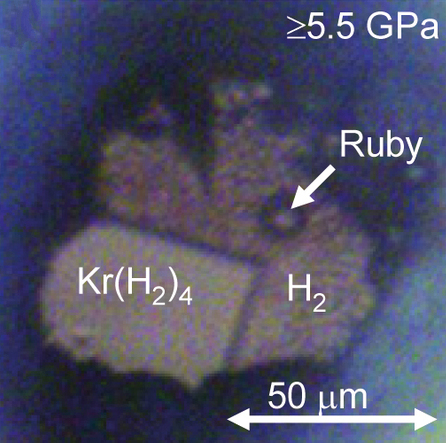
Noble gas compounds are diverse in bonding and stability. Heavier noble gases such as xenon and krypton are most likely to form covalent fluorides and oxides because they have lower ionization energies than helium and neon. Many are strong oxidizers or fluorinating agents and may be sensitive to heat, moisture or light. Some noble gas arrangements exist only at very low temperature or under high pressure.
Historical development
The first confirmed compound with a noble gas element overturned a century of textbook statements. In the 1960s researchers demonstrated that xenon could be oxidized to give stable salts and fluorides, initiating systematic study of noble gas chemistry. Subsequent work extended known species and clarified the conditions needed to stabilize them.
Common examples
- Xenon fluorides: XeF2, XeF4, XeF6 — well-studied covalent molecules used in research as fluorinating reagents.
- Krypton difluoride: KrF2 — a strong oxidizer attainable only under specific conditions.
- Xenon oxides and oxyanions: XeO3, XeO4 and salts derived from them.
- Exotic and transient species: weakly bound van der Waals complexes, matrix-isolated compounds such as HArF and charged complexes involving noble gas atoms.
Formation and reactivity
Noble gas compounds form when a strong oxidizing partner, energetic conditions or extreme pressures overcome the closed-shell stability of the noble gas atom. Fluorine and powerful fluorinating agents are common partners. Many products are highly reactive and require careful handling in inert atmospheres or cold matrices.
Importance and distinctions
These compounds are important for fundamental chemistry because they show how electron configurations thought to be inert can participate in bonding. Practical uses are limited but include specialized fluorination reactions and research into bonding theory. Light noble gases (helium, neon) rarely form true chemical bonds, while heavier ones (xenon, krypton, radon) provide the bulk of known noble gas chemistry. For further technical details and primary literature see sources indexed under element and comprehensive reviews linked from general databases noble gas resources and indexed compilations compound listings.
Related articles
Author
AlegsaOnline.com Noble gas compound Leandro Alegsa
URL: https://en.alegsaonline.com/art/70494
Sources
- doi.org : 10.1126/science.259.5100.1428
- pubmed.ncbi.nlm.nih.gov : 17801275
- doi.org : 10.1021/ja00084a089