
National Botanic Garden of Israel (Mount Scopus)
A botanical and archaeological garden on Mount Scopus in Jerusalem, devoted to the native plants of Israel, with living collections, research ties to the Hebrew University and Second Temple burial caves.
Overview
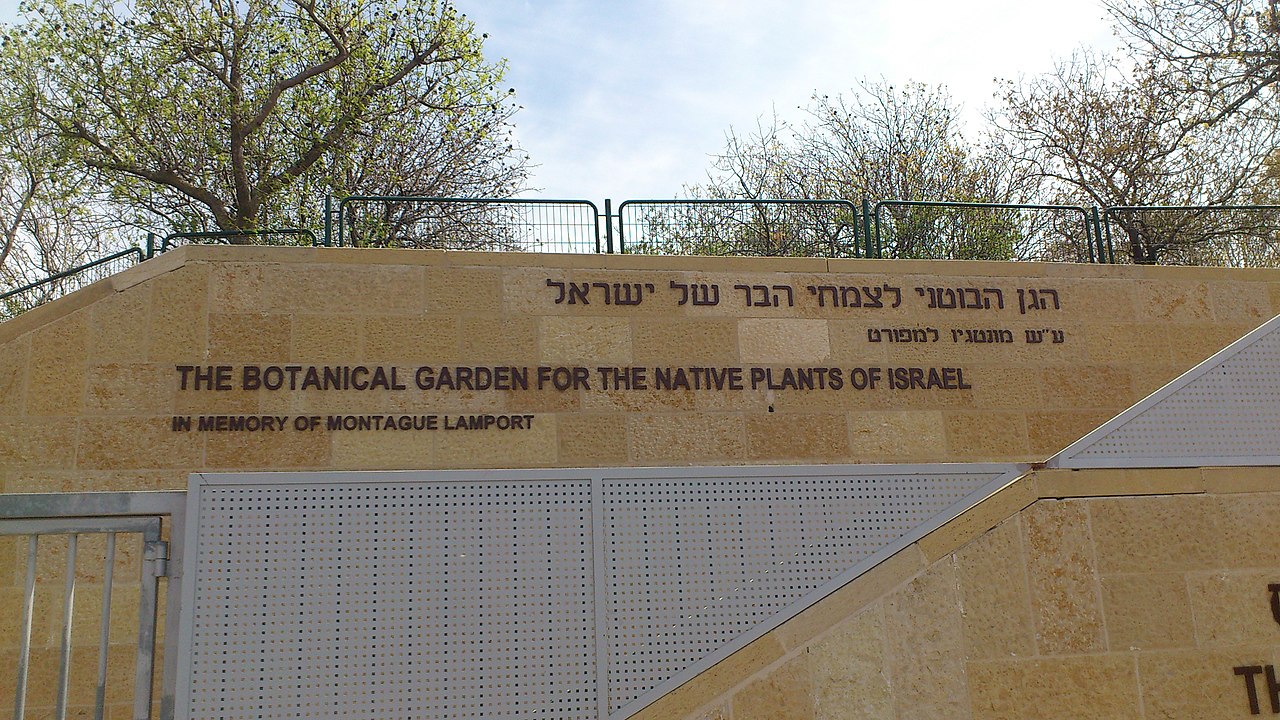
The National Botanic Garden of Israel, officially the Botanical Garden for the Native Plants of Israel in memory of Montague Lamport (Hebrew name), is a specialized botanical garden located on Mount Scopus in Jerusalem. The garden's mission emphasizes the cultivation, study and conservation of flora native to the historical and modern lands of Israel (native plants), and it has been associated with the scientific and educational work of the Hebrew University.
Image gallery
5 Images


History and development
The garden was founded and opened in 1931 by botanists Otto Warburg and Alexander Eig as part of the botanical department of the university. After the 1948 war and the isolation of Mount Scopus from the rest of the country, the university and garden staff established a complementary botanical site in West Jerusalem at Givat Ram. That new facility, the Jerusalem Botanical Gardens, opened in 1954 and extended the university's capacity for living collections, public display and horticultural research while the Mount Scopus site retained historical and regional significance.
Collections, design and purpose
The Mount Scopus garden is arranged to represent the varied habitats of the region, from Mediterranean scrub and coastal communities to desert-adapted species. Emphasis is placed on plants that are endemic, threatened or of particular cultural or ecological importance. The living collections are used for taxonomic study, propagation of rare species, and public education. As part of the university's applied botany and conservation programs, the garden supports research into plant ecology, restoration and sustainable landscaping.
Archaeology and notable sites
Besides its botanical value, the site is an archaeological park containing burial caves and tombs dating to the Second Temple period (Second Temple). One of the best-known caverns in the southern precinct is the Tomb of Nicanor (Tomb of Nicanor), a rock-cut chamber that later became a burial place for prominent Zionist figures such as Leon Pinsker and Menachem Ussishkin (Zionist activists). The coexistence of living plants and ancient stonework makes the garden a site where natural history and human history intersect.
Visiting, education and significance
Visitors encounter themed plantings, interpretive signage and trails that explain ecological relationships and cultural uses of species. The garden serves as a resource for students, botanists and conservationists, and it participates in exchange and propagation programs with other botanical institutions. Its role extends beyond display: it functions as a center for safeguarding regional plant diversity and for illustrating how botanical knowledge supports landscape restoration and heritage interpretation.
Notable features at a glance
- Official dedication: Memorial name and Hebrew designation (Hebrew name).
- Location and affiliation: Mount Scopus, Jerusalem, connected with Hebrew University and nearby academic facilities (Mount Scopus, Jerusalem).
- Complementary site: Givat Ram and the Jerusalem Botanical Gardens as an extension of living collections (Givat Ram).
- Archaeological interest: Second Temple period caves including the Tomb of Nicanor and related historical burials (Second Temple, Zionist activists).
- Focus: Conservation and study of native plants with public education and scientific research.
Today the National Botanic Garden of Israel remains a compact but rich institution where botanical science, conservation practice and archaeological heritage are presented together. For visitors and researchers alike it offers a concentrated view of the region's plant diversity and a tangible connection to the landscape's human past.
Related articles
Author
AlegsaOnline.com National Botanic Garden of Israel (Mount Scopus) Leandro Alegsa
URL: https://en.alegsaonline.com/art/68551