
Nepenthes (Tropical Pitcher Plants): biology, distribution, and significance
Nepenthes are tropical carnivorous vines known as pitcher plants or monkey cups. This article outlines their form, feeding strategy, range, cultivation, history and conservation issues.
Overview
Nepenthes are a genus of tropical carnivorous plants often called pitcher plants or "monkey cups." They belong to the family Nepenthaceae and include roughly 120 or so described species, with new taxa and hybrids regularly reported. The common name "monkey cup" derives from the habit of some animals drinking from the pitchers. Most Nepenthes are climbing or scrambling plants that produce characteristic cup-shaped traps formed from modified leaves.
Image gallery
10 Images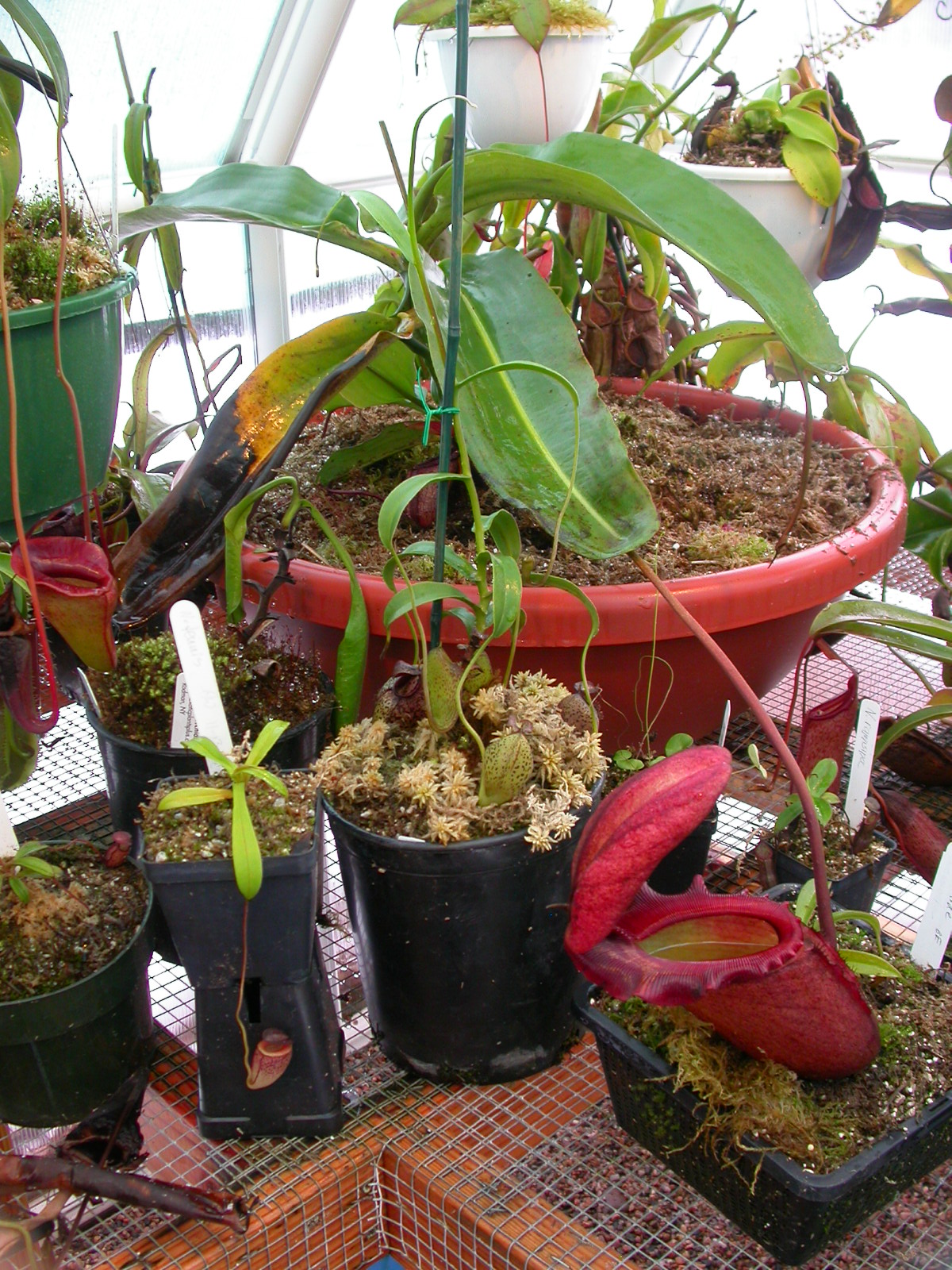




Morphology and feeding
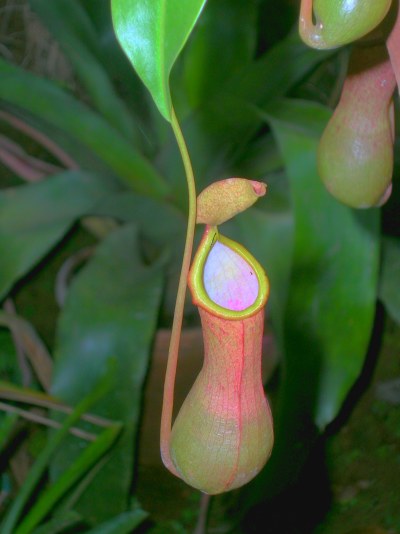
The distinctive feature of Nepenthes is the pitcher: a hollow, fluid-filled structure at the end of a tendril. Pitchers occur in two main forms on many species—ground-level "lower" pitchers and aerial "upper" pitchers—which can differ in size, colour and shape. Key parts include the peristome (the rim), a lid that helps reduce dilution by rain, slippery inner walls, and digestive glands at the base that absorb nutrients from prey. The trap contains a plant-produced fluid that may be watery or viscous and serves to subdue and digest captured animals; this liquid remains effective even when diluted by rain. Some species rely mainly on insects, while others capture larger prey or derive nutrients also from mutualistic animals that visit the pitcher for nectar.
Typical features
- Leaves transformed into pitchers with a cup, lid and tendril.
- Two pitcher forms: lower (terrestrial) and upper (aerial).
- Fluid inside the pitcher that drowns prey (digestive fluid) and may be thin or syrupy (viscous).
- Small, often inconspicuous flowers produced in racemes; plants are dioecious (separate male and female individuals).
Distribution and habitat
Nepenthes occur across a broad swath of the Old World tropics. Their natural range includes parts of southern China, much of the islands of Indonesia, Malaysia, the Philippines, and stretches westward to Madagascar and the Seychelles. They are also native to parts of Australia and New Caledonia, and reach into regions of India and Sri Lanka. Species occupy a variety of habitats from hot, humid lowland forest to cool, misty montane ridges; horticulturists and ecologists commonly distinguish "lowland" and "highland" species on the basis of their elevation-related temperature and humidity needs.
History, taxonomy and notable species
European interest in these plants dates back to the 17th century; one of the earliest illustrations appears in Leonard Plukenet's 1696 work and later Linnaeus used the name Nepenthes in the 18th century. Taxonomically they are treated as a single genus with many described species and numerous natural and cultivated hybrids. Well-known examples include several large-pitchered species prized by collectors and researchers for their unusual interactions with animals. The size of some pitchers can be remarkable—certain species can hold substantial volumes of liquid and accommodate relatively large visitors.
Uses, cultivation and conservation
Nepenthes are popular in horticulture and among carnivorous plant enthusiasts because of their striking traps and diverse forms. Cultivation requirements vary: lowland species usually need consistently warm, humid conditions while highland species prefer cooler nights and moderate daytime warmth. Beyond hobbyist interest, Nepenthes are studied for evolutionary ecology, plant-animal interactions and digestive physiology. Many species face conservation threats from habitat loss, collection and climate change; some are protected in situ or through ex-situ cultivation programs. The genus also produces many natural hybrids and deliberate crosses that are common in cultivation.
For general reference on the genus see Nepenthes overview and for plant family information consult Nepenthaceae resources. Additional regional floras and specialist monographs provide detailed treatments of species in particular areas such as China, Indonesia, Malaysia, the Philippines, Madagascar, the Seychelles, Australia, New Caledonia, India and Sri Lanka. For reading about the plants' digestive secretions and trap fluid characteristics see discussions linked at trap fluid and viscosity.
Related articles
Author
AlegsaOnline.com Nepenthes (Tropical Pitcher Plants): biology, distribution, and significance Leandro Alegsa
URL: https://en.alegsaonline.com/art/69181