
Myles Standish Burial Ground — historic 17th-century cemetery in Duxbury
Historic colonial cemetery in Duxbury, Massachusetts, traditionally associated with Captain Myles Standish and early Pilgrim families; one of the oldest maintained burial grounds in the United States.
Overview
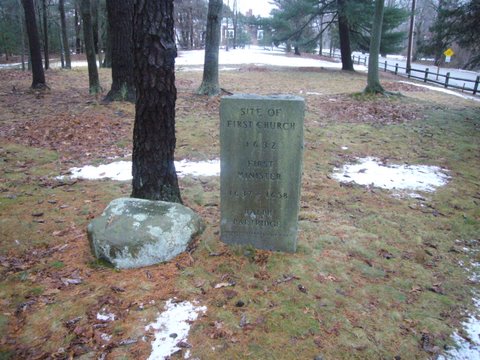
The Myles Standish Burial Ground is a small, historic cemetery in Duxbury, Massachusetts, associated with some of the town's earliest English settlers. It is traditionally identified as the burial place of Captain Myles Standish, an officer of the Plymouth Colony, and contains graves of other early Pilgrims and colonial families. The site is valued for its age, stone carving examples, and continuity with New England's colonial past.
Image gallery
9 Images





Location and characteristics
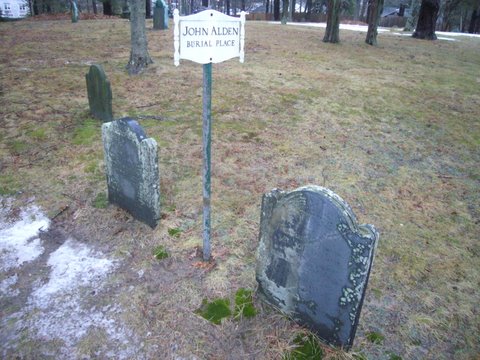
Located within the town of Duxbury, the burial ground is modest in size and laid out in an irregular pattern typical of 17th‑ and 18th‑century New England graveyards. Fieldstone and slate markers, some with winged skulls or willow-and-urn motifs, survive along with later 18th–19th century stones. The area is largely grassed with a few mature trees and simple boundary treatments that reflect its long use.
History and development
Graves at the site date to the 1600s and it has been used continuously for centuries. Early burials were unmarked or marked with simple stones; later centuries added carved headstones and family plots. While oral tradition and local records link Standish to this ground and indicate his death in the mid-17th century, precise locations of many early graves are uncertain because of weathering and limited documentary detail.
Notable burials and examples
- Captain Myles Standish (traditionally believed) and members of his family.
- Several early settlers and their descendants who shaped Duxbury's colonial era.
- Stonework that illustrates changing funerary art from the 17th through 19th centuries.
Preservation and public importance
The burial ground is recognized as an important cultural and historic asset. Local and state groups have undertaken preservation efforts to conserve fragile stones, interpret the site for visitors, and maintain the landscape. Interpretive signage and guided visits help explain the symbolism of the stones and the role of the cemetery in telling the broader story of early New England settlement.
Visiting and further reading
The site is accessible to the public and often visited by those studying colonial history or family genealogy. For practical visitor information and official stewardship details consult the site's information pages and the town resources: site information and local municipal guides. Researchers seeking deeper documentation can consult town records, preservation reports, and published histories linked through local archives and heritage organizations.
As a tangible link to the 17th century, the Myles Standish Burial Ground offers insight into early colonial life, mortuary customs, and community memory in southeastern Massachusetts.
Related articles
Author
AlegsaOnline.com Myles Standish Burial Ground — historic 17th-century cemetery in Duxbury Leandro Alegsa
URL: https://en.alegsaonline.com/art/67970