
Myles Standish: Early New England Military Leader
English military officer who sailed on the Mayflower in 1620, served as the military commander and a civic officer of Plymouth Colony, and played a controversial but influential role in the colony's survival and defense.
Myles Standish (c.1584–1656) was an English soldier and colonial military figure who travelled on the Mayflower and helped protect the first group of Pilgrims in New England. Born in England around 1584, he is best known for his role as the armed leader of the early settlement at Plymouth. Though not a religious leader of the Separatists, Standish became indispensable as an organizer of defense, reconnaissance and negotiated contact with Indigenous nations.
Image gallery
10 Images


Roles and responsibilities
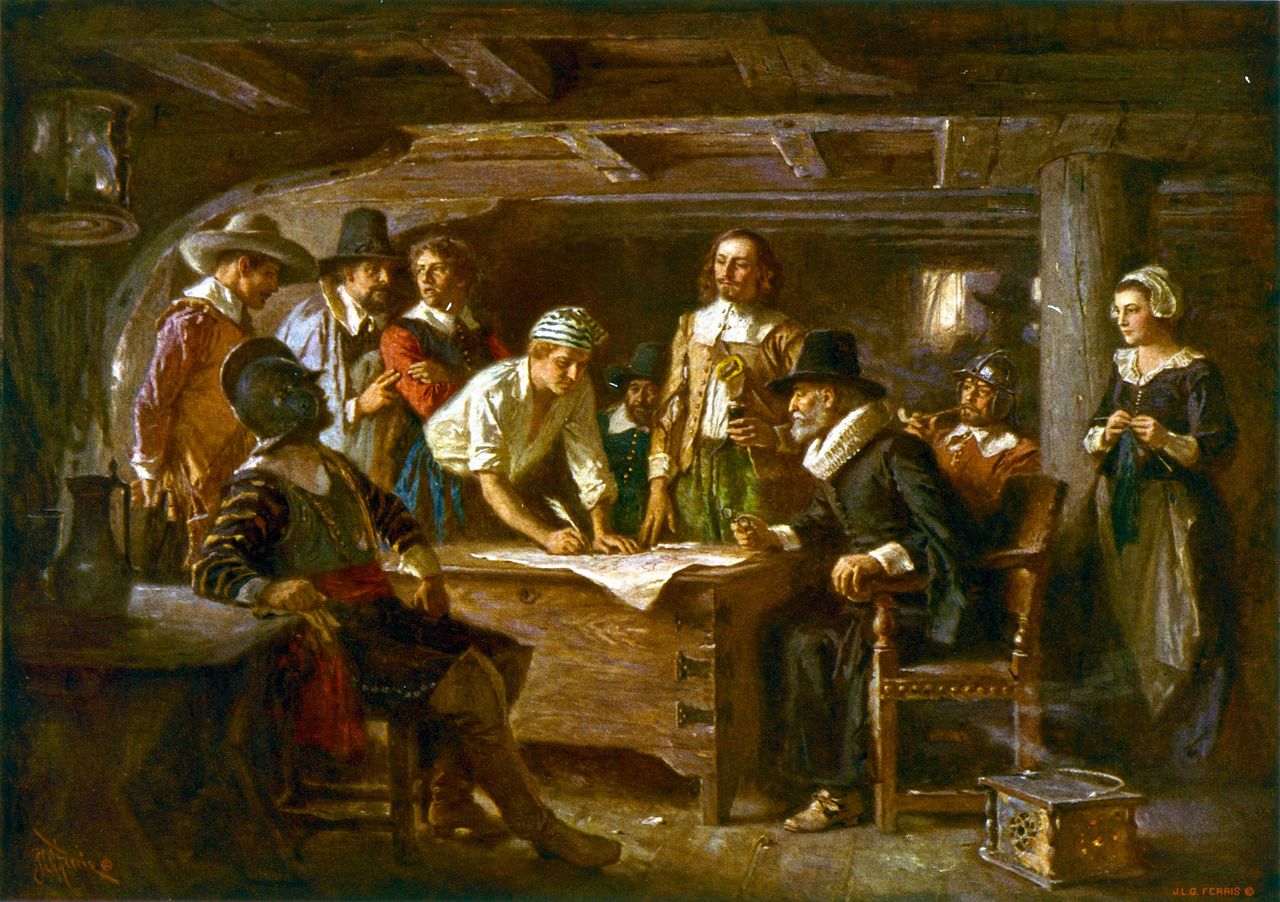
Standish combined military experience with colonial administration. He is commonly described as a professional English man-at-arms and a military officer in the service of Plymouth’s settlers. He travelled with the Pilgrims aboard the Mayflower and signed the Mayflower Compact, an early framework for self-government. Within the settlement he served as the colony’s military commander and later held civil offices including assistant governor and treasurer.
Actions and expeditions
Shortly after the 1620 landing, Standish led scouting and security missions into surrounding areas to locate resources, establish relations, and counter threats. He directed small-scale expeditions that combined negotiation with shows of force to protect the fragile settlement. His work involved both fortifying the settlement and meeting Indigenous leaders; these missions helped ensure the colony’s survival but sometimes provoked ethical debate because of the use of violence in disputes.
Historical context and development
Standish operated at a time when English colonists lacked formal support and depended on local initiative for survival. The first years at Plymouth were marked by disease, food shortages and delicate diplomacy. The presence of a competent military organizer reduced some of the colony’s vulnerabilities and allowed settlers to focus on farming and community organization. Standish’s career developed from soldierly skill into practical colonial leadership.
Legacy and notable facts
- Survival and security: Historians credit Standish with contributing materially to Plymouth’s persistence through his planning and patrols.
- Controversy: His willingness to use force in dealings with some native groups has led to mixed assessments of his conduct.
- Civic roles: Beyond military duties he served the settlement in administrative posts in Plymouth Colony.
- Cultural memory: Standish was later memorialized in poetry and monuments that shaped public perceptions of the early colony.
Because documentary traces of his early life are sparse, some details of Standish’s origins and military service in England are uncertain. Nonetheless, his imprint on early colonial defense, local government and Anglo-Indigenous relations in the decades after 1620 is widely acknowledged. For more general context about the voyage and governance compact that accompanied the settlers, see references on the New World migration and the institution-building that followed.
Questions and answers
Q: Who was Myles Standish?
A: Myles Standish was an English military officer who defended the Pilgrims in the New World.
Q: How did Myles Standish travel to the New World?
A: Myles Standish traveled to the New World on the Mayflower in 1620.
Q: What did Myles Standish do when he arrived in the New World?
A: Myles Standish was selected to defend the Pilgrims and also signed the Mayflower Compact. He became an assistant governor and treasurer of Plymouth Colony.
Q: What position did Myles Standish hold in Plymouth Colony?
A: Myles Standish held the positions of assistant governor and treasurer in Plymouth Colony.
Q: When was Myles Standish born?
A: The exact date of Myles Standish's birth is unknown but he was born around 1584.
Q: When did Myles Standish die?
A: Myles Standish died in 1656.
Q: What was the Mayflower Compact?
A: The Mayflower Compact was a document signed by the Pilgrims on the Mayflower outlining rules and regulations for their new settlement in the New World.
Related articles
Author
AlegsaOnline.com Myles Standish: Early New England Military Leader Leandro Alegsa
URL: https://en.alegsaonline.com/art/67971
Sources
- sail1620.org : "Myles Standish, Born Where? The State of the Question"
- books.google.com : The Military History of Boston's Harbor Islands
- books.google.com : The Pilgrim Republic: An Historical Review of the Colony of New Plymouth
- worldcat.org : 316126717
- worldcat.org : 2812063
- books.google.com : Captain Myles Standish
- worldcat.org : 3000476
- books.google.com : Mayflower: A Story of Community, Courage and War
- books.google.com : Captain Myles Standish: His Lost Lands and Lancashire Connections
- worldcat.org : 2134828
- books.google.com : William Bradford: Plymouth's Faithful Pilgrim
- books.google.com : Plymouth Colony: Its History & People, 1620–1691
- books.google.com : History of the Town of Duxbury
- worldcat.org : 32063251
- books.google.com : The Memorial History of Boston vol. 1