
Nanjing City Wall: Ming-era capital fortifications
Extensive Ming-dynasty masonry wall encircling Nanjing, China. Built 1366–1393, largely preserved today; notable for scale, gates (including Gate of China) and ongoing conservation and interpretation efforts.
The Nanjing City Wall is the principal surviving fortification surrounding the old core of Nanjing in China. Erected during the early Ming dynasty when Nanjing served as the dynasty's capital, the wall is one of the largest and best-preserved pre-modern city walls in the world. It is renowned for its length, solid masonry construction and number of surviving gates and defensive works.
Image gallery
10 Images





Design, layout and characteristics
The complete fortification system has traditionally been described as a multi-ring arrangement that protected different parts of the city: a palace precinct (imperial or palace city), an inner imperial city, the main capital-city wall that enclosed the administrative and residential core, and an outer suburban ring. In modern usage, the name "Nanjing City Wall" most often refers to the main capital-city wall, a continuous masonry rampart that follows local ridgelines and wraps the historic urban core.
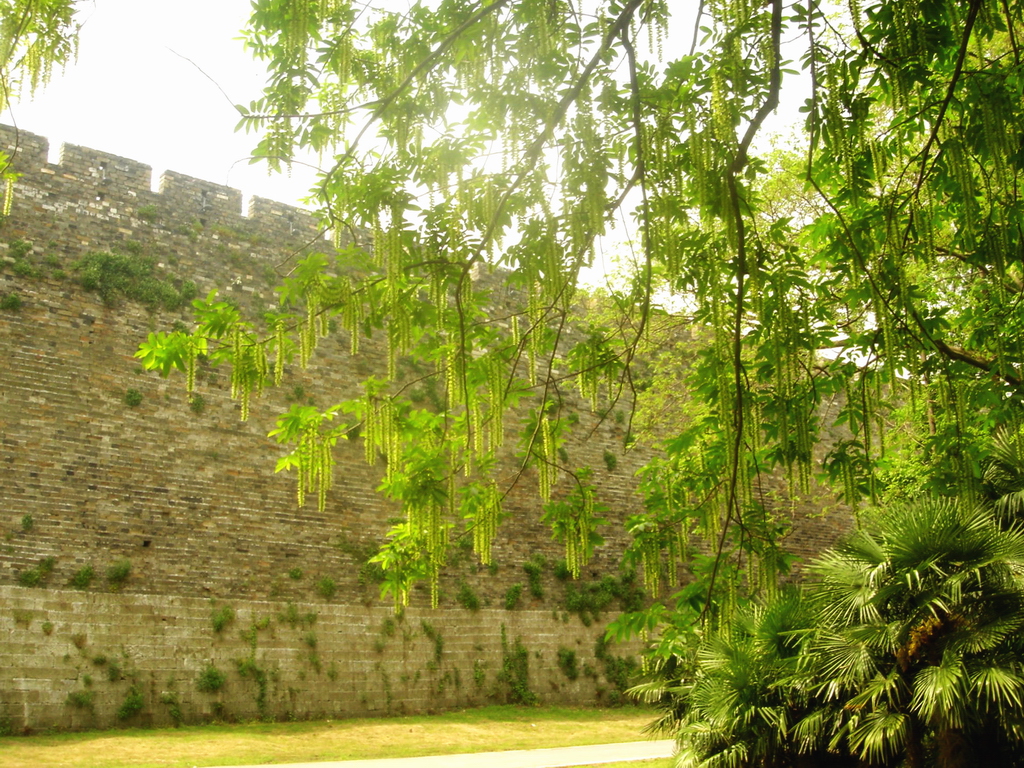
Constructed with an earthen core faced in carefully fired bricks and local stone, the wall was built with sloping faces, broad ramparts for patrols and artillery, and numerous gate complexes, watchtowers and bastions. The preserved circuit measures about 25.1 kilometres and includes many well-preserved stretches, ramparts wide enough to walk on, and reinforced towers that once supported small garrisons and signalling.
Construction and historical background
Work on the present wall began in 1366 and was substantially completed by 1393, a programme that took around 27 years. The project was a large state undertaking, drawing labour and materials from many provinces; contemporary records and later studies note that some 280,000 labourers were mobilized and that approximately 350 million bricks were used. Building the wall formed part of the Ming court's broader efforts to secure the capital with permanent, monumental infrastructure.
Gates, sections and notable features
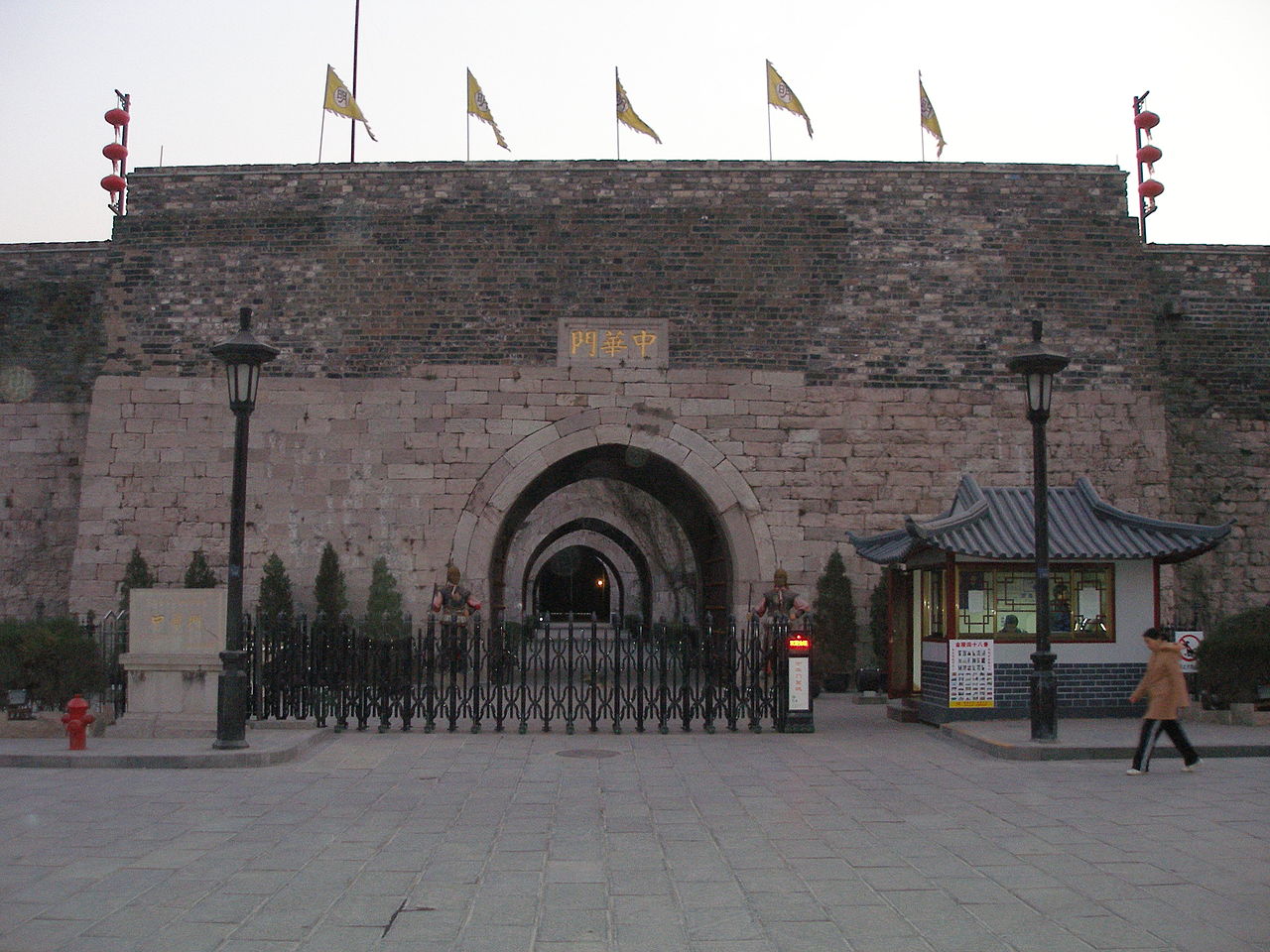
- Gate of China — a ceremonial and defensive gate complex often cited as the most famous portal; visitors and scholars frequently refer to this monument as a focal point of the city's fortifications. Gate of China
- Zhongshan Gate — a major southern entrance featuring layered defensive works and a complex of passages.
- Xuanwu Gate — positioned near the northern lakes and parklands and associated with important approaches to the historic city.
Many gate complexes retain original stone foundations, brickwork, inner passageways and defensive platforms; other sections show evidence of later repairs, replacements and adaptations made as the city grew and modern infrastructure intersected with historic masonry.
Conservation, use and significance
Beyond its original military purpose, the wall has shaped Nanjing's urban form by influencing streets, neighbourhood boundaries and the location of temples and administrative compounds. In the present day it functions as a cultural landmark: protected stretches are part of parks and walking routes, interpretive signage and museum displays explain construction techniques, and academic studies examine its engineering and historical role.
Conservation efforts face typical challenges: balancing historic preservation with urban development, addressing decay and weathering of mortar and bricks, and integrating visitor access without compromising structural integrity. Where restored, work aims to follow material and technique evidence rather than introduce speculative reconstructions.
Visiting and further study
Sections of the wall are accessible to the public and are incorporated into local heritage trails; museums and site exhibitions provide contextual information about the wall's construction, gates and role during the Ming period. For a fuller account consult archaeological and conservation reports, local historical studies and published surveys that document measurements, materials and restoration history.
Questions and answers
Q: What is the Nanjing City Wall?
A: The Nanjing City Wall is a city wall located in Nanjing, China.
Q: When was most of the city wall made and why?
A: Most of the city wall was made during the early Ming Dynasty when Nanjing was the capital of China.
Q: What is the Jingshiying Tianfu four city wall pattern?
A: The Jingshiying Tianfu four city wall pattern is a four-wall system. It consists of four walls, namely, the imperial city, the imperial city, the capital city, and the outer city.
Q: Which of the four walls is now most commonly referred to as the Nanjing City Wall?
A: The capital city wall, which is the longest, largest, and best-preserved old city wall in the world, is now most commonly referred to as the Nanjing City Wall.
Q: When was the city wall built, and how long did it take?
A: The city wall was built in 1366 (Yuan to Zheng 26 years) and completed in 1393 (Ming Hongwu 26 years), taking a total of 27 years to construct.
Q: How many people were involved in building the city wall and what materials were used?
A: A total of 280,000 migrant workers were involved in building the city wall, using about 350 million urban bricks.
Q: What are some of the gates included in the city wall?
A: Some of the gates included in the city wall are the Gate of China, the Zhongshan Gate, and the Xuanwu Gate.
Related articles
Author
AlegsaOnline.com Nanjing City Wall: Ming-era capital fortifications Leandro Alegsa
URL: https://en.alegsaonline.com/art/68247