
Muses: Greek goddesses of inspiration for the arts and sciences
The Muses are nine Greek goddesses who personify and inspire artistic, literary and scientific activity. This article explains their names, roles, origins, cult, and lasting cultural influence.
For other uses, see Muse (band) or the fruit-bearing palm sometimes called açaí. In classical Greek tradition the Muses are divine figures associated with creative disciplines. They are commonly described as patrons of various arts and intellectual pursuits or sciences, and they appear throughout ancient literature and art as sources of inspiration and authoritative memory.
Mythically the Muses belong to the cosmology of Greek mythology. Most accounts identify them as daughters of the Titaness Mnemosyne, the embodiment of memory, and the god Zeus. Because of that parentage they symbolize the link between memory and creative expression: poets, singers and thinkers invoked the Muses to secure accurate remembrance and eloquent speech for telling stories, composing songs, or performing rituals.
Image gallery
10 Images


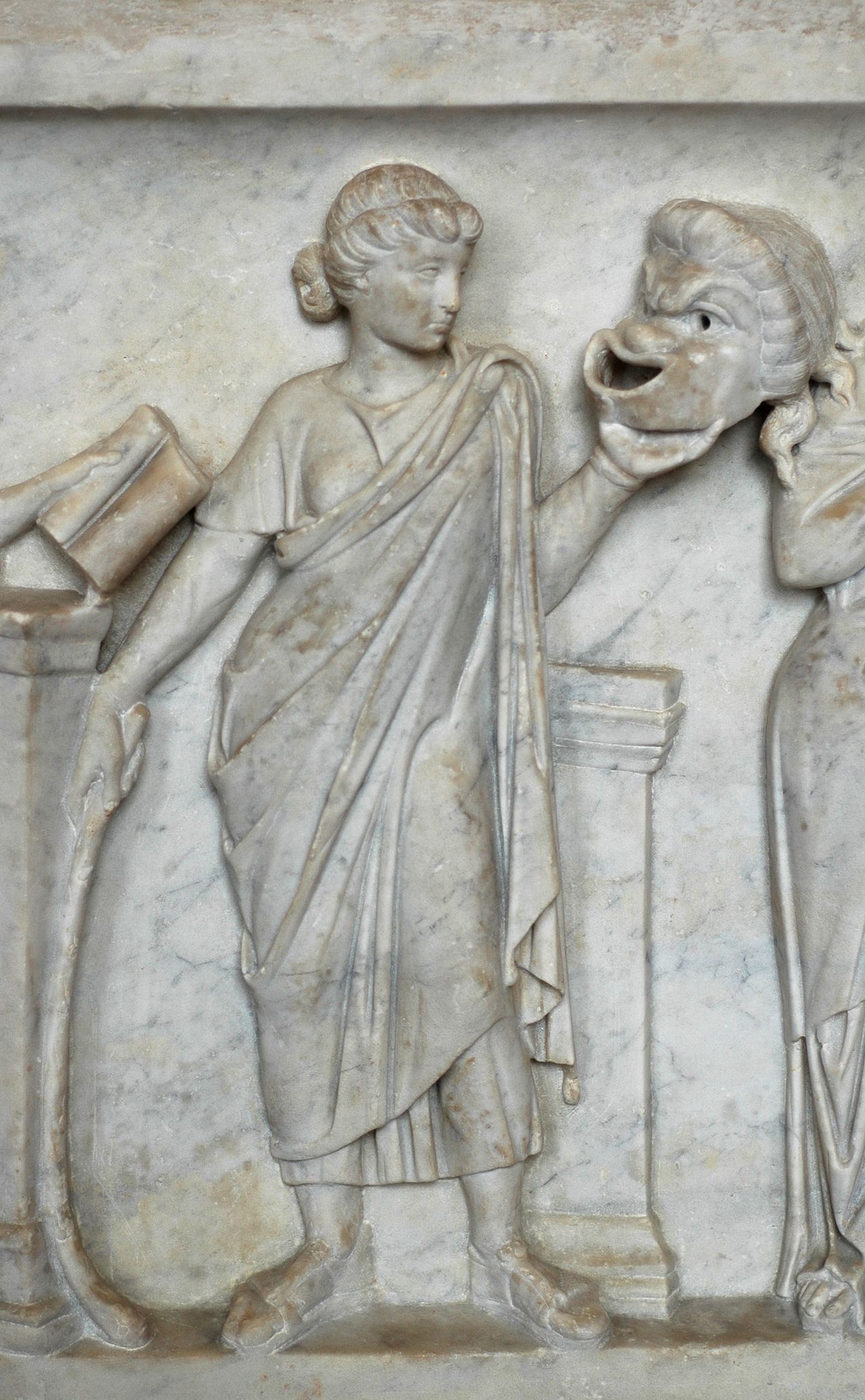
Names and conventional roles
- Calliope — traditionally the eldest and associated with epic poetry. She is sometimes named as the mother of the legendary musician Orpheus.
- Euterpe — linked with music and lyric poetry. Later stories credit her with a love of wind instruments; one tale connects her son Rhesus with the events of the Trojan War described in the Iliad.
- Clio — the muse of history, often shown with scrolls or a chest of records.
- Erato — associated with erotic and love poetry, frequently depicted with a small lyre.
- Melpomene — originally a chorus leader and later the muse of tragedy, commonly represented with the tragic mask.
- Polyhymnia — connected to sacred song and the hymn, and sometimes linked with contemplative arts such as geometry.
- Terpsichore — patron of dance and choral song, often pictured dancing while playing a lyre.
- Thalia — muse of pastoral poetry and comedy, portrayed with a comic mask or shepherd's staff.
- Urania — associated with astronomy and the study of the heavens, sometimes invoked for astrological knowledge as well (astrology).
Classical poets and scholars invoked the Muses at the beginnings of poems and histories to claim divine support for the accuracy and authority of their work. Surviving sources from antiquity — including hymns, epic openings and scholia — show that the Muses served a ritual as well as artistic function: they were honored in song, at festivals, and at sanctuaries where singers and performers gathered.
Over centuries the idea of a "muse" broadened beyond the nine personifications. In later Western culture the term came to mean any external source of creative inspiration or a poet's inner guiding voice. Writers and artists refer to a favored patron, beloved person, or recurring theme as their muse when it shapes their work. In this modern sense the word is frequently applied to impulse and imagination in poetry, music and visual art.
Notable distinctions: ancient lists of the Muses vary in number and local names in different regions of Greece; the familiar list of nine became standard in classical Athens and Hellenistic literature. Iconography associates each Muse with particular attributes — masks, scrolls, musical instruments, or stars — that made their role legible in sculpture and painting. While they are divine, their function is chiefly inspirational rather than authoritative lawgiving: they provide the memory, skill and voice, but human artists translate that gift into concrete works.
Related articles
Author
AlegsaOnline.com Muses: Greek goddesses of inspiration for the arts and sciences Leandro Alegsa
URL: https://en.alegsaonline.com/art/67710