
Montserrat — Caribbean island and British Overseas Territory
Montserrat is a small Caribbean island and British Overseas Territory, noted for its Irish heritage, the Soufrière Hills eruption that destroyed Plymouth, and ongoing recovery centered in Brades.
Overview
Montserrat is a small Caribbean island and a British Overseas Territory in the Leeward Islands. It is volcanic in origin and has a compact land area and a small, dispersed population. The territory combines European colonial institutions with local Caribbean cultural traditions; governance, legal ties and international relations are linked to the United Kingdom while day-to-day life reflects regional patterns of language, religion and community.
Image gallery
10 Images




Geography and administration
Montserrat's size and terrain are dominated by volcanic mountains and forested lowlands. It is administered as a British Overseas Territory, with a locally elected legislature and an executive headed by a governor appointed on behalf of the Crown — the office of governor represents that connection. The historic capital, Plymouth, was located on the southwest coast but was abandoned after volcanic activity rendered it unsafe; government functions now operate from temporary or alternative centers while longer-term planning continues.
Early inhabitants
Before European contact, the island was inhabited by indigenous people, chiefly Kalinago and Taíno communities, who knew the island by a name variously recorded in historical sources. These groups practiced agriculture, fishing and craft traditions suited to the island environment. Archaeological remains and early accounts provide the principal evidence of their presence and of pre-colonial life on the island.
Colonial period and slavery
In the colonial era Montserrat was settled largely by immigrants from Ireland and other parts of the British Isles; many of the early European planters were Irish and some identified as Catholics. Plantation agriculture, especially sugar cultivation, became the island's economic backbone and planters brought enslaved people from West Africa to provide labor. Enslaved African and Afro-Caribbean people, described in older records as black slaves, worked on the sugar plantations that generated wealth for the colonial owners. The British abolition of the slave trade and later legal emancipation in the early 19th century transformed the island's labour system; as elsewhere in the British Empire, emancipation involved a complex transition that included legal measures and financial arrangements for former slaveholders.
The Soufrière Hills eruption and aftermath
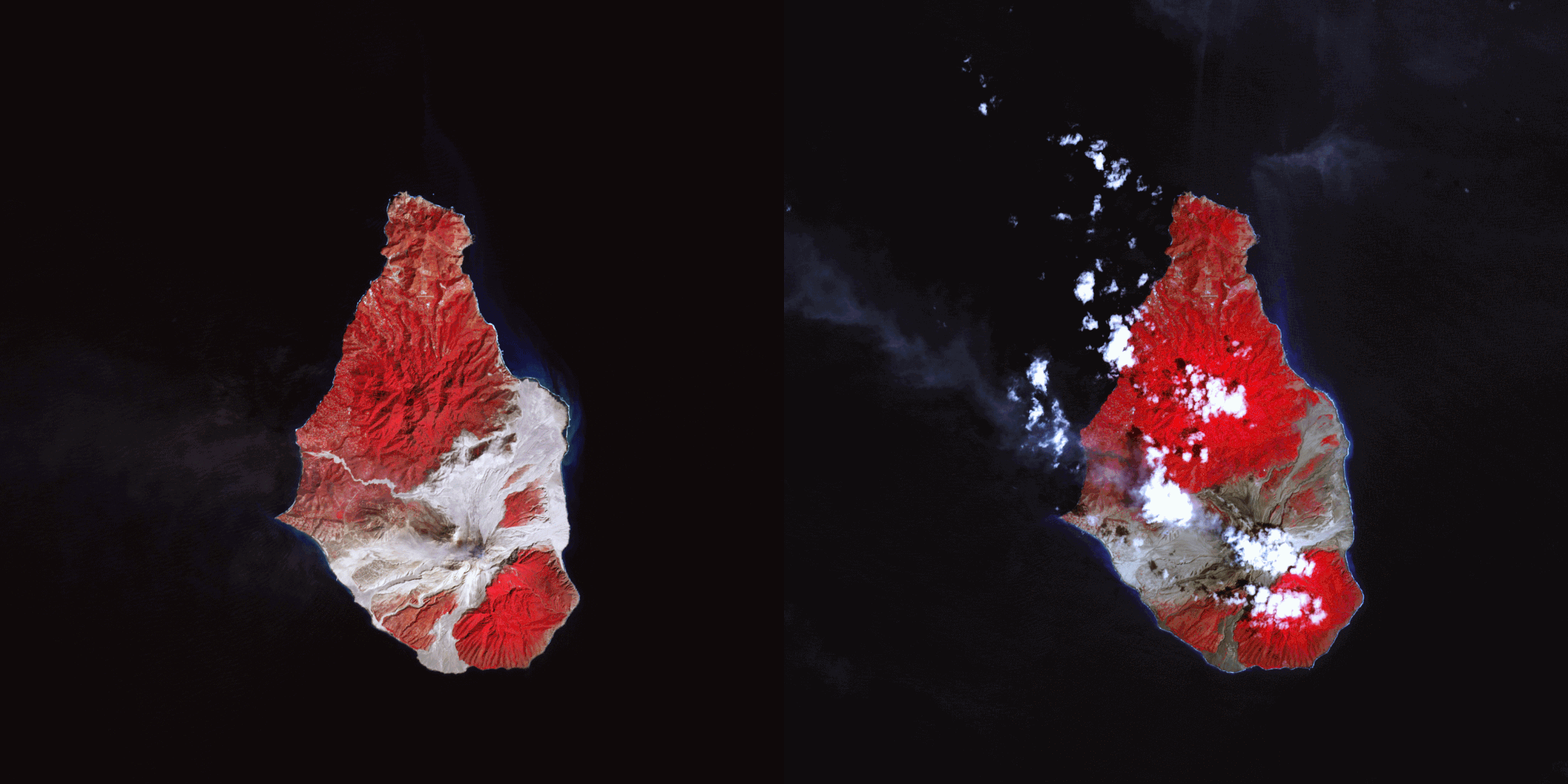
In the 1990s an eruption of the Soufrière Hills volcano, centred near Chances Peak, produced pyroclastic flows, ashfall and lahars that devastated large parts of the island and permanently damaged the southern half, including Plymouth. Much of the population was evacuated, and the government moved many functions to the northern town of Brades and other temporary centers. Recovery has been gradual and ongoing: exclusion zones around the volcano remain in effect in parts, while reconstruction, community resettlement and hazard monitoring have reshaped planning and daily life.
Culture, economy and notable facts
Montserrat retains a distinctive cultural mix that reflects indigenous, African and European influences; it is sometimes called the "Emerald Isle of the Caribbean" in reference to its Irish links and green scenery. The economy today relies on public administration, construction, small-scale agriculture, remittances from emigrant communities, and niche tourism related to volcanic landscapes, heritage and natural scenery. The island's modern story is one of resilience: institutions tied to the United Kingdom remain important while local leaders and international partners work on development, hazard preparedness and cultural preservation.
Further information and official sources can be consulted via government and regional organizations for up-to-date details on administration, travel, and safety. For historic records and archaeological studies see specialist publications and archives that discuss the island's indigenous past, colonial era, and post-eruption recovery efforts.
Indigenous history | Irish settlement | Religious heritage | Migration and labor | African diaspora | Slavery and emancipation | Plantation economy
Related articles
Author
AlegsaOnline.com Montserrat — Caribbean island and British Overseas Territory Leandro Alegsa
URL: https://en.alegsaonline.com/art/66499