
Merginae (seaducks)
Merginae, commonly called seaducks, are a subfamily of Anatidae adapted mostly to coastal and cold-water habitats; they are diving birds with salt-tolerance adaptations and varied life histories.
Overview
The Merginae, commonly called seaducks, form a subfamily within the waterfowl family Anatidae. They are members of the broader group of birds that also includes the familiar duck, goose and swan. As their name implies, most species spend much of the year in coastal or offshore waters, especially outside the breeding season.
Image gallery
10 Images



Key characteristics
Merginae are primarily diving birds: they swim underwater to capture prey rather than dabble at the surface. Many have compact bodies, strong legs set far back, and specialized bills—some serrated or narrow for catching fish. Several species possess functional salt glands that help them tolerate marine environments; juveniles typically lack fully developed glands and therefore rely on sheltered freshwater while young.
- Strong diving ability and streamlined bodies
- Diet largely of fish, crustaceans and molluscs
- Sexual dimorphism in plumage common
Distribution and habitat
Most seaducks are associated with temperate to Arctic regions of the Northern Hemisphere, frequenting open coasts, bays and continental shelves in winter and using tundra ponds, estuaries or sheltered inshore waters to breed. A few species prefer inland or riverine sites and freshwater systems during parts of their life cycle; for example some mergansers are closely tied to riverine habitats where they nest and feed.
Taxonomy and examples
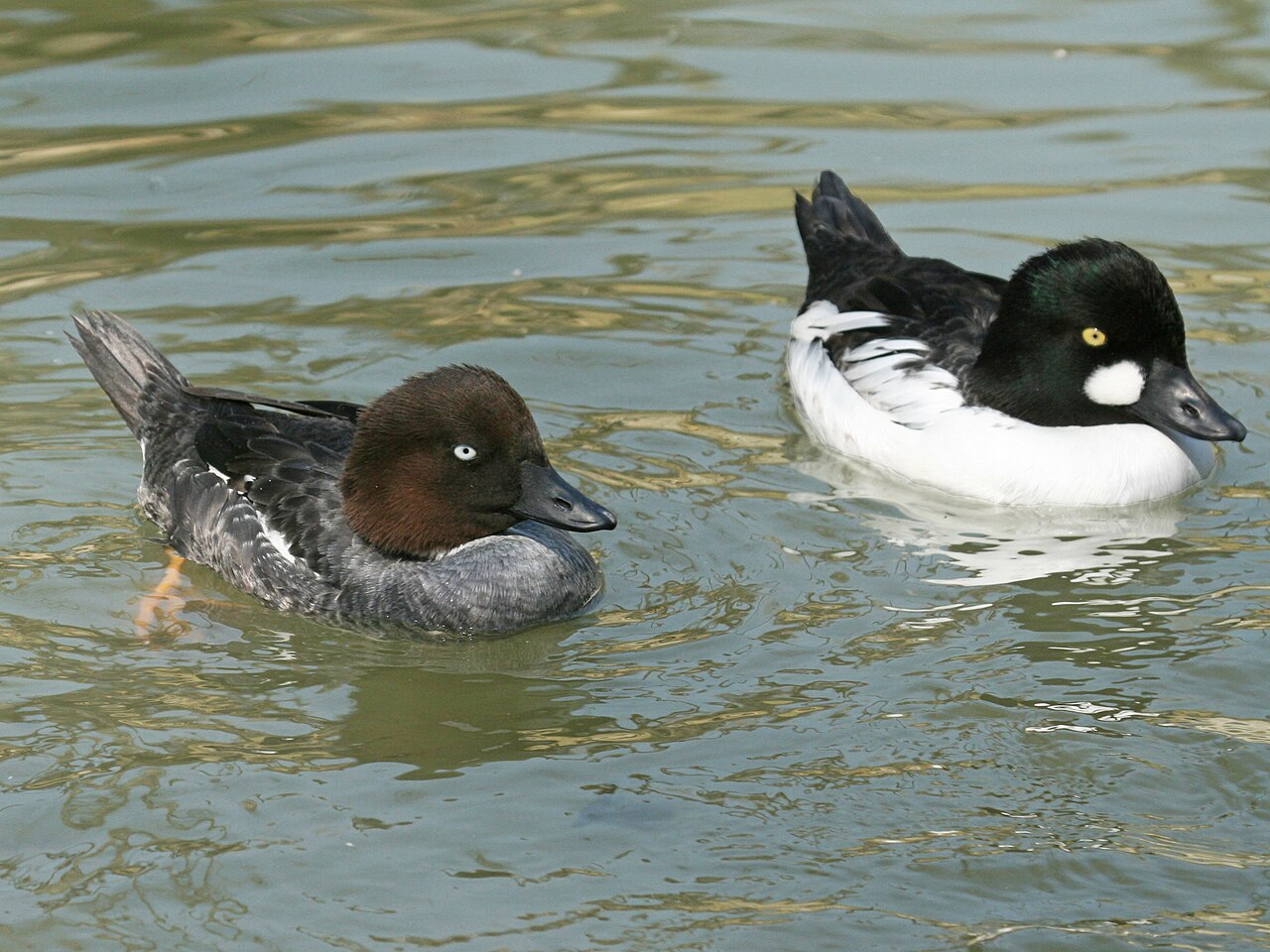
The subfamily includes several familiar groups such as eiders, scoters, mergansers, goldeneyes and the long-tailed duck. These groups differ in bill shape, feeding technique and preferred prey but share a suite of adaptations to an aquatic, often cold-water existence.
Ecology, human interactions and conservation
Seaducks play important roles as predators of marine invertebrates and small fish, and they are indicators of coastal ecosystem health. They have cultural and economic importance as game birds in some regions. Threats include oil pollution, habitat loss, climate change impacts on breeding and wintering areas, and disturbance. Conservation actions often focus on protecting key coastal and nesting sites, regulating harvest, and reducing pollution.
Notable adaptations
Beyond salt glands, many seaducks show seasonal shifts in plumage and molt timing, use specific moulting sites where they gather in large numbers, and undertake long migrations between breeding and wintering grounds. Their diversity of bill shapes and feeding behaviours illustrates evolutionary specialization within a single subfamily of waterfowl.
Anatidae overview, ducks, geese, swans, birds, marine life and riverine habitats are all relevant contexts when studying Merginae.
Related articles
Author
AlegsaOnline.com Merginae (seaducks) Leandro Alegsa
URL: https://en.alegsaonline.com/art/63961