
Mesobatrachia: the intermediate clade of frogs
Mesobatrachia is a group of frogs positioned between primitive and modern lineages; commonly treated as containing about six families and several dozen genera, its limits have changed with modern phylogenetics.
Overview
Mesobatrachia is a term used by herpetologists to describe a group of frogs that occupy an intermediate position between the most primitive anurans and the vast radiation of modern frogs. The name, meaning "middle frogs," reflects their mix of ancestral and derived anatomical and genetic traits. They are a recognized unit in many classifications and are often introduced in broader treatments of Anura and amphibians.
Image gallery
2 Images
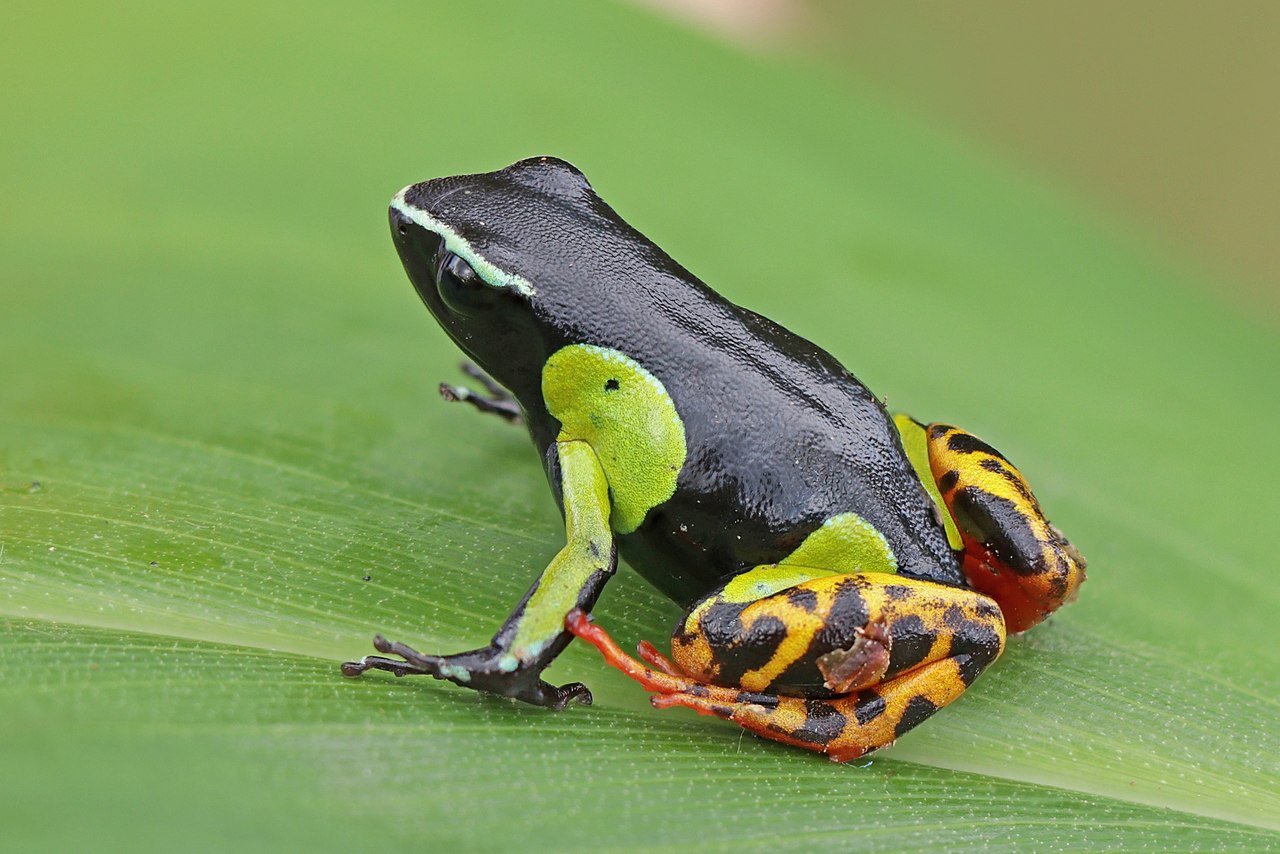
Characteristics
Members commonly exhibit features that are transitional in comparison with older and newer frog lineages. Rather than a single defining trait, the group is characterized by a mosaic of skeletal, reproductive and larval characteristics. In practice, researchers identify mesobatrachian frogs by a combination of reproductive modes, limb and skull features, and molecular markers.
Taxonomy and history
Mesobatrachia was proposed in the early 1990s when molecular and morphological analyses suggested a distinct clade intermediate to Archaeobatrachia (primitive frogs) and Neobatrachia (modern frogs). Classic treatments list roughly six families, about twenty genera and on the order of a few hundred species, though exact numbers vary as taxonomists revise relationships. Modern phylogenetic work has refined which taxa belong in Mesobatrachia and has sometimes shifted families to other subgroups.
Distribution, ecology and importance
Mesobatrachian frogs occur in a variety of habitats, including temperate woodlands, grasslands and seasonal wetlands. Like other frogs, they play important ecological roles as insect predators and as prey for larger animals. Their life histories—egg laying, tadpole development and metamorphosis—contribute to nutrient cycling in both aquatic and terrestrial ecosystems. Because many species are sensitive to habitat change and pollution, they are useful indicators of environmental health.
Notable facts and distinctions
- They are positioned between the ancient (Archaeobatrachia) and the very diverse modern frogs (Neobatrachia) in evolutionary trees.
- Composition and rank have been debated: some genera have moved in or out of Mesobatrachia as new genetic data appear.
- For lists of genera and further taxonomic details see resources on amphibian classification such as specialized catalogues.
Because anuran taxonomy continues to change with new sequencing data, Mesobatrachia is best understood as a useful, but evolving, way to describe frogs with intermediate evolutionary characters rather than an immutable list of species.
Related articles
Author
AlegsaOnline.com Mesobatrachia: the intermediate clade of frogs Leandro Alegsa
URL: https://en.alegsaonline.com/art/64086
Sources
- doi.org : 10.1016/j.gene.2005.07.034
- pubmed.ncbi.nlm.nih.gov : 16307849
- doi.org : 10.1086/429523
- pubmed.ncbi.nlm.nih.gov : 15795855