
Merostomata: sea scorpions (Eurypterida) and horseshoe crabs (Xiphosura)
Merostomata is a historical grouping of chelicerate arthropods that included extinct sea scorpions (Eurypterida) and modern horseshoe crabs (Xiphosura); covers anatomy, fossil record, taxonomy and human relevance.
Overview
Merostomata is a traditional name applied to a group of chelicerate arthropods that historically encompassed the extinct sea scorpions, Eurypterida, and the living horseshoe crabs, Xiphosura. The term was used to emphasize certain shared external features and an aquatic lifestyle, but its usage has shifted as scientific understanding of arthropod relationships has advanced.
Image gallery
3 Images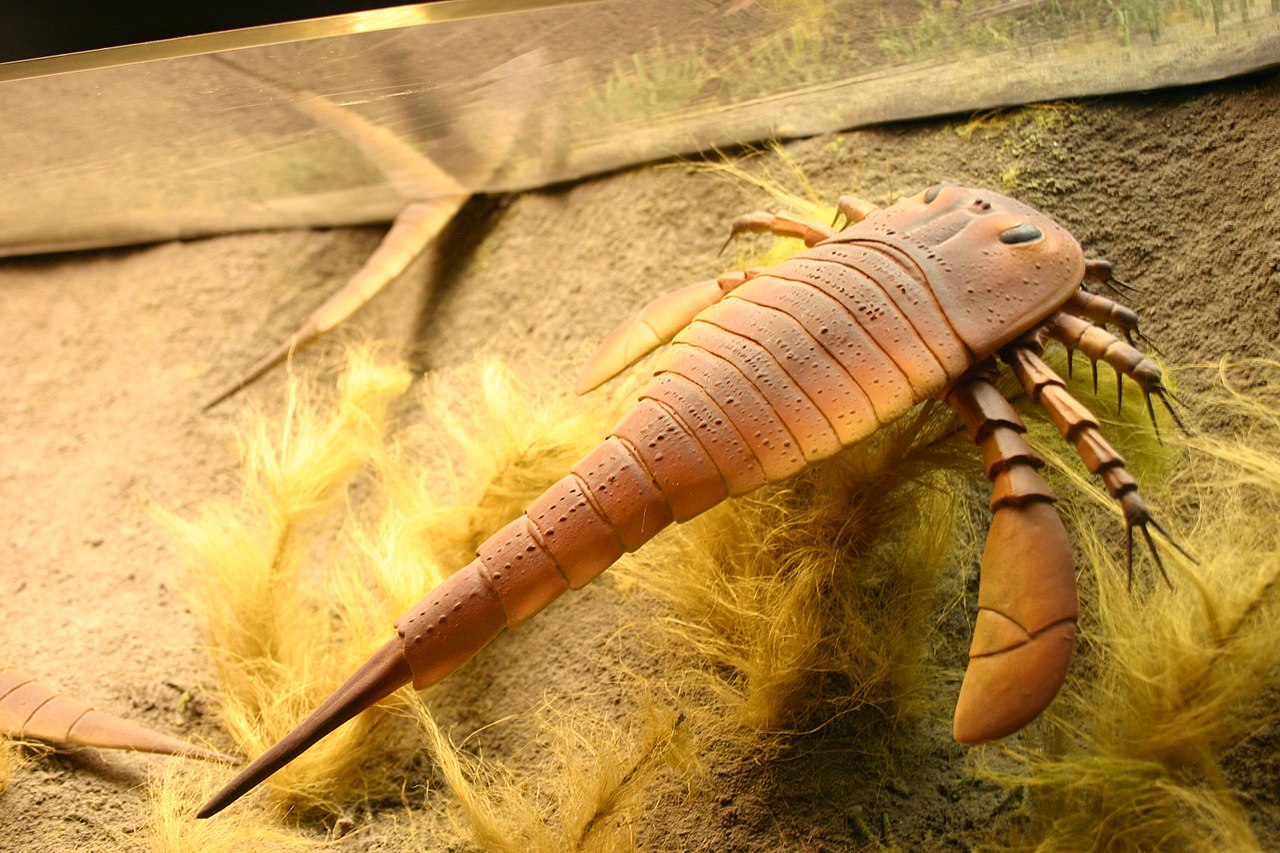
Anatomy and distinguishing features
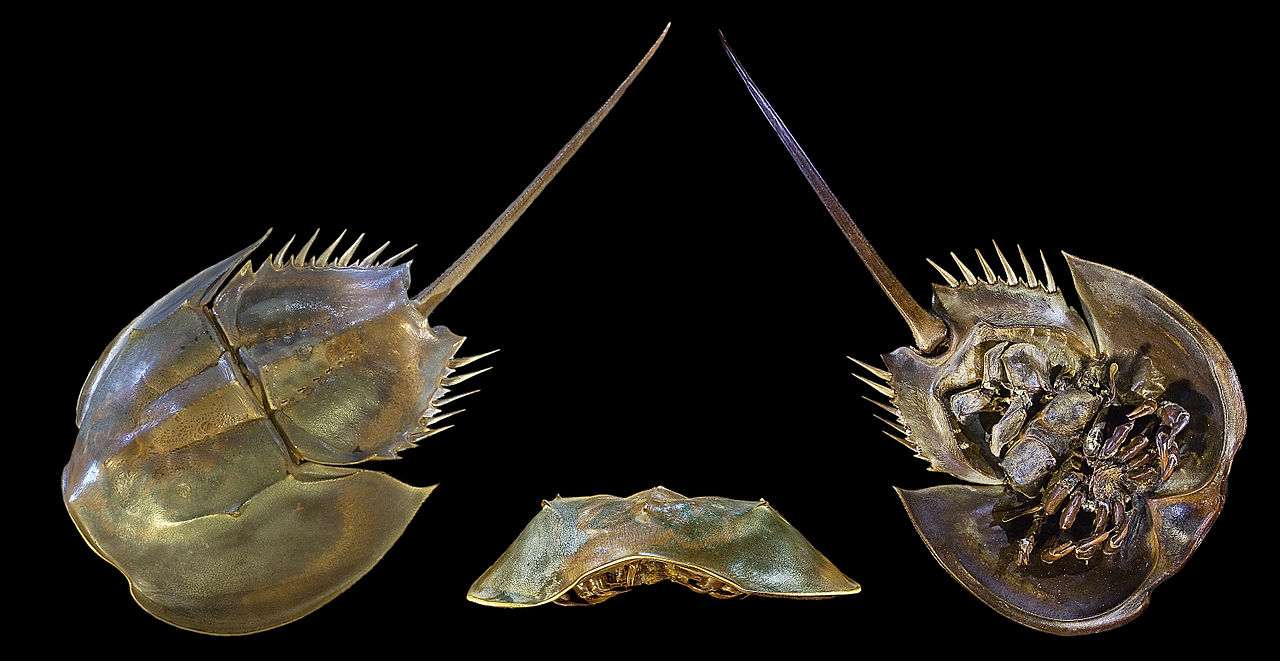
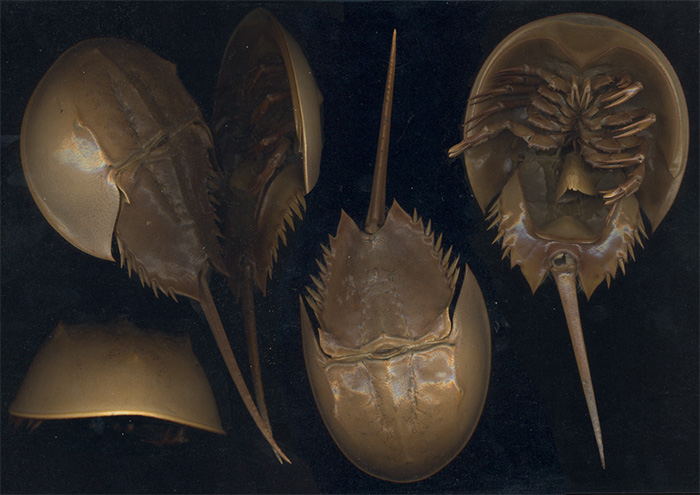
Members traditionally placed in Merostomata share the basic chelicerate body plan: a prosoma (head region) bearing chelicerae and walking legs, and an opisthosoma (abdomen) often ending in a tail spine or telson. Characteristic traits include:
- Rigid carapace covering the front body segments in both groups.
- Telson — a posterior spine used for righting in horseshoe crabs and present as a tail extension in many eurypterids.
- Respiratory structures — horseshoe crabs possess book gills adapted for breathing in water; eurypterids show a variety of lobed gill-like structures interpreted from fossils.
- Swimming and walking adaptations — eurypterids often had paddle-like appendages for swimming, while horseshoe crabs are primarily benthic walkers.
Fossil record and naming history
Eurypterids are known from abundant Paleozoic fossils and were important marine predators in many ecosystems; some forms rank among the largest arthropods in Earth history. Horseshoe crab lineages are also ancient, with relatives traceable back hundreds of millions of years, and show remarkable morphological stability. The name Merostomata was introduced by James Dwight Dana to refer initially to horseshoe crabs; later, Henry Woodward extended its use to include sea scorpions and related fossils, reflecting 19th-century attempts to group organisms by shared features rather than detailed phylogeny. For more on the historical application of the term, see nomenclatural history.
Taxonomy and modern perspective
With advances in phylogenetics, Merostomata is now seen as a historical or informal grouping rather than a clade that accurately reflects evolutionary relationships. Studies indicate that horseshoe crabs (Xiphosura) and eurypterids do not form a single natural group exclusive of other chelicerates; in particular, horseshoe crabs appear closely related to arachnids in some analyses. As a result, the name Merostomata has largely fallen out of favour in formal classifications.
Ecology, importance and human interactions
Horseshoe crabs remain ecologically significant in coastal ecosystems: their eggs are a vital food source for migratory shorebirds, and adults contribute to benthic community dynamics. They also have direct human relevance because blood from horseshoe crabs is the basis for Limulus amebocyte lysate (LAL), a biological test used to detect bacterial endotoxins in medical settings. Conservation concerns—habitat loss, overharvesting for bait, and biomedical collection—have prompted management and research into alternatives to help protect surviving species.
Notable facts and distinctions
Key points to remember: merostomes as historically defined included both extinct eurypterids and living horseshoe crabs; eurypterids dominated many Paleozoic seas while horseshoe crabs have persisted with little morphological change; modern taxonomy treats Merostomata cautiously because it does not represent a single evolutionary lineage. Today, four species of horseshoe crabs are commonly recognized worldwide, and the groups once lumped as "merostomes" continue to attract interest from paleontologists, ecologists and conservationists alike.
Related articles
Author
AlegsaOnline.com Merostomata: sea scorpions (Eurypterida) and horseshoe crabs (Xiphosura) Leandro Alegsa
URL: https://en.alegsaonline.com/art/64002