
Mariner 1: NASA’s First Mariner Mission and Its Early Failure
Mariner 1 was the United States' first spacecraft in the Mariner series, intended for a Venus flyby in 1962; it was destroyed shortly after launch after the booster veered off course.
Overview
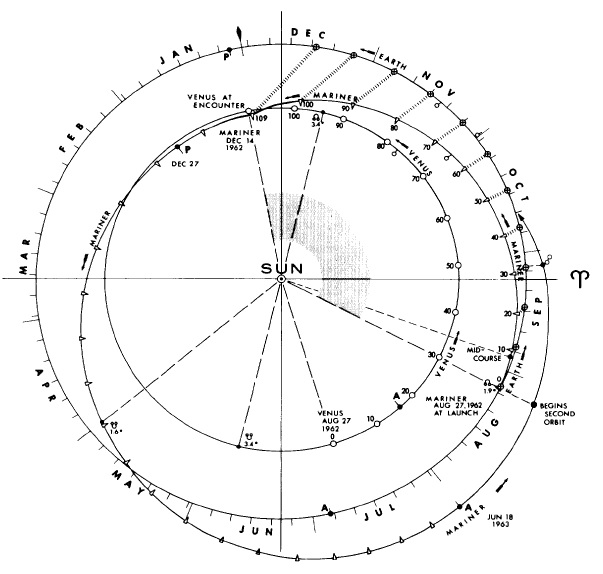
Mariner 1 was the inaugural spacecraft of the United States Mariner program, an early series of planetary probes designed to visit nearby planets. Built and managed by NASA and its contractors, the mission’s primary aim was a flyby of Venus to test long‑range guidance, communications, and instrumentation that would be used on later planetary missions. The probe never completed its objective because it was lost during ascent.
Image gallery
6 Images


Design and mission objectives
The spacecraft followed the basic design of early interplanetary probes: a compact instrument stack, telemetry and tracking systems, and a basic suite of scientific sensors for measuring magnetic fields, charged particles and planetary radiation environments. A main goal was to demonstrate the technologies needed for a successful close approach and to return engineering data about the spacecraft’s performance en route to a planetary encounter.
Launch and failure
Mariner 1 lifted off in July 1962 atop a multi‑stage booster. Seconds into the flight the launch vehicle began to deviate from its planned trajectory. At 293 seconds after liftoff, the flight safety officer initiated a destruct command and the vehicle was destroyed because it posed a hazard if it continued off course. The flight anomaly is commonly attributed to a guidance problem linked to how the vehicle’s control data were processed and interpreted; later analyses highlighted the role of a mistaken transcription in the guidance software specification and inadequate error checking.
Consequences and legacy
The loss of Mariner 1 had immediate technical and programmatic consequences. It underscored the need for more rigorous software verification, tighter preflight testing of guidance systems, and improved integration between spacecraft and booster teams. Lessons learned from this failure were applied to subsequent missions, and the follow‑on probe, Mariner 2, successfully completed a Venus flyby and returned important planetary data.
Notable facts and distinctions
- Mariner 1 is often cited as an early high‑profile example of how small errors in guidance logic or data handling can have catastrophic results.
- The vehicle remained a focus of study for improving launch safety procedures; the decision to terminate the flight illustrates the role of the Range Safety Officer in protecting people and property on the ground and downrange from a malfunctioning rocket.
- The event occurred 293 seconds after launch and is referenced in discussions of early spaceflight failures and risk management; a contemporary report recorded that the Range Safety Officer acted because the rocket had become a safety risk.
- As the first entry in the Mariner line, the mission helped define goals for planetary exploration and shaped the planning of later successful missions in the program (Mariner program).
For readers seeking more detail on the technical sequence of events, launch profile, or programmatic changes that followed, specialist histories and declassified mission reviews provide deeper analyses; introductory resources and summaries are available through archival collections and educational portals (293 seconds is a commonly cited timing for the destruct action in those accounts).
Mariner 1 remains a historically important case in early spaceflight: it demonstrates both the ambition of the first planetary efforts and the harsh consequences of design and verification shortcomings that later programs worked to remedy.
Related articles
Author
AlegsaOnline.com Mariner 1: NASA’s First Mariner Mission and Its Early Failure Leandro Alegsa
URL: https://en.alegsaonline.com/art/61944
Sources
- catless.ncl.ac.uk : "Mariner I – no holds BARred"
- faqs.org : "Planetary Probe History"
- books.google.com : p. 225