
Mariner 4: NASA's First Successful Mars Flyby and Close-Up Images
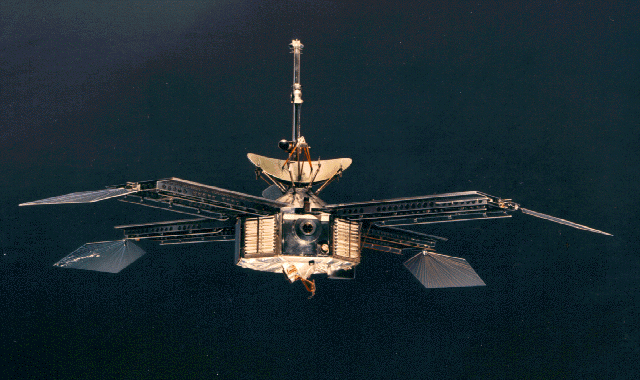
Mariner 4 was the first spacecraft to return close-up photographs of Mars and to probe its atmosphere, reshaping knowledge of the planet with a brief eight-month flyby mission launched in 1964.
Overview
Mariner 4 was an early interplanetary NASA mission and the fourth vehicle in the Mariner series. Designed as a relatively small, reliable probe, it was dispatched to perform a flyby of Mars and collect the first direct, close-range observations of another planet. Launched from Cape Canaveral on November 28, 1964, the spacecraft travelled for roughly eight months before making its encounter. The mission established several technical and scientific firsts for planetary exploration.
Image gallery
10 Images




Spacecraft and instruments
Mariner 4 carried a payload focused on imaging and environmental measurements. Its primary instrument was a television camera system that returned the first close-up pictures of Mars. In addition to imaging, the probe carried instruments to detect charged particles and cosmic radiation and used radio signals to probe the density of the Martian atmosphere. A compact engineering design and careful selection of sensors allowed the mission to achieve important science with a modest mass and budget.
Mission timeline and operations
The probe left Earth on a trajectory that would intercept Mars for a rapid flyby rather than enter orbit. During cruise it performed routine engineering checks and calibrations. On approach it took a sequence of images and transmitted data back to Earth across long distances. The encounter itself lasted only minutes to hours at close range, but the data returned over subsequent weeks contained its most significant findings. The mission is often described simply as a Mars flyby mission because it did not enter orbit or attempt a landing.
Key results and scientific impact
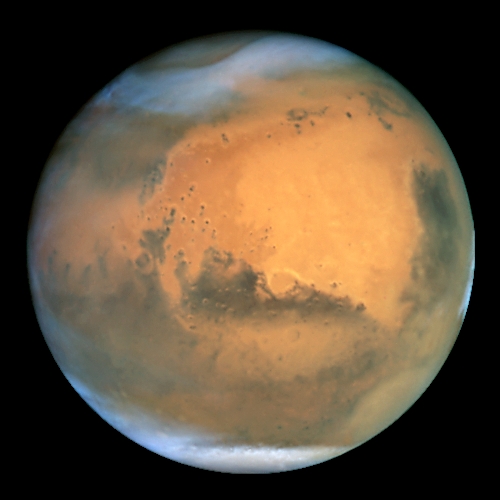
Mariner 4 returned a set of photographs that showed a cratered, heavily scarred surface, more reminiscent of the Moon than of a warm, Earth-like world. The radio occultation and other measurements indicated a very thin atmosphere, which implied that surface conditions were far less hospitable than some earlier theories had suggested. These results changed scientific expectations about Mars and influenced the planning of later missions.
Legacy, costs, and historical context
As the first successful Mars spacecraft, Mariner 4 marked a milestone in planetary exploration and demonstrated the feasibility of sending reliable probes to other planets. It was the fourth craft in the broader Mariner program, a series of missions that provided foundational data on the inner planets. The mission's total cost has been reported in historical summaries (the program and mission together are often discussed in program-level budget analyses), and its achievements helped justify subsequent, more ambitious missions.
Notable facts
- Mariner 4 delivered the first close-up images of another planet, altering popular and scientific views of Mars.
- Its instruments combined imaging with particle and radio experiments to study both surface appearance and atmospheric properties.
- The success of Mariner 4 provided operational experience that informed later Mariner missions and other planetary probes.
For further archived materials and mission summaries see institutional resources labeled as the Mariner series and historical mission pages, and consult contemporary analyses for detailed technical reports and post-mission assessments. Related contemporary documents and mission notes are available through heritage archives and program histories maintained by the agency and affiliated institutions. Additional reading on the spacecraft concept and the Mariner lineage can be found via program summaries and retrospective reviews of early planetary exploration.
Related links: spacecraft details, NASA overview, Mariner program, Mars flyby missions, launch site, atmosphere studies.
Related articles
Author
AlegsaOnline.com Mariner 4: NASA's First Successful Mars Flyby and Close-Up Images Leandro Alegsa
URL: https://en.alegsaonline.com/art/61948