
Mariana Islands
Volcanic archipelago in the western Pacific forming part of Micronesia. Includes Guam and the Commonwealth of the Northern Mariana Islands; noted for Chamorro culture, deep-sea trench, World War II history, and biodiversity.
The Mariana Islands, commonly called the Marianas, are a volcanic island chain in the western Pacific Ocean. Formed by the summits of a series of volcanic mountains, the archipelago is the southern portion of a long seamount arc that extends northward for more than fifteen hundred miles. The Marianas are part of the wider cultural and geographic region known as Micronesia. The total land area of the islands is modest, and politically the archipelago is divided between the island of Guam, an organized territory of the United States, and the Northern Mariana Islands, a commonwealth in political union with the United States that includes Saipan, Tinian and Rota among other islands.
Image gallery
10 Images




Geography and geology
The islands rise steeply from deep ocean basins and lie near the Mariana Trench, the deepest part of the world's oceans. The chain is the surface expression of subduction-related volcanic activity where an oceanic plate descends beneath another plate, producing a volcanic arc. Individual islands vary in origin and appearance: some are volcanic cones with rugged relief, others are capped by uplifted limestone formed from ancient reef systems. Many shorelines support fringing coral reefs and lagoons. The seamount arc that includes the Marianas reaches northward toward the waters near Japan and is an important feature of western Pacific geology.
Climate
The Marianas have a tropical marine climate with little seasonal temperature variation but with distinct wet and dry periods. Tropical storms and typhoons can affect the islands, bringing heavy rains and strong winds. Climate and rainfall patterns influence freshwater availability, agriculture and the condition of coastal ecosystems such as coral reefs and mangrove wetlands.
History and human settlement
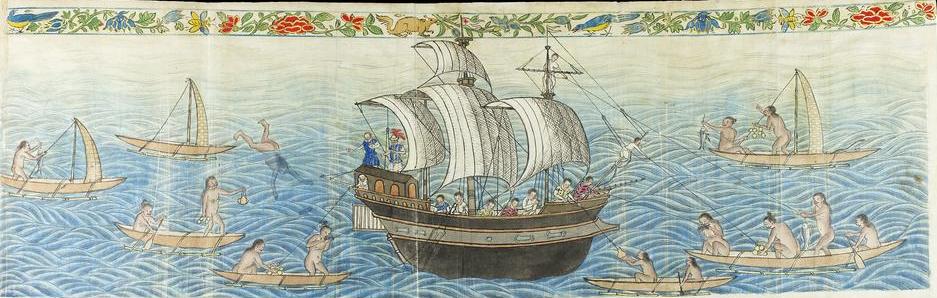
Archaeological evidence indicates that the indigenous Chamorro people settled the Marianas many centuries before European contact and developed a distinct island culture. The first recorded European sighting was by the expedition of Ferdinand Magellan in 1521; Spanish explorers later claimed the islands and, in the 17th century, named them for Mariana of Austria, a queen consort. Over subsequent centuries the Marianas experienced colonial influences, missionary activity, and shifts of control among foreign powers. In the 20th century the islands were significant in regional conflicts, notably during World War II when battles took place on Guam, Saipan and Tinian. After the war, the United States administered the islands under different arrangements: Guam as a U.S. territory and the Northern Mariana Islands eventually as a commonwealth associated with the United States.
People, languages and culture
Chamorro culture remains central throughout the Marianas, expressed in language, crafts, foodways and social customs. In parts of the Northern Marianas, people of Carolinian origin and other Pacific and Asian communities contribute to the cultural mix. Languages commonly used include Chamorro, Carolinian on some islands, and English; Spanish and other influences persist in place names and family histories. Christianity is the predominant religion, inherited from long periods of European missionary presence, though indigenous beliefs and practices continue to influence local traditions.
Ecology and conservation
The Marianas host a range of habitats from coastal reefs and mangroves to tropical forests. Coral reefs support fisheries and tourism but face pressures from coastal development, overfishing, land runoff, invasive species and climate change. Island ecosystems often include endemic plants and animals adapted to local conditions; many of these species are vulnerable to habitat loss and introduced predators. Conservation programs on the islands focus on reef protection, forest and watershed management, control of invasive species, and protection of rare species and cultural landscapes.
Economy and infrastructure
Economic activities in the Marianas include tourism, government and military employment, local services, and small-scale agriculture and fisheries. Guam has a significant role as a strategic hub for air and maritime operations in the western Pacific, and both Guam and parts of the Northern Marianas host facilities related to regional logistics and defense. Tourism, particularly visitors drawn to beaches, diving and World War II sites, is an important source of revenue for many islands, while infrastructure varies from well-developed harbors and airports to more limited services on smaller and more remote islets.
Administration and political status
Administratively the archipelago is split: Guam is an organized, unincorporated territory of the United States with its own civil government, while the Northern Mariana Islands form a commonwealth in political union with the United States. These different arrangements affect local law, citizenship and the provision of federal services. Local governments manage many day-to-day matters, though federal authorities play roles in defense, major infrastructure, and certain regulatory areas.
Notable sites and heritage
- Historic and archaeological sites that document Chamorro settlement and colonial eras.
- World War II battlefields, airfields and memorials on Guam, Saipan and Tinian.
- Marine protected areas and popular diving sites associated with coral reefs and wrecks.
Further reading and resources
For introductions and focused topics, consult the following resources and subject pages:
- Overview: Geography of the Marianas
- Island formation and volcanic arcs
- Volcanic peaks and summit islands
- Pacific Ocean context and currents
- Mariana Trench and deep sea studies
- Seamount chains and tectonics
- Guam: history and administration
- Northern extent toward Japan and oceanography
- Micronesia: regional context
- Northern Mariana Islands: government and islands
- Saipan: island profile
- European exploration in the Pacific
- Ferdinand Magellan and early voyages
- 1521 contacts and Pacific navigation
- Spanish colonial period and claim
- Mariana of Austria and the origin of the name
Related articles
Author
AlegsaOnline.com Mariana Islands Leandro Alegsa
URL: https://en.alegsaonline.com/art/61839