
Marin County, California: geography, history, and notable features
Marin County, north of the San Francisco Bay, is a historically and ecologically significant county in California known for parks, coastal landscapes, and connections to San Francisco.
Marin County lies just north of the San Francisco Bay in the U.S. state of California. The county combines suburban communities, extensive protected open space and rugged coastline. Its proximity to San Francisco and the scenic hills and shorelines make Marin a region of both residential importance and outdoor recreation.
Image gallery
10 Images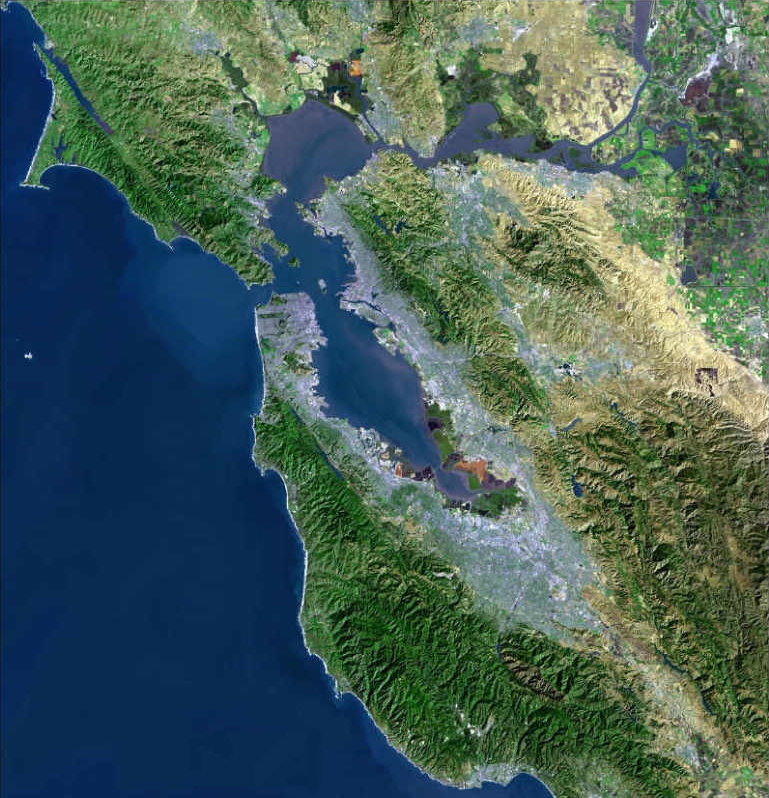









Geography and environment
Marin features a varied landscape: coastal bluffs, beaches, estuaries, redwood groves and the prominent summit of Mount Tamalpais. Much of the land is preserved as state and national parks, open-space districts, and wildlife refuges. The county's Mediterranean climate supports diverse habitats and attracts hikers, cyclists and birdwatchers.
History and development
Indigenous Coast Miwok peoples inhabited the area long before European contact. During the Spanish and Mexican periods the land was organized into ranchos. Later, the region developed small towns, agriculture and eventually suburban communities as connections to San Francisco improved, notably after the construction of major bridges and roadways.
Economy, culture and uses
Marin's economy blends residential services, tourism, outdoor recreation, arts and light industry. It is known for environmental leadership, open-space conservation and a cultural scene centered on small cities and waterfront towns. Many residents commute to jobs in the larger Bay Area while enjoying local parks and cultural institutions.
Government, notable places and distinctions
- County seat and largest city functions are centered in San Rafael.
- Prominent public lands include Muir Woods, Point Reyes National Seashore and Mount Tamalpais.
- Marin is often recognized for conservation efforts, scenic landscapes and its role as a gateway to the north bay.
The county's blend of protected natural areas, coastal access and close ties to San Francisco shapes its identity as a region where conservation, recreation and community life intersect.
Related articles
Author
AlegsaOnline.com Marin County, California: geography, history, and notable features Leandro Alegsa
URL: https://en.alegsaonline.com/art/61917
Sources
- marincounty.org : "County of Marin - Cultural Services"
- parks.ca.gov : "Mount Tamalpais State Park"
- nps.gov : "National Park Service, Muir Woods National Monument (Official Map & Guide)"
- marincounty.org : "Marin County"