
Lockheed Martin F-35 Lightning II
An accessible overview of the F-35 Lightning II family: design, variants, capabilities, development history, uses, operators, and notable debates surrounding the program.
Overview
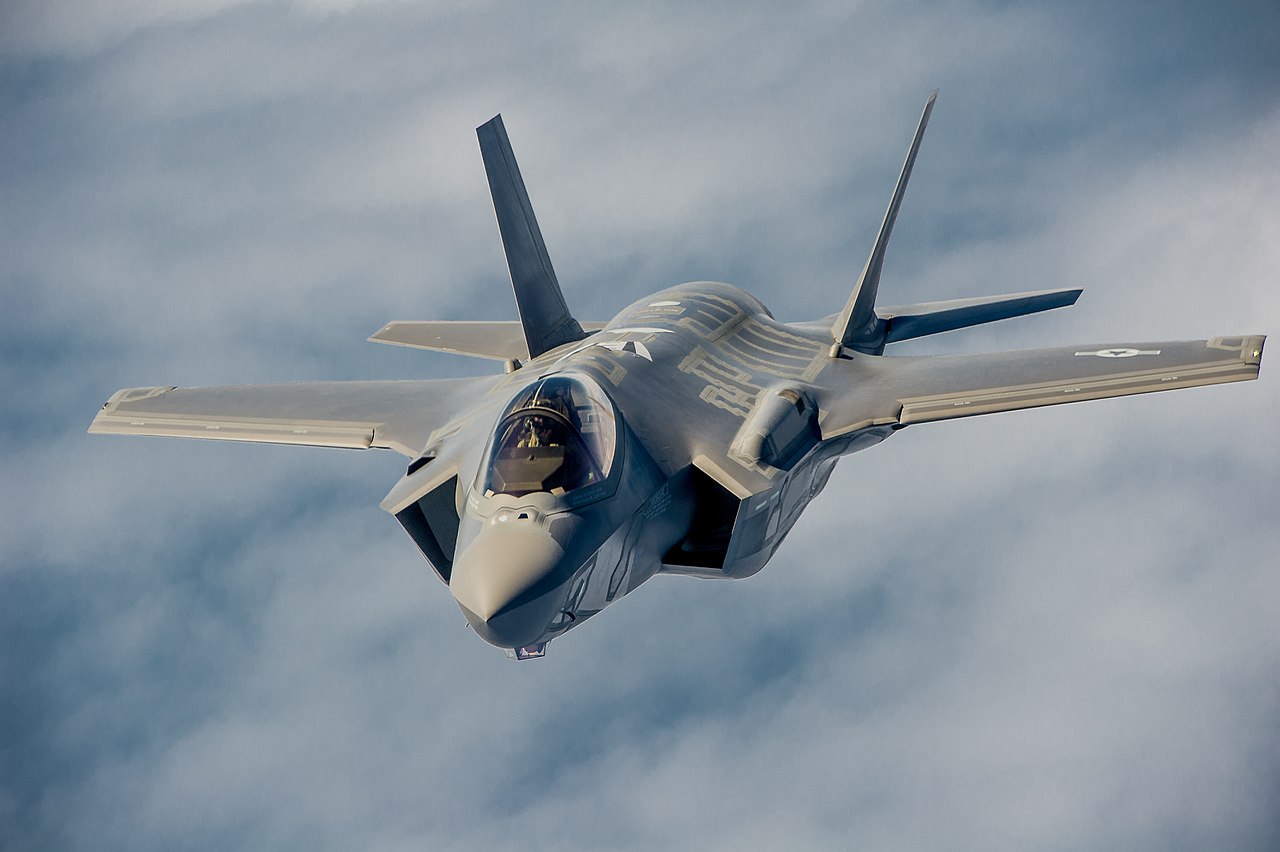
The Lockheed Martin F-35 Lightning II is a family of fifth‑generation, single‑seat, single‑engine multirole fighters developed to perform a wide range of missions including strike, reconnaissance and air superiority. Built by Lockheed Martin as the principal airframe contractor, the F-35 was designed to combine stealth, advanced sensors and networked avionics to improve survivability and situational awareness in contested airspace.
Image gallery
10 Images



Design and main characteristics
The F-35 family shares a common core but is produced in several variants to meet different service requirements: a conventional takeoff and landing version, a short takeoff/vertical landing variant for amphibious and expeditionary forces, and a carrier‑based model. Key design goals emphasized low observable features, sensor fusion, and interoperability with allied forces.
- Multirole capabilities: intended for precision ground attack (strike), tactical reconnaissance (reconnaissance) and air defense (air superiority).
- Stealth and signature management: shaping and materials reduce radar and infrared detectability (stealth technologies).
- Integrated sensors: an array of onboard radar, distributed apertures and electro‑optical systems that support a fused tactical picture.
- Avionics and networking: designed to share data with other platforms and command networks.
Development and history
The F-35 emerged from the Joint Strike Fighter competition as a multinational effort to replace multiple aging types in U.S. and allied inventories. Its program combined commonality across variants with extensive software development to enable advanced capabilities. The complexity of integrating stealth, propulsion, and sensor suites led to a long development cycle with iterative test and fielding phases.
Roles, operators and examples of use
Operators have used the F-35 for a mix of missions: precision strike against defended targets, intelligence‑gathering with its sensor package, suppression of enemy air defenses and force‑multiplier roles that extend the reach of other aircraft. The type is intended to operate alongside conventional fighters and to support distributed operations by connecting to ground and maritime assets. The program has been a core component for services such as the U.S. Air Force as well as partner nations' air arms.
Notable distinctions and controversies
The F-35 is often noted for its combination of stealth, advanced sensors and pilot‑centered interfaces (including helmet systems and sensor fusion). At the same time, the program has attracted debate: critics point to schedule delays, rising development and sustainment costs, and technical challenges such as software maturity and maintenance logistics. Supporters emphasize that the aircraft brings a new level of data sharing, survivability and mission flexibility that current legacy fleets cannot match.
Importance and future outlook
As production and upgrades continue, efforts focus on enhancing software, expanding interoperability, and reducing lifecycle costs. The F-35 remains a focal point in discussions about airpower modernization, coalition operations, and how stealthy, sensor‑rich platforms fit into future conflict scenarios.
Questions and answers
Q: What is the Lockheed Martin F-35 Lightning II?
A: The Lockheed Martin F-35 Lightning II is a family of single-seat, single-engine, fifth generation multirole Fighter aircraft under development to perform ground attack, reconnaissance, and air defense missions with stealth capability.
Q: What has been the controversy surrounding the F-35 project?
A: Many people feel like the US Air Force has been spending too much money on the F-35 project, and that the government should halt all development of the project.
Q: How many generations does this fighter aircraft belong to?
A: The Lockheed Martin F-35 Lightning II belongs to fifth generation multirole Fighter aircraft.
Q: What are some of its capabilities?
A: The Lockheed Martin F-35 Lightning II can perform ground attack, reconnaissance, and air defense missions with stealth capability.
Q: Who is developing this fighter aircraft?
A: The Lockheed Martin Corporation is developing this fighter aircraft.
Q: Is there any other opinion about halting its development?
A: Yes, some people believe that further development of the project should continue despite its high cost.
Related articles
Author
AlegsaOnline.com Lockheed Martin F-35 Lightning II Leandro Alegsa
URL: https://en.alegsaonline.com/art/58777
Sources
- defense.gov : "Adjustments Put F-35 on Track, Program Director Says"
- aviationweek.com : Cost Predictions Rattle Foreign Customers&next=0 "JSF Cost Predictions Rattle Foreign Customers."
- lse.co.uk : "US Navy, Air Force may field F-35s later than 2016." · archive.is
- irconnect.com : "Northrop Grumman Begins Assembling First F-35 Production Jet."
- saffm.hq.af.mil : "FY 2012 Budget Estimates"
- pogoblog.typepad.com : "JSF Likely Far More Expensive Than Aircraft They're Replacing."
- aviationweek.com : "Canada Expects Much Higher JSF Unit Costs."
- globes.co.il : "Knesset Finance Committee approves F-35 deal."