
Long-range shooting: principles, equipment, and applications
Long-range shooting is making accurate shots at distances beyond ordinary engagement. Covers equipment, ballistics, technique, history, uses, safety, and distinctions between precision and extreme-range shooting.
Long-range shooting is the practice of placing accurate shots at distances that exceed what an average rifle and shooter will typically achieve. The term is relative: historic firearms using black powder and simple sights limited effective ranges to tens or a few hundred yards, whereas modern precision shooters regularly engage targets at hundreds to thousands of yards, and some specialist marksmen reach beyond one mile (1.6 km). Contemporary long-range shooting combines rifle design, ammunition consistency, optics and a deep understanding of external ballistics.
Image gallery
5 Images

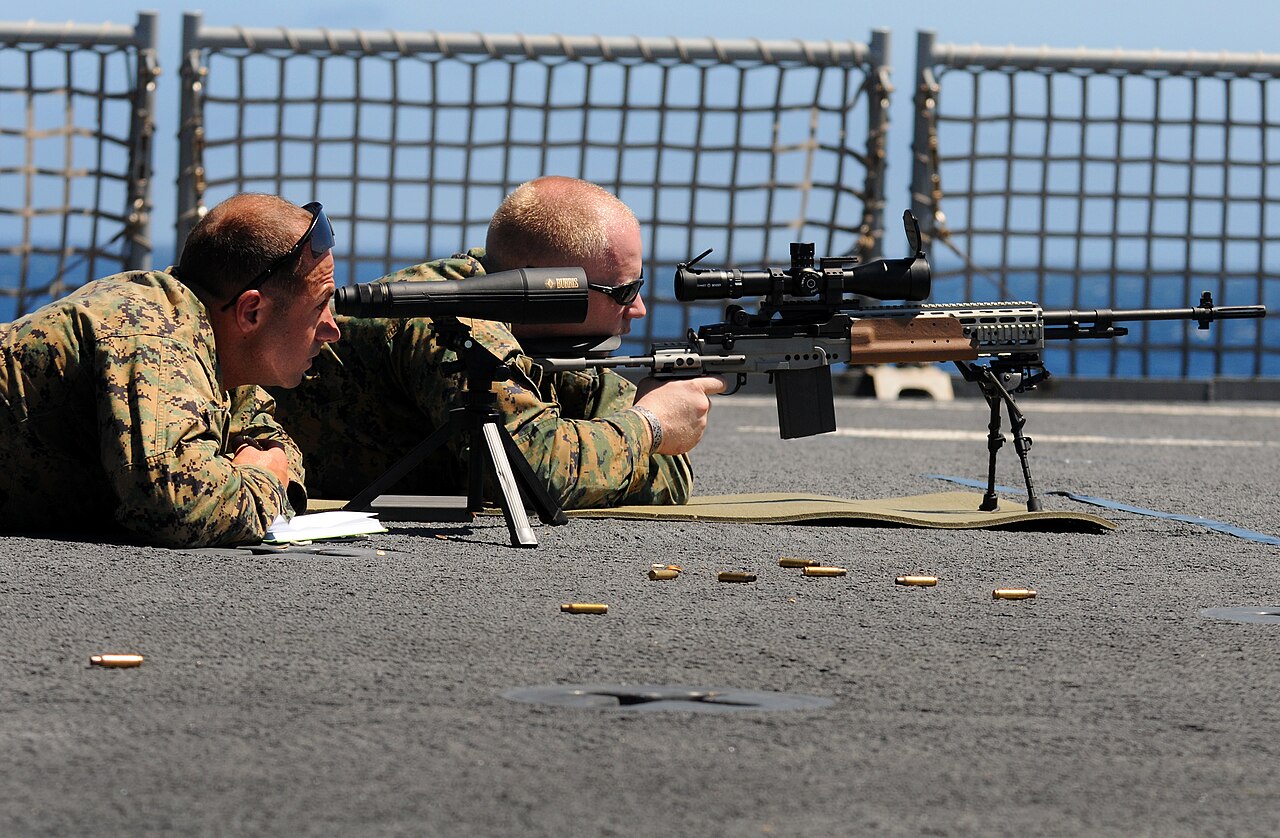


Core components and equipment
Success at long range depends on a combination of quality hardware and reliable data. Key items include a stable, accurately manufactured rifle action and barrel, match-grade ammunition, a high-quality optic, and accessories such as bipods or rear bags. Equally important are measuring tools and software: laser rangefinders, ballistic calculators and environmental sensors that help translate conditions into aiming corrections. Marksmanship fundamentals and consistent maintenance of components are essential.
Ballistics, environment and tools
External ballistics governs how a projectile travels after leaving the muzzle. Shooters must compensate for gravity drop, wind deflection, air density (affected by altitude, temperature and humidity), and, at extreme distances, factors such as spin drift and the Coriolis effect. Practical long-range shooting routinely uses ballistic tables and calculators to convert those inputs into holdover and windage adjustments. Modern practice blends field measurements with electronic tools: rangefinders, ballistic apps and atmospheric meters.
Techniques, training and practice
Good technique reduces variables: stable positions, consistent cheek weld, controlled breathing and a smooth trigger press. Training emphasizes the interplay of fundamental rifle handling and the application of ballistic data: reading wind, estimating range, and confirming hits. Prone and supported positions are common in precision work, while positional shooting is trained for hunting or tactical roles. Many shooters learn through formal courses, clubs and competitions that simulate real-world challenges. See resources on historical marksmanship and modern training methods at specialist outlets.
History and development
The evolution of long-range accuracy followed changes in ammunition, propellants and manufacturing. Early flintlock rifles and smoothbore muskets had limited consistency; the introduction of rifling, percussion primers, and then smokeless powder gradually extended practical ranges. In the 20th and 21st centuries, precision machining, specialized cartridges and advanced optics made sub-MOA (minute of angle) groups and reliable long-range hits achievable for trained shooters. For historical context read discussions of frontier-era shooting and later military sniping traditions at historical sources.
Uses, disciplines and distinctions
- Military and law enforcement: sniping and overwatch roles requiring accurate remote engagement.
- Competitive shooting: disciplines such as F-Class, precision rifle series and benchrest test marksmanship under rules and time limits.
- Hunting and recreation: ethical long-range harvest requires reliable equipment and an understanding of terminal performance.
It is useful to distinguish precision shooting—the pursuit of consistent group sizes at given ranges—from extreme long-range, where environmental unpredictability and minute ballistic effects demand additional expertise. Safety, ethics and legal compliance are fundamental; check local rules and training programs before attempting advanced ranges. For community guidance and forums, consider established instructional platforms and clubs: training networks and shooting associations.
Long-range shooting sits at the intersection of craft, science and discipline. Practitioners engage with material science (ammo and barrel), applied physics (ballistics), and human factors (technique and decision-making). Whether pursued competitively, professionally, or recreationally, it rewards careful study, iterative practice and respect for safety and the environment.
Questions and answers
Q: What is long range shooting?
A: Long range shooting involves accurate shooting at distances that ordinary rifles and shooters cannot reach.
Q: What example is given to illustrate long range shooting capabilities in the past?
A: Daniel Boone was able to hit a target up to 100 yards away using a flintlock rifle.
Q: What is the range of the targets that expert marksmen are hitting today?
A: Expert marksmen are hitting targets well over 1 mile (1.6 km) away.
Q: What does modern long range shooting entail?
A: Modern long range shooting involves more than just using modern machined actions and precision gun barrels.
Q: Can a decent shooter hit targets at 250 yards using modern long range shooting equipment?
A: Yes, a decent shooter can hit targets at about 250 yards using modern long range shooting equipment, which were unheard of by black powder shooters.
Q: How has long range shooting evolved over time?
A: Long range shooting has evolved from being able to hit targets at up to 100 yards using flintlock rifles to being able to hit targets over 1 mile away using modern long range shooting equipment.
Q: What distinguishes modern long range shooting from traditional shooting practices?
A: Modern long range shooting involves using specialized equipment, techniques, and skills to hit targets at much greater distances than those achievable with traditional shooting practices.
Related articles
Author
AlegsaOnline.com Long-range shooting: principles, equipment, and applications Leandro Alegsa
URL: https://en.alegsaonline.com/art/59105
Sources
- science.howstuffworks.com : "How Military Snipers Work"
- millettsights.com : "Shooting Tips; Making a 2700-Yard shot"
- centralvirginiatactical.com : "The Importance of the Sniper's Spotter/Observer"