
Lockheed P-38 Lightning
Twin-boom, twin-engine American World War II fighter by Lockheed; long-range escort, interceptor and reconnaissance aircraft noted for concentrated nose armament and versatile service in both theatres.
Overview
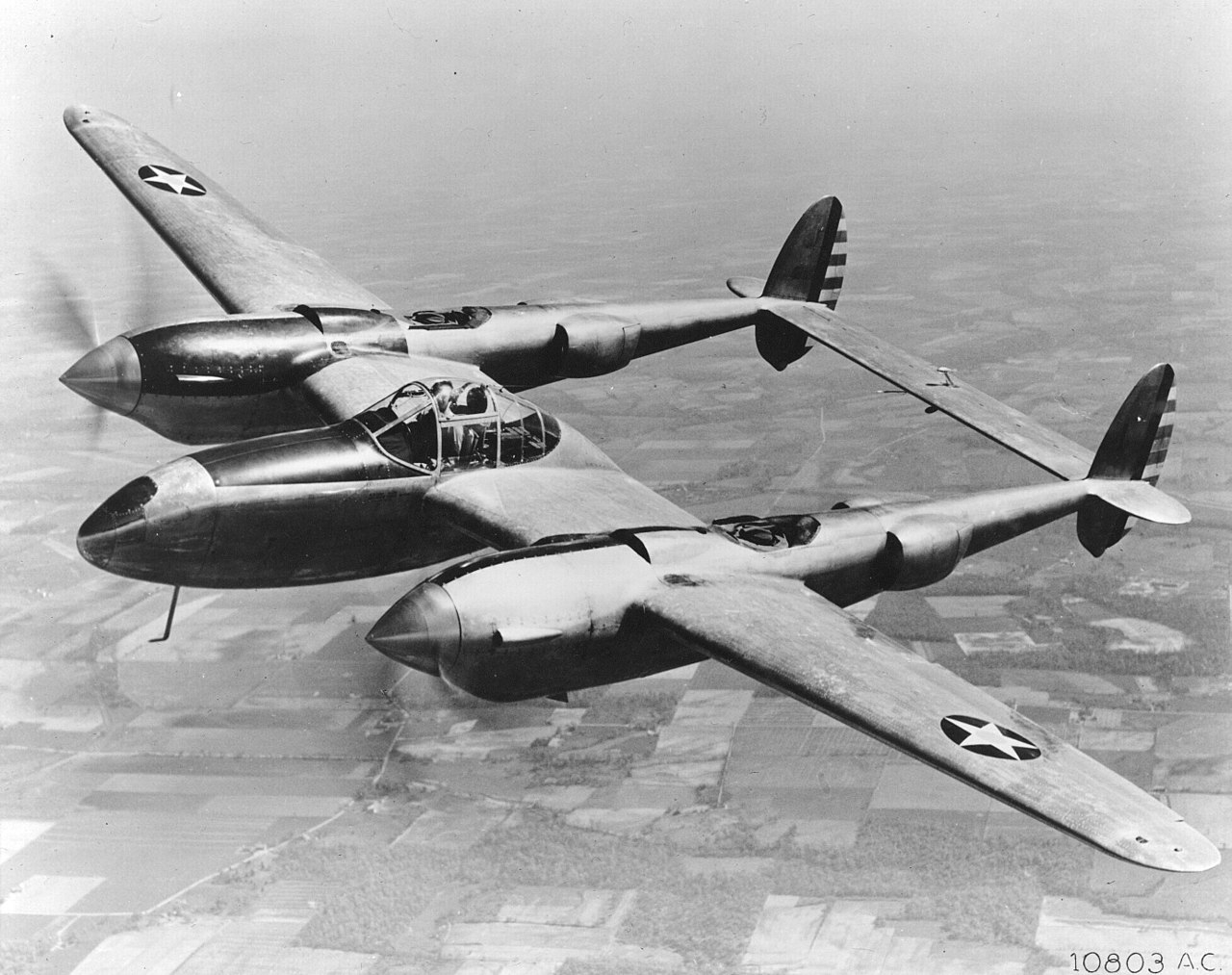
The Lockheed P-38 Lightning is a distinctive American twin-engine fighter of World War II, developed and built by Lockheed. With its twin-boom tail and central cockpit pod, the P-38 combined range, speed and heavy nose-mounted firepower to perform escort, interception, ground-attack and photographic reconnaissance roles. The prototype first flew in 1939 and the type entered service in the early 1940s, remaining in frontline use through the end of the war.
Image gallery
10 Images


Design and characteristics
The Lightning employed two Allison V-1710 liquid-cooled engines mounted in twin booms with a central fuselage pod for the pilot and armament. Early models used turbo-superchargers to maintain power at altitude, and counter-rotating propellers reduced torque effects. The layout offered redundancy from twin powerplants and permitted substantial internal fuel and equipment capacity, helping deliver unusually long range for a fighter of its era. Initial production aircraft encountered high-speed aerodynamic control problems that were addressed through subsequent aerodynamic and control modifications.
Armament and performance
Unlike many contemporary fighters that placed guns in the wings, the P-38 concentrated its weapons in the nose. Typical armament comprised four .50-caliber machine guns and a 20 mm cannon mounted to fire through the propeller arc, providing a concentrated and accurate forward burst without complex harmonization. The Lightning could also carry bombs or external fuel tanks for extended operations. With top speeds reported at over 400 miles per hour in combat conditions, it ranked among the faster fighters of the early war period.
Operational history
The P-38 served widely with the United States Army Air Forces in both the European and Pacific theaters. Its long range and endurance were particularly valuable in the Pacific, where it escorted bombers, attacked shipping and provided air superiority across vast distances. In Europe the type saw important early service but was gradually supplemented and in many missions replaced by long-range single-engine escorts as those became available.
Reconnaissance and specialised roles
Photo-reconnaissance versions, often given F-designations, removed guns to accommodate cameras and extra fuel, and conducted high-altitude and long-range mapping and intelligence flights. These variants contributed a significant share of wartime aerial photography and were prized for their speed and range. The basic airframe was also adapted into fighter-bomber and other specialised versions to meet changing operational needs.
Notable pilots and missions
The P-38 was flown by several of the United States' highest-scoring aces in the Pacific, and it was flown on some of the war's most famous missions, including the long-range interception that resulted in the death of a senior enemy admiral in 1943. Renowned pilots associated with the type include some of the service's top-scoring airmen, who exploited the Lightning's speed, firepower and range.
Variants, production and replacement
The Lightning evolved through multiple production variants that improved engines, armament, equipment and handling. Several thousand P-38s were produced and they served alongside other types until later long-range fighters and changing tactical requirements reduced their role in some theaters. In Europe the emergence of very long-range single-engine escorts led to the P-38's gradual replacement in many escort missions by aircraft such as the P-51 Mustang, while the Lightning continued to serve effectively in the Pacific for an extended period.
Legacy
The P-38 Lightning left an important legacy as an innovative and versatile warplane. Its twin-boom silhouette, concentrated nose armament and long-range capability influenced later thinking on fighter design and mission adaptability. Today preserved examples operate at airshows and in museums, and the type remains a subject of study for its technical solutions and wartime record. For further reading on design, operational history and variants consult specialist histories and archive collections: fighter aircraft overview, first flight and prototype history, and replacement and postwar context.
Related articles
Author
AlegsaOnline.com Lockheed P-38 Lightning Leandro Alegsa
URL: https://en.alegsaonline.com/art/58780