
Longbow: design, history, and battlefield role
A longbow is a powerful traditional weapon used from prehistory through the late medieval period; notable for its simple construction, rapid rate of fire, and profound military and cultural impact.
Overview
The longbow is a tall, usually self-contained bow designed to be drawn with two hands and fired from the shoulder. It differs from shorter bow forms in length, power and handling. Compared with mechanical devices like the crossbow, the longbow delivered a high rate of fire in trained hands, and—when paired with specially designed war arrows—could penetrate the period's armour at typical combat ranges, damaging mail and lesser plate or slipping between plates in some cases (armour).
Image gallery
4 Images

Construction and characteristics
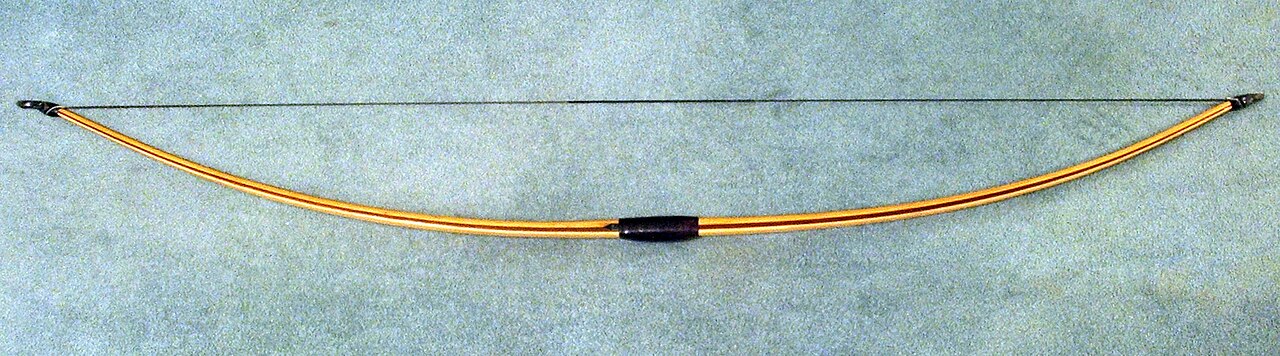
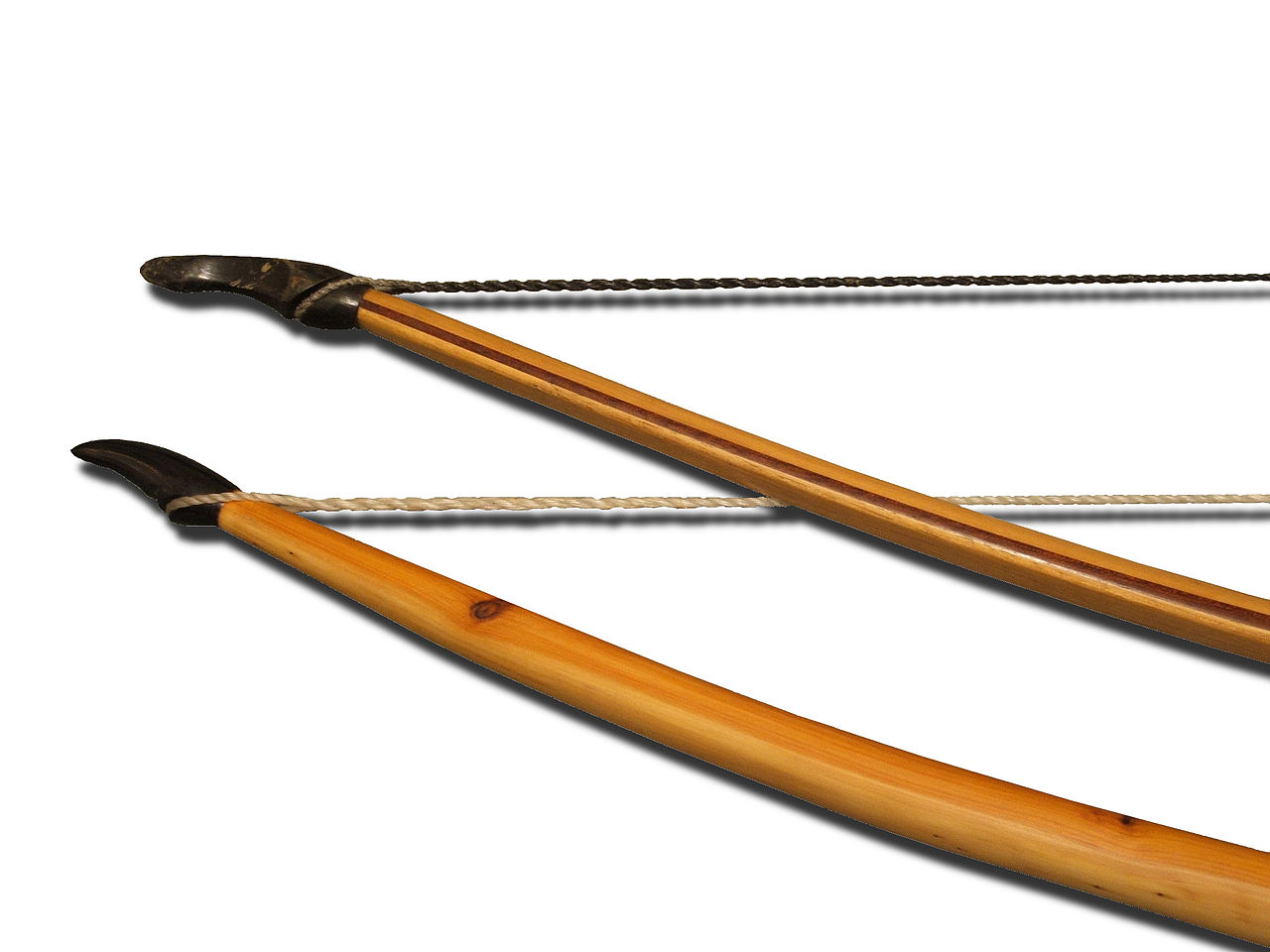
Traditional longbows were most often crafted from a single piece of wood rather than laminated components. The favored species in northern Europe was yew, prized because its heartwood provided strong compression resistance while its outer sapwood remained flexible in tension. Craftsmen harvested timber at particular seasons to reduce warping—historically winter cutting was common—and shaped the stave so that the flat face pointed toward the target while the rounded belly faced the archer. Although the longbow's profile appears simple, subtle tapering and careful tillering were essential to provide even bending and consistent performance (wood).
History and development
Longbows are archaeologically attested across Europe from late prehistoric periods, including finds that date to the Mesolithic, and they evolved in form and use over millennia. Their prominence rose in the Middle Ages, especially in the British Isles and parts of France and Spain, and they remained a dominant missile weapon until the widespread adoption of gunpowder weapons in the 15th and 16th centuries (Middle Ages). Over that long span, both bowyers and archers refined tools, draw techniques and arrow types to meet changing battlefield requirements.
Tactics, training, and battlefield role
Longbowmen were trained to sustain rapid volleys: disciplined units could release several arrows per minute each, and massed ranks firing together created dense arrow showers intended to disrupt, wound and demoralize enemy formations. Commanders often deployed longbowmen on flanks or forward of main lines and combined their fire with stakes, pits or other obstacles to blunt cavalry charges. Because archers might be engaged in close combat if the fight closed, they typically carried a secondary weapon—commonly a short sword, knife or a heavier implement such as a battle-axe—for self-defence.
Advantages, limits and logistics
Advantages of the longbow included a relatively low material cost compared with mechanical siege or repeating weapons, rapid sustained fire, and a high degree of reliability in good equipment. Its effectiveness depended heavily on the archer's strength and years of practice: a powerful draw weight and consistent technique were needed to exploit the weapon's range and penetration. Limitations included fatigue for shooters, sensitivity of wooden bows to moisture and temperature, and the impressive but ultimately disruptive rise of firearms and more protective armour which reduced the longbow's battlefield dominance by the early modern era.
Legacy and notable facts
Remnants of longbows, fragments and depictions appear in museums and iconography, showing a continuity from prehistoric hunting tools to organized medieval military arms. Archaeological finds confirm that the longbow was widespread and long-lived in Europe, while historical accounts emphasize its tactical impact during key battles. The longbow also left cultural traces: it influenced laws on archery practice, social expectations for soldiery and the craft of bow-making. For further general context see introductory resources on the bow and comparative material such as the crossbow and studies of armour.
- Construction materials: wood, commonly yew.
- Historical span: from the Mesolithic through the Middle Ages into the early modern period.
- Comparative weapons: crossbow, firearms.
- Ancillary gear: battle-axe or short blades for close combat.


Japanese longbow
From Japan a variant of the longbow is known, which is called Yumi. They are considered the longest bows known in the world.
Questions and answers
Q: What is a longbow?
A: A longbow is a type of bow used mainly in the Middle Ages until the 1500s. It was made from a single piece of hard wearing, flexible wood, often from a yew tree.
Q: How did it compare to a crossbow?
A: The longbow may not have been as strong as a crossbow, but it could shoot more arrows per minute.
Q: What kind of armor could stop it?
A: Only the strongest armor would be able to stop an arrow shot from a longbow.
Q: What other weapon would archers usually carry?
A: Archers (longbowmen) would usually have a second weapon, often a battle-axe, if the fighting came close to them.
Q: How was the longbow constructed?
A: The longbow was constructed with one side facing the target being made of flexible sapwood and the belly (facing the archer) being round and made of strong heartwood (from the center of a tree).
Q: How did groups of archers use their weapons together?
A: Groups of longbowmen would shoot at the same time and their arrows would come down like hail which often scared off enemies.
Q: When were longbows first used in Europe?
A: Longbows have been found in Europe as far back as the Mesolithic period.
Related articles
Author
AlegsaOnline.com Longbow: design, history, and battlefield role Leandro Alegsa
URL: https://en.alegsaonline.com/art/59115