
Lockheed P-3 Orion maritime patrol aircraft
Four‑engine turboprop maritime patrol and anti‑submarine aircraft developed by Lockheed in the late 1950s; long‑endurance platform used worldwide in surveillance, ASW, and special missions.
The Lockheed P-3 Orion is a long‑range, four‑engine turboprop aircraft developed from the civilian L-188 Electra airliner to meet maritime patrol and anti‑submarine warfare (ASW) requirements. First introduced to service in the early 1960s, the P-3 became a mainstay of naval aviation for persistent overwater surveillance, submarine detection and a variety of other maritime missions. Hundreds of airframes were produced and served with the United States Navy and many international operators.
Image gallery
10 Images


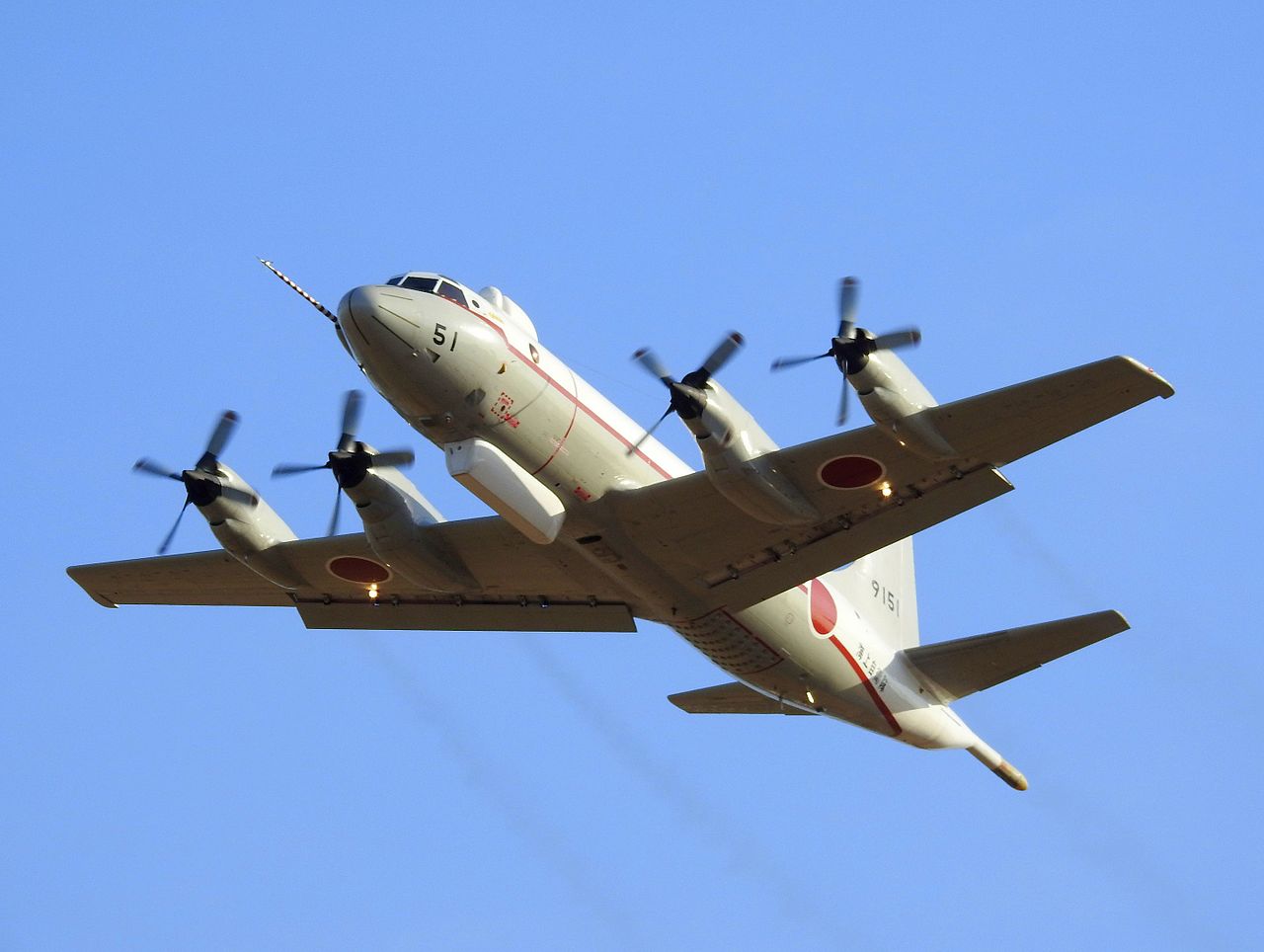


Design and key features
The Orion is optimized for long on‑station endurance. It is powered by four T56-series turboprop engines that drive large constant-speed propellers, providing fuel efficiency and loiter capability at low to medium altitudes. A characteristic feature is the slender tail boom that carries a magnetic anomaly detector (MAD) used to sense disturbances in Earth’s magnetic field caused by large submerged objects such as submarines. The airframe includes an internal weapons bay and external hardpoints for torpedoes, depth charges, missiles and other stores.
- Propulsion: four turboprop engines for long endurance and efficient cruise.
- Sensors: surface search radar, sonobuoy launch and processing systems, acoustic processors, MAD boom, and electronic surveillance measures.
- Payload: internal weapons bay plus wing pylons for torpedoes, anti‑ship missiles, mines and auxiliary fuel tanks.
- Crew: typically a flight crew and a team of mission specialists; crew sizes commonly range from about 8 to 12 depending on mission and variant.
Variants and mission adaptations
Over its production life the P-3 family evolved through multiple blocks and special conversions. Early models were produced as P-3A and P-3B, with later P-3C blocks receiving progressive avionics, acoustic and processing upgrades. Numerous national variants include airframes upgraded by operators to local standards, while specialized versions have been converted for signals intelligence (SIGINT), electronic reconnaissance and meteorological reconnaissance. The U.S. National Oceanic and Atmospheric Administration (NOAA) operates WP-3D Orions for hurricane research and weather reconnaissance.
Operational history and legacy
The P-3 Orion performed core ASW duties through the Cold War and continued to serve in diverse roles afterward, including maritime patrol, search and rescue coordination, counter‑drug operations and intelligence gathering. Many operators modernized avionics and sensors to extend service life. In the 21st century, several navies have been replacing P-3s with newer jet‑based patrol aircraft, but the Orion's longevity, adaptability and long endurance have left a lasting influence on maritime patrol aircraft design and operations.
Related articles
Author
AlegsaOnline.com Lockheed P-3 Orion maritime patrol aircraft Leandro Alegsa
URL: https://en.alegsaonline.com/art/58779
Sources
- navy.mil : "P-3C Orion long range ASW aircraft."
- p3orion.nl : "P-3 production."