
Lessemsauridae: early large-bodied sauropodomorph dinosaurs
Lessemsauridae are an early clade of large-bodied sauropodomorphs from the Late Triassic–Early Jurassic of Argentina and South Africa, showing early steps toward true sauropod body plan and gigantism.
Overview
Lessemsauridae is a name given to a group of early large-bodied sauropodomorph dinosaurs that lived in the Late Triassic and Early Jurassic. Studies place them close to the origin of true sauropods, and they are notable for combining primitive features of basal sauropodomorphs with early adaptations seen in later giant, long-necked herbivores. Fossils attributed to this group are known from parts of southern Gondwana, particularly Argentina and South Africa.
Image gallery
10 Images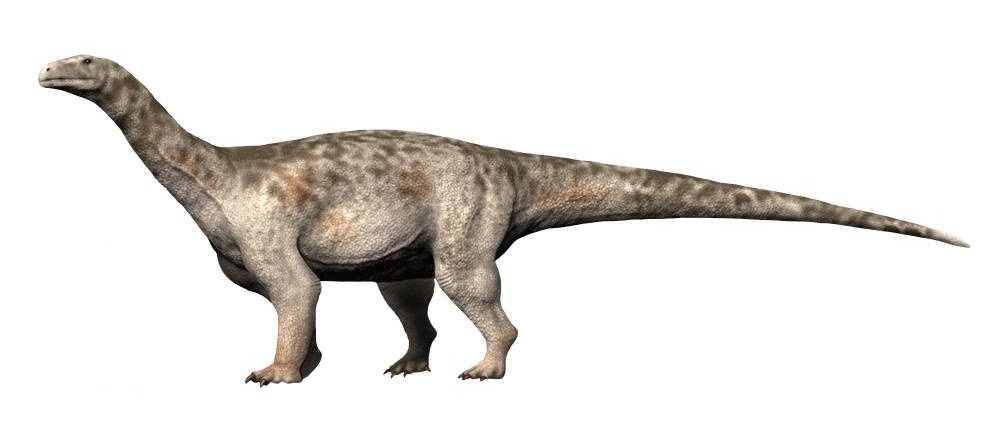


Key characteristics
Members of Lessemsauridae show a mix of traits that indicate a transition toward the classic sauropod body plan. Typical features reported in the literature include:
- Substantial increases in overall body size compared with earlier sauropodomorphs.
- Robust, column-like limb bones suggesting weight-bearing adaptations and reduced cursorial ability.
- Vertebral and pelvic changes that begin to resemble those of later sauropods, sometimes with expanded neural arches and reinforced rib articulations.
- A combination of bipedal heritage and emerging quadrupedal posture or facultative quadrupedality.
History and classification
The clade was recognized as researchers compared early sauropodomorphs and early sauropods to understand how gigantism and the sauropod body plan evolved. Several Late Triassic and Early Jurassic genera — for example, Lessemsaurus and Ingentia — have been placed in or near this group by various analyses. Phylogenetic work (including analyses published by teams such as Apaldetti and colleagues) has sought to resolve the precise branching order, showing Lessemsauridae as an important lineage near the base of the sauropod stem.
Distribution and age
Fossil remains assigned to this assemblage come from sediments deposited in the Late Triassic and Early Jurassic. These deposits record faunas from southern continents; research has highlighted material from formations in Triassic and Jurassic rock sequences across parts of Gondwana, most notably in Argentina and South Africa. The temporal span of these fossils makes Lessemsauridae important for understanding the timing of early sauropod evolution.
Importance and notable facts
Lessemsauridae are significant because they document some of the earliest steps toward the extreme body plan of later sauropods: very large size, long necks, and heavy, columnar limbs. They help paleontologists trace how locomotion, feeding strategies, and skeletal architecture shifted as sauropodomorphs moved away from small bipedal ancestors toward obligate, massive quadrupeds. Ongoing discoveries and phylogenetic studies continue to refine which genera belong to the group and how these animals fit into the broader dinosaur evolutionary tree.
For summaries of current analyses and taxonomic proposals, consult recent reviews and the primary papers cited by researchers working on early sauropodomorph relationships; these sources synthesize anatomical details and cladistic results that place Lessemsauridae near the root of sauropod evolution.
sauropod • Triassic • Jurassic • Argentina • South Africa
Questions and answers
Q: What is Lessemsauridae?
A: Lessemsauridae is a group of early sauropod dinosaurs that lived in Argentina and South Africa during the Triassic and Jurassic periods.
Q: Where did Lessemsauridae live?
A: Lessemsauridae lived in Argentina and South Africa.
Q: When did Lessemsauridae exist?
A: Lessemsauridae existed during the Triassic and Jurassic periods.
Q: Who performed the phylogenetic analysis of Lessemsauridae?
A: Apaldetti and colleagues performed the phylogenetic analysis of Lessemsauridae.
Q: What is a phylogenetic analysis?
A: A phylogenetic analysis is a study of the evolutionary relationships between organisms, based on their characteristics and genetic information.
Q: What was the result of the phylogenetic analysis of Lessemsauridae?
A: The result of the phylogenetic analysis conducted by Apaldetti and colleagues is shown in the text.
Q: Can you describe the result of the phylogenetic analysis of Lessemsauridae?
A: The text does not provide a description of the result of the phylogenetic analysis of Lessemsauridae.
Related articles
Author
AlegsaOnline.com Lessemsauridae: early large-bodied sauropodomorph dinosaurs Leandro Alegsa
URL: https://en.alegsaonline.com/art/57454
Sources
- nature.com : "An early trend towards gigantism in Triassic sauropodomorph dinosaurs"
- doi.org : 10.1038/s41559-018-0599-y
- linkinghub.elsevier.com : "A giant dinosaur from the earliest Jurassic of South Africa and the transition to quadrupedality in early sauropodomorphs"
- doi.org : 10.1016/j.cub.2018.07.063
- ameghiniana.org.ar : "Evolución de las vértebras presacras en Sauropodomorpha"
- researchgate.net : "New information on Lessemsaurus sauropoides (Dinosauria: Sauropodomorpha) from the Upper Triassic of Argentina"
- bbc.co.uk : bbc.co.uk/news/science-environment-44744153