
Newt: overview of the small semiaquatic salamanders
Newts are a group of small semiaquatic salamanders known for their life stages (efts), toxic skin secretions, and importance in ecology and scientific research. Found across Europe, Asia and North America.
Overview
Newts are small amphibians placed within the salamander lineage and commonly treated as a distinct group of the family Salamandridae. They are typically semiaquatic: many species split their lives between water and land. The term "eft" is used for the terrestrial juvenile stage of some species. For more on the broader salamander group see salamander family references.
Image gallery
10 Images




Physical characteristics
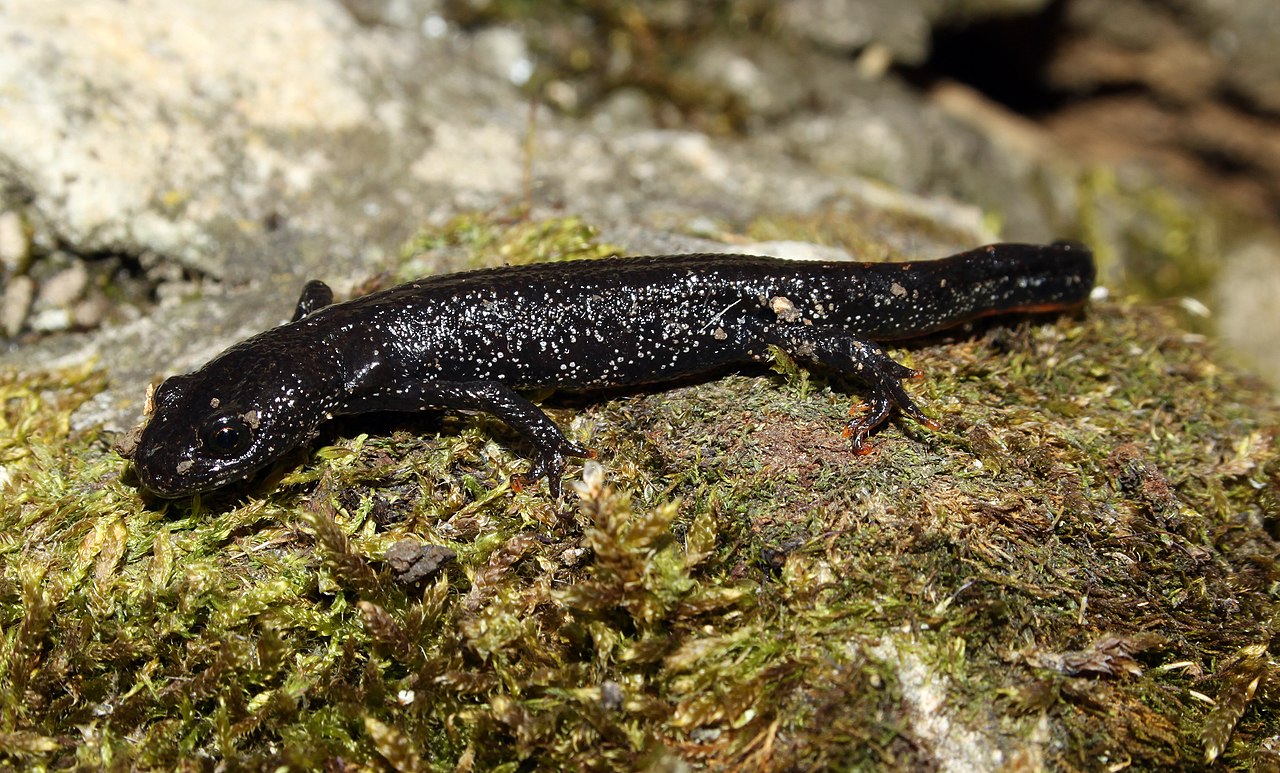
Newts usually have slender bodies, long tails and four well-developed limbs. Skin texture varies from smooth and moist to rough and granular; coloration often includes drab tones on the back and bright warning colors on the belly. Typical features include:
- Size ranging from small to medium for salamanders.
- Laterally compressed tails in aquatic phases to aid swimming.
- Toxic skin secretions in many species as a defense.
Life cycle and behavior
Most newts undergo a metamorphic cycle: aquatic eggs and larvae hatch into gilled larvae, then metamorphose into a terrestrial juvenile stage called an eft, and later become adults that may return to water for breeding. Breeding often takes place in ponds or slow-moving waters, where males display courtship behaviors and females lay strings of eggs on submerged plants.
Distribution and habitat
Newts are native to temperate regions across Europe, parts of Asia and North America. They occupy a range of habitats from garden ponds and wetlands to woodland streams. Regional resources: North America, Europe, North Asia.
Human relevance and conservation
Newts play useful ecological roles as predators of invertebrates and as prey for larger animals. They are studied in biology for their regenerative abilities and developmental biology. Conservation issues include habitat loss, pollution and disease (for example amphibian chytrid pathogens). Several species are legally protected or monitored due to declining populations.
Notable distinctions
Colloquially, "newt" is distinct from other salamanders by life-style and life-stage terms like eft, but taxonomically the boundaries are part of the broader salamander classification. Folklore has long associated newts with myths and remedies, reflecting their conspicuous skin secretions and striking colors.
Related articles
Author
AlegsaOnline.com Newt: overview of the small semiaquatic salamanders Leandro Alegsa
URL: https://en.alegsaonline.com/art/69795
Sources
- species.wikimedia.org : Salamandridae
- bsp.berkeley.edu : "Phylogeny and biogeography of the family Salamandridae (Amphibia: Caudata) inferred from complete mitochondrial genomes"
- doi.org : 10.1016/j.ympev.2008.08.020
- worldcat.org : 1055-7903
- pubmed.ncbi.nlm.nih.gov : 18801447
- caudata.org : caudata.org · web.archive.org
- cdc.gov : CDC MMWR: Reptile-Associated Salmonellosis: Selected States, 1998-2002
- bbc.co.uk : bbc.co.uk Factfile 479
- tolweb.org : tolweb.org/Salamandridae