
Land reclamation: creating usable land from water and wetlands
Land reclamation is the engineered process of creating new land from seas, rivers, lakes or wetlands using earthworks, dikes and drainage. This article explains methods, history, uses and impacts.
Overview
Land reclamation is the process of converting areas that are underwater, tidally influenced, marshy, or otherwise unsuitable for development into stable, usable land. Engineers and planners achieve this by adding material, building containment structures, draining water, or a combination of these approaches. Reclaimed land supports agriculture, urban expansion, ports, airports and infrastructure where natural dry land is scarce. The basic intent is to accelerate natural infilling processes by managing sediments, water levels, and coastal barriers.
Image gallery
10 Images




Common settings and basic principles
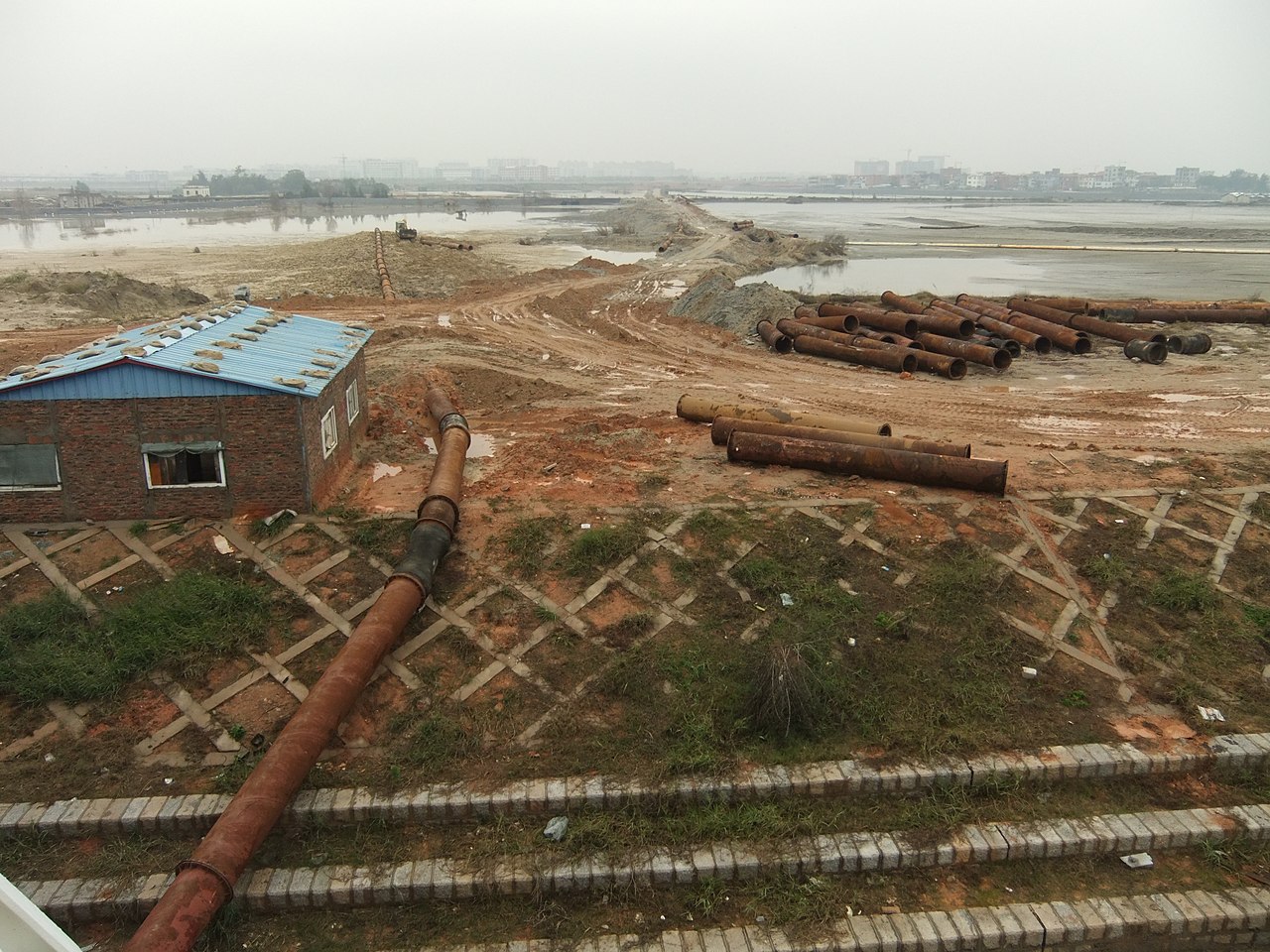
Reclamation is most frequently applied in coastal zones but also occurs in river floodplains and lake margins. It aims to create new land by raising the ground surface with sand, soil, rock or engineered fill. Natural accretion—where wind and currents deposit sand and silt—can be mimicked or hastened by human intervention. Containment and water control are fundamental: temporary or permanent barriers such as dikes or sea walls hold fill in place while drainage systems and pumps lower the water table. Pioneer vegetation, including salt-tolerant species such as Salicornia, is often used to stabilize newly exposed soils.
Principal methods
- Natural infill enhancement: encouraging sediment deposition with structures or marsh planting.
- Direct infill: depositing dredged or imported material into an enclosed area and compacting it.
- Pumping and drainage: enclosing an area and removing water with pumps; commonly used in low-lying regions.
- Engineered island construction: building large artificial landforms from fill and rock.
Reclaimed plots often require networks of channels or ditches to control groundwater and surface runoff; maintenance pumps may be necessary where subsidence or heavy rainfall threatens dryness.
History and notable developments
Human societies have reclaimed land for centuries, from simple embankments to extensive polder systems. Large-scale modern reclamation projects include poldering in the Netherlands around the IJsselmeer, as well as purpose-built platforms for ports and airports. Some contemporary efforts produce prominent artificial landforms: the construction of artificial islands for urban and commercial use is exemplified by developments like the Palm Islands in Dubai, and major port expansions such as the Maasvlakte extension of the port of Rotterdam.
Uses, benefits and examples
Reclaimed land enables the creation or expansion of:
- Ports, terminals and industrial zones where deepwater access is required.
- Transport infrastructure like airports built on flat, consolidated ground.
- Urban housing and commercial districts in densely populated coastal regions.
- Agricultural lands and flood protection polders that increase arable area.
Examples include airport platforms, harbor terminals and reclaimed agricultural polders used worldwide; each project is tailored to local tides, soils and economic needs.
Environmental and social considerations
While reclamation provides economic benefits and land supply, it also carries environmental costs: loss of wetlands and habitats, altered sediment and tidal regimes, and potential increases in flood risk elsewhere. Subsidence of loose fill and long-term maintenance of pumps and levees can create ongoing liabilities. Social issues include displacement of fisheries, changes to traditional livelihoods, and impacts on water quality. Modern projects increasingly require environmental impact assessment and mitigation measures such as habitat creation, controlled sediment management, and adaptive design.
Distinctions and final notes
Not every construction on water is technically the same: some projects are temporary platforms or floating structures, while others are permanent reclaimed land sealed and consolidated for long-term use. The term "reclamation" covers a range of techniques from enhancing natural accretion to full-scale infill and containment. For further reading and project case studies, consult engineering, coastal management and environmental planning resources online (overview, coastal, river, lake).
Relevant historical and technical examples, planning guidance, and environmental assessments can be found through specialized sources and local authorities responsible for land, water and coastal management (sediment, soil, dike, polder, saltmarsh, drainage, island, urban, regional, port, harbour).
Related articles
Author
AlegsaOnline.com Land reclamation: creating usable land from water and wetlands Leandro Alegsa
URL: https://en.alegsaonline.com/art/55791