
Lamellibrachia: cold‑seep tube worms and their chemosynthetic ecosystems
Lamellibrachia is a genus of long-lived tube worms that form symbioses with sulfur‑oxidizing bacteria, creating dense cold‑seep communities that sustain diverse deep‑sea life independent of sunlight.
Overview
Lamellibrachia is a genus of large tube worms that inhabit cold‑seep environments on the ocean floor. Rather than relying on photosynthesis, these animals gain energy through a partnership with internal chemoautotrophic bacteria that convert reduced chemicals from the seabed into organic matter. Members of this genus are among the most conspicuous foundation species at many seep sites and are related to other giant tube worms found at chemosynthetic habitats, such as the better known giant tube worms.
Image gallery
2 Images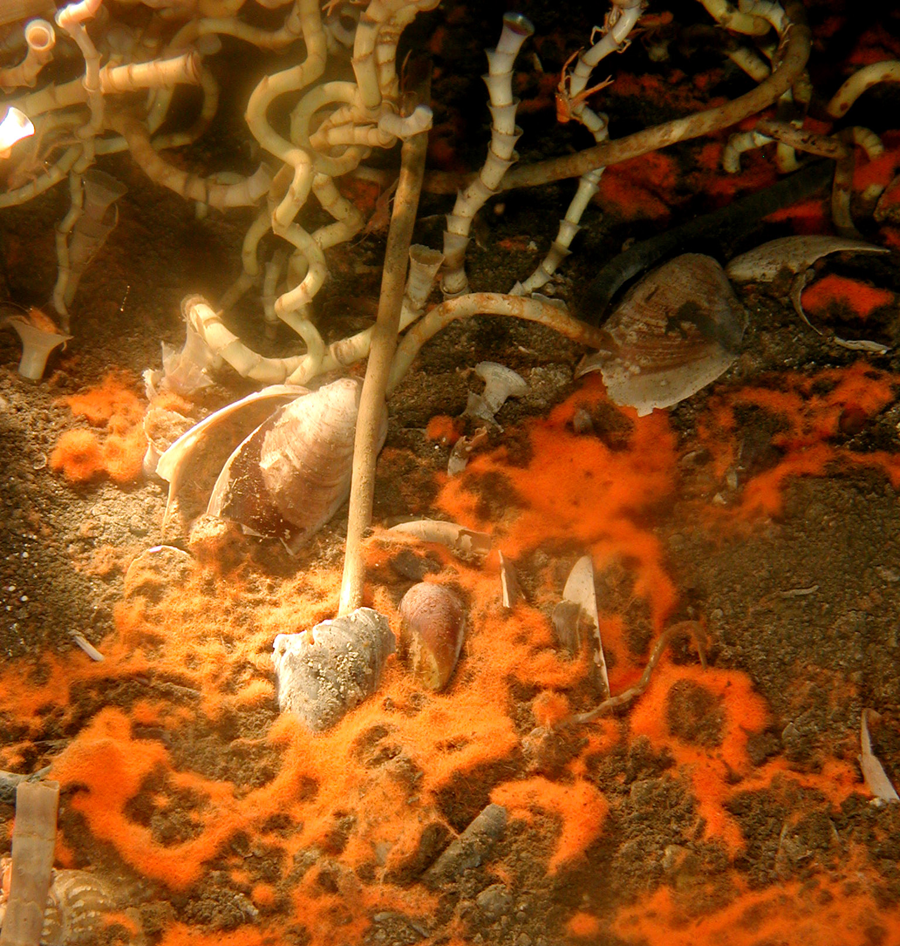

Anatomy and symbiosis
Lamellibrachia worms live inside long, chitinous tubes anchored in sediment or attached to hard substrates. The living animal has a red plume that functions in gas exchange and contains hemoglobin capable of binding both oxygen and hydrogen sulfide. Gases and dissolved chemicals are taken from surrounding seawater and transported to a specialized internal organ, the trophosome, which houses dense populations of sulfur‑oxidizing bacteria. These bacteria oxidize hydrogen sulfide to produce organic carbon that sustains the worm; the association is a classic example of symbiosis between animal and microbe. The microbes themselves belong to groups of bacteria known for their ability to oxidise reduced sulfur compounds; broadly they are described as chemosynthetic bacteria that can metabolize sulfide and related substrates (sulphide oxidation).
Habitat and ecological role
Lamellibrachia is a characteristic inhabitant of cold seeps—areas of the seafloor where hydrocarbons such as crude oil and methane escape slowly from underlying sediments. These seeps are typically found on the ocean floor along continental margins and in some deep basins. Large aggregations of Lamellibrachia form dense carpets or clumps that create a biogenic habitat, providing structure, food, and chemical niches for many other organisms. Such aggregations support diverse communities—mollusks, crustaceans, other worms and microbial mats—many of which are specialized for life at seeps and are recorded as associated species.
Life history, size and longevity
Individuals can reach several metres in length; field observations often report tubes exceeding three metres. Growth is slow compared with many shallow‑water animals, and Lamellibrachia populations appear stable over long periods because cold seeps are relatively persistent when compared with more ephemeral features like hydrothermal vents. While hydrothermal vents may be short‑lived and thermally extreme, cold seeps tend to leak chemical energy steadily. Consequently, organisms at seeps do not rely on photosynthesis and many seep inhabitants, including Lamellibrachia, can live for decades to possibly centuries; some estimates indicate lifespans measured in hundreds of years for certain species.
Importance and research
Lamellibrachia and other seep foundation species are important for carbon and sulfur cycling in the deep sea and for sustaining unique biodiversity. They are studied to understand chemosynthetic ecology, the evolution of symbiosis, and how deep‑sea ecosystems respond to natural seepage and human activities such as hydrocarbon extraction. Researchers use submersibles, remotely operated vehicles and in situ chemical measurements to study how Lamellibrachia acquire sulfide and oxygen and how their bacterial partners fix carbon.
- Notable species: examples include Lamellibrachia luymesi and other regionally distributed taxa.
- Related topics: giant tube worms, cold seeps, hydrothermal vents.
- Further reading and resources: research on seep communities and symbiosis is available through databases and marine science programs (ocean floor surveys, microbial ecology). See also links about marine hydrocarbons and their ecological effects.
For concise definitions and background on terms mentioned above, consult introductory materials on chemosynthesis, benthic ecology and marine symbioses via authoritative sources and collections of primary literature (sulphide chemistry, gas transport and hemoglobin, symbiosis overviews). Observations from many seep locales continue to refine our understanding of Lamellibrachia's biology and its role in deep‑sea ecosystems (biogenic habitats, associated fauna).
Related articles
Author
AlegsaOnline.com Lamellibrachia: cold‑seep tube worms and their chemosynthetic ecosystems Leandro Alegsa
URL: https://en.alegsaonline.com/art/55696
Sources
- doi.org : doi:10.1371/journal.pbio.0030102
- sciencedaily.com : sciencedaily.com/releases/2000/02/000203075002.htm