
Large intestine: structure, function, and clinical significance
Overview of the large intestine (colon): anatomy, functions such as water absorption and feces formation, its microbiota, common disorders, and distinctions from the small intestine.
The large intestine, commonly called the colon, is the terminal portion of the digestive tract that connects the small intestine to the rectum and anus. It is shorter but wider than the small intestine and often cited at about 1.5 metres in length (≈5 ft), with a greater internal diameter than the small bowel. Its main role is to recover water and electrolytes from luminal contents, compact undigested material into feces, and store waste until elimination by defecation.
Image gallery
10 Images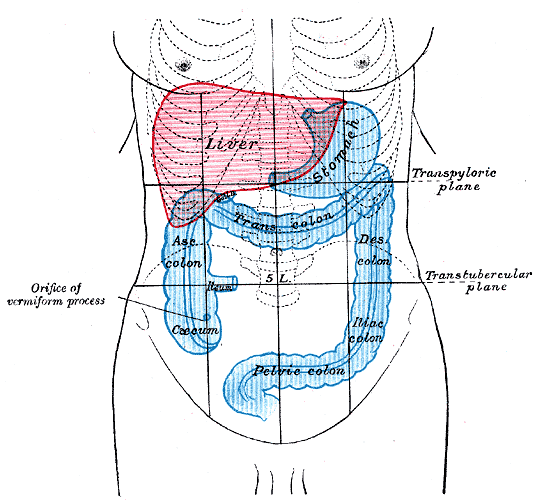


Anatomy and visible parts
The large intestine is divided into distinct regions with characteristic form and position. From proximal to distal these are:
- Cecum and appendix: a blind pouch where the small intestine empties.
- Ascending colon: rises on the right side of the abdomen.
- Transverse colon: crosses the abdomen horizontally.
- Descending colon: runs down the left side.
- Sigmoid colon: an S-shaped segment leading into the rectum.
- Rectum and anal canal: store and then expel feces through the anus.
Primary functions
Beyond simple transport, the large intestine performs several interrelated tasks:
- Absorption of water and selected ions (helping to concentrate waste).
- Fermentation of certain undigested carbohydrates by resident bacteria.
- Synthesis of small amounts of vitamins (for example vitamin K and some B vitamins) by the microbiota.
- Formation, temporary storage and controlled elimination of feces.
Microbiota and physiology
A dense and diverse microbial community inhabits the large intestine. These microbes aid digestion of fibers, produce gases and short-chain fatty acids that can supply energy to colon cells, and interact with the immune system. Motility patterns in the colon are slower than in the small intestine and include segmental mixing and occasional mass movements that propel contents toward the rectum.
Clinical relevance and distinctions
Disorders affecting the large intestine are common and range from transient problems (constipation, diarrhea) to chronic or serious conditions (inflammatory bowel disease, diverticulosis, colorectal polyps and cancer). Examination techniques such as endoscopy and imaging are used for diagnosis and screening. Functionally, the large intestine differs from the small intestine in its reduced role in nutrient absorption, larger diameter, and more prominent bacterial fermentation.
Understanding the large intestine's structure and roles clarifies why diet, hydration, microbiome composition and regular medical screening influence digestive health and disease prevention.
Questions and answers
Q: What is the large intestine and what are its other names?
A: The large intestine is a part of the digestive system that connects the small intestine to the rectum and anus. Its other names include colon and large bowel.
Q: How long is the large intestine?
A: The large intestine is about 1.5 meters long or 5 feet.
Q: How does the diameter of the large intestine compare to the small intestine?
A: The diameter of the large intestine is larger than that of the small intestine.
Q: What happens in the large intestine?
A: Water is absorbed in the large intestine, and the remaining waste material is stored as faeces before being removed by defecation.
Q: What is the function of the large intestine?
A: The function of the large intestine is to absorb water and store waste material before it is removed from the body.
Q: What are the two ends of the large intestine connected to?
A: The two ends of the large intestine are connected to the small intestine on one end and the rectum and anus on the other end.
Q: What is the importance of the large intestine in the digestive system?
A: The large intestine plays an essential role in the digestive system by absorbing water from waste material, which helps in maintaining the body's fluid balance. It also stores faeces before removal from the body.
Related articles
Author
AlegsaOnline.com Large intestine: structure, function, and clinical significance Leandro Alegsa
URL: https://en.alegsaonline.com/art/56026
Sources
- cancer.gov : "large intestine"