
Lateral line: the sensory system that lets fish feel water movement
The lateral line is a mechanosensory system in fish and some aquatic amphibians that detects water motion, pressure gradients and vibrations via hair-cell receptors, aiding orientation, hunting and schooling.
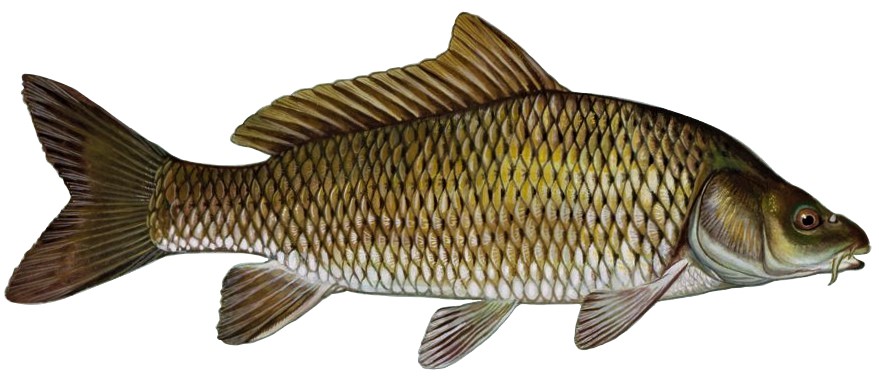
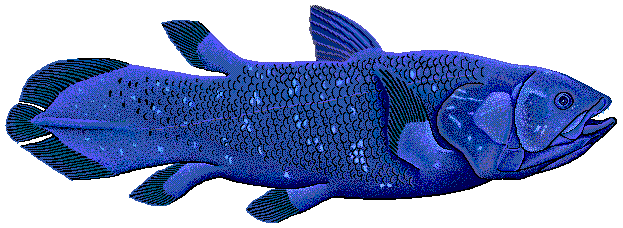
The lateral line is a distributed sensory system found along the sides of most fishes and in the aquatic stages of some amphibians. It consists of series of receptor organs that detect water motion and pressure changes in the environment, allowing an animal to sense nearby objects, currents and the movements of other animals. These sensory organs are particularly important where vision is limited, for example in murky water or at night.
Image gallery
10 Images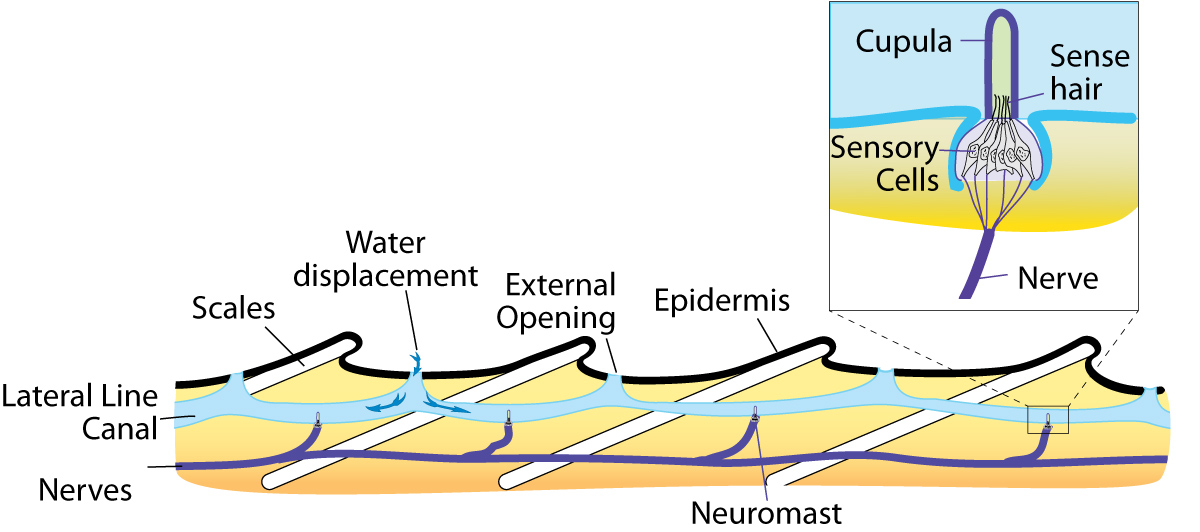





Structure and components
Externally the lateral line is often visible as faint pores or grooves running lengthwise from the head toward the tail, typically from the gill covers to the caudal peduncle. Internally it is formed from modified epithelial cells, commonly called hair cells, that are topped by a gelatinous cupula. When water moves past the skin these structures bend and the hair cells transduce mechanical deflections into electrical signals that are sent to the brain. The epithelial receptors are sometimes collectively described as modified epithelial cells and they turn mechanical input into neural impulses.
How it works
Hair cells in the lateral line respond to low-frequency flow, pulses and vibration (vibration) rather than to high-frequency sound. Afferent nerves carry the signals into the animal's central nervous system, where they are integrated with other senses. The system can detect the direction and relative strength of currents and can sense disturbances such as the vortices shed by moving bodies; for example, a predator may follow the trail of vortices produced by fleeing prey (vortices).
Functions and behavior
The lateral line contributes to a range of behaviors. It helps fishes maintain position in a school (schooling), navigate complex environments, detect approaching predators or prey, and orient relative to obstacles and substrate. In some species the lateral line's receptor organs are modified into electroreceptors, allowing detection of weak electrical fields as an additional sensory modality.
Distribution, development and related systems
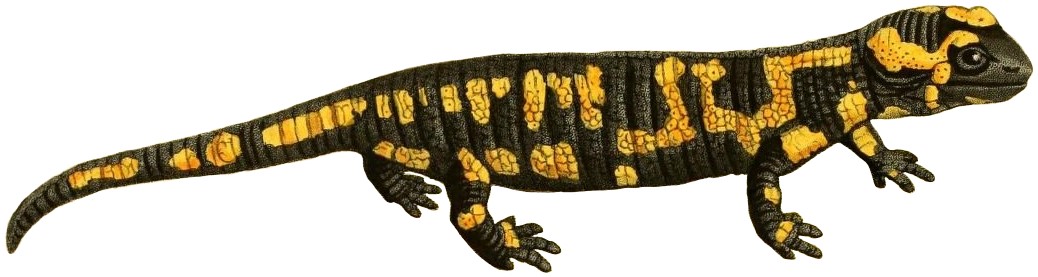
The lateral line is widespread among bony fishes and cartilaginous fishes, and a lateral-line-like system occurs in most amphibian larvae and in some fully aquatic adult amphibians (amphibian). Terrestrial vertebrates lack an operational lateral line because it functions only in an aquatic medium. During development the lateral line arises from placode-derived cell clusters that migrate and differentiate into the arranged receptors and canals seen in adults.
Importance and applications
Beyond its biological role, the lateral line has inspired technological designs in underwater robotics and flow sensors. Engineers mimic the array of hair-cell-like detectors to build arrays capable of detecting flow direction and disturbances for navigation and object detection. For further reading on anatomy, physiology and engineering applications, see these resources: overview, mechanisms, cell structure, signal transduction, neural pathways, behavioral studies, hydrodynamics, external morphology, comparative systems, developmental biology.
Questions and answers
Q: What is the lateral line system?
A: The lateral line system is a system of sense organs found in fish that detects movement and vibration in the surrounding water.
Q: What are hair cells?
A: Hair cells are modified epithelial cells that respond to changes around the fish and turn the changes into electrical impulses which go to their central nervous system.
Q: What is the function of the lateral line system in fish?
A: The lateral line system is used in schooling, predation, and orientation. For example, fish use their lateral line system to follow the vortices produced by fleeing prey.
Q: Where are the lateral lines located in fish?
A: The lateral lines are faint lines running lengthwise down each side, from the gill covers to the base of the tail.
Q: How do some species modify their lateral line receptive organs?
A: In some species, the receptive organs of the lateral line have been modified to function as electroreceptors, which are organs used to detect electrical impulses.
Q: Do land vertebrates have a lateral line system?
A: No, the lateral line system is found only in fish and not in land vertebrates.
Q: Do amphibians have a system similar to the lateral line?
A: Yes, most amphibian larvae and some fully aquatic adult amphibians have systems which work a bit like the lateral line.
Related articles
Author
AlegsaOnline.com Lateral line: the sensory system that lets fish feel water movement Leandro Alegsa
URL: https://en.alegsaonline.com/art/56192
Sources
- doi.org : 10.1007/BF00612711
- pubmed.ncbi.nlm.nih.gov : 3236259