
Larynx (voice box): anatomy, function, and clinical importance
The larynx, or voice box, is a cartilaginous organ in the neck that protects the airway and produces sound. This article explains its structure, roles in breathing and swallowing, development, and clinical relevance.
The larynx, commonly called the voice box, is a flexible cartilaginous organ situated in the front of the neck. It is an organ that forms part of the upper respiratory tract and lies above the trachea and below the pharynx. In everyday language it is most often associated with voice production, but its roles extend to protecting the airway during swallowing and contributing to respiration and reflexes such as coughing. The larynx is present in humans and many animals, with size and shape variations that affect vocal pitch and function.
Image gallery
10 Images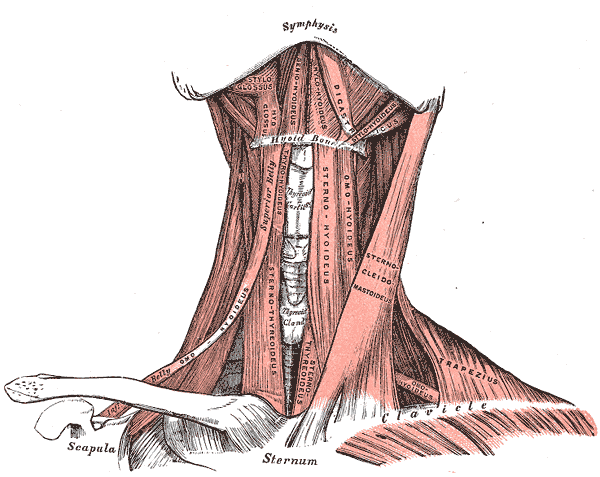




Structure
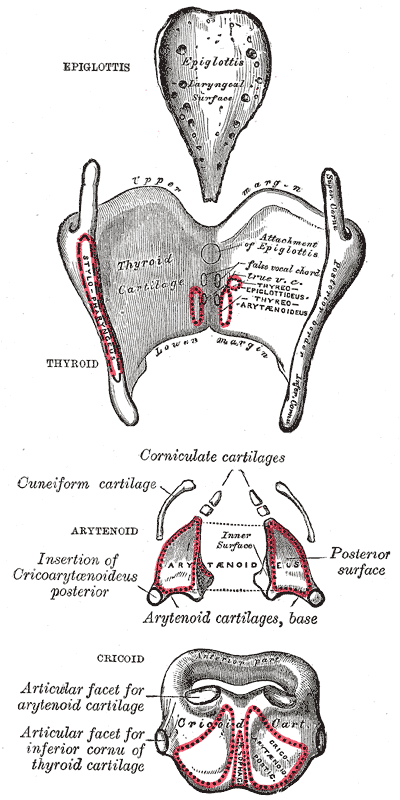
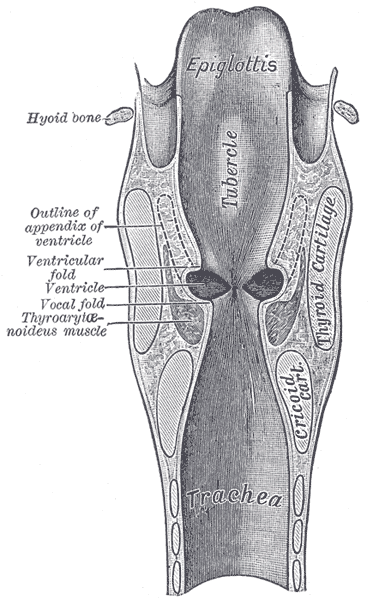
The larynx is built from several cartilages, membranes, muscles and mucosal folds. Major visible elements include:
- Cartilages — thyroid, cricoid and paired arytenoid cartilages provide a rigid frame and attachment points for muscles.
- Vocal folds (vocal cords) — two mucosal folds that can be brought together and set into vibration to produce sound.
- Epiglottis — a leaf-shaped flap that helps direct food away from the airway during swallowing.
- Muscles and membranes — intrinsic muscles adjust tension and position of the vocal folds; extrinsic muscles support and move the larynx as a whole.
Anatomical position is in the front of the neck, approximately between the levels of the third and sixth cervical vertebrae in adults, though exact placement varies with age and posture.
Functions
The larynx performs several interrelated functions:
- Phonation — sound is generated when air from the lungs passes through the closed or nearly closed vocal folds, causing them to vibrate; pitch and loudness are controlled by tension, length, and subglottic pressure.
- Airway protection — during swallowing the epiglottis and coordinated laryngeal elevation reduce the risk of aspiration; a cough reflex clears any material that reaches the laryngeal inlet.
- Respiratory modulation — the larynx helps regulate airflow resistance during breathing and activities such as lifting or valsalva maneuvers.
Secondary contributions include acting as a resonating chamber together with the pharynx and oral cavity, which shapes the quality of the voice.
Developmentally and evolutionarily, the larynx has been recognized and studied since antiquity; its detailed anatomical description advanced with dissection and microscopy. In many mammals the larynx serves similar protective and vocal functions, though structural differences account for species-specific vocalizations.
Clinically the larynx is central to several common conditions. Acute laryngitis causes hoarseness and can follow viral infection or vocal strain. Chronic disorders include vocal fold nodules and polyps, reflux-related laryngitis, and laryngeal cancer. Medical and surgical interventions range from voice therapy and medication to microlaryngoscopic procedures; in emergency settings artificial airways such as intubation or tracheostomy bypass the larynx to secure ventilation.
Notable facts: anatomical differences in laryngeal size and vocal fold mass contribute to typical pitch differences between sexes and across the lifespan. Because the larynx sits at the junction of breathing, swallowing and speaking, its integrity is essential for safe airway protection and effective communication.
For more schematic or clinical resources, see links to general references: organ overview, neck anatomy and human anatomy.
Related articles
Author
AlegsaOnline.com Larynx (voice box): anatomy, function, and clinical importance Leandro Alegsa
URL: https://en.alegsaonline.com/art/56097
Sources
- commons.wikimedia.org : Larynx
- vancouversun.com : "Rare transplant gives California woman a voice for the first time in a decade"