
Lazarus taxon
A Lazarus taxon is a group that vanishes from the fossil record for one or more intervals and later reappears; causes include sampling bias, local extinction and later recolonization or true survival in refugia.
A Lazarus taxon is a biological group — a species, genus, family or other taxon — that seems to disappear from parts of the geological or fossil record and then reappears in younger strata or in the modern world. The name alludes to the biblical story of Lazarus being restored to life; the phrase has been adopted by paleontologists to describe apparent disappearances that are not permanent. Discussions of Lazarus taxa appear frequently in studies of extinction, survival and the limits of the fossil record.
Image gallery
10 Images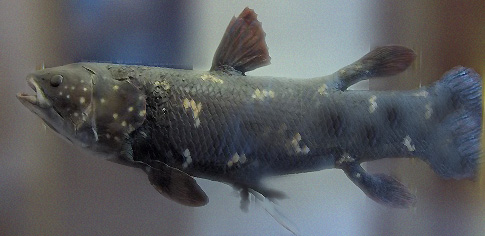




Causes and mechanisms
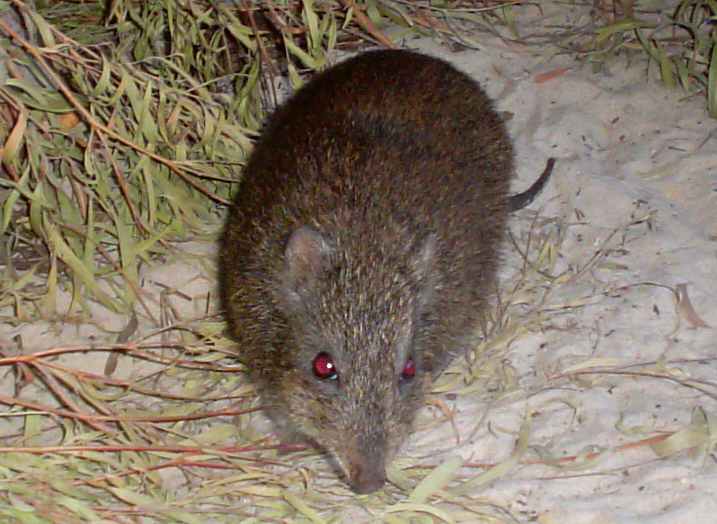
Several mechanisms can produce the pattern recognized as a Lazarus taxon. The most common explanations are sampling and preservational bias: only a tiny fraction of organisms become fossils, so a taxon that becomes rare or restricted to habitats poor for fossilization may leave no record for long intervals. This outcome is related to well-known biases in paleontology, including the Signor‑Lipps effect and the so‑called pull of the recent. Other causes include true local extirpation followed by later recolonization, survival in refugia (isolated areas where conditions remain favorable), or taxonomic revision when anatomically similar survivors are reinterpreted as the same group. In conservation and modern biology, the term can also be applied loosely to species rediscovered after being declared extinct.
History of the concept
The notion that taxa can vanish and later reappear has been recognized informally since the early days of stratigraphy, but the specific phrase "Lazarus taxon" became established in late twentieth‑century literature as paleontologists sought concise terms for recurrent patterns in extinction and recovery. The term references the Gospel of John metaphorically, and some authors use it alongside related labels such as Elvis taxon (a false reappearance caused by convergent relatives) or dead clade walking (groups that survive a mass extinction but fail to recover diversity). Discussions of Lazarus taxa helped emphasize that absence from sampled strata is not always definitive proof of extinction.
Notable examples and cases
- Coelacanths (living Latimeria) — long known from ancient fossils and later found alive in modern oceans; often cited as a classic Lazarus example.
- Monoplacophorans — a class of molluscs known from fossil beds and later discovered as living deep-sea animals, demonstrating survival in undersampled habitats.
- Several plant and invertebrate lineages show long gaps in their fossil histories yet reappear in younger deposits or as extant taxa, illustrating the variety of ways the pattern can occur.
Readers can find general background information through paleontology glossaries and taxonomic references; for specific case studies see overviews that treat fossil sampling, extinction, and rediscovery in more detail (taxon, biogeography).
Significance and caveats
Identifying a Lazarus taxon has practical and conceptual implications. It warns researchers and conservationists to be cautious when declaring extinctions based only on absence in the fossil or observational record. Lazarus patterns also inform reconstructions of past biodiversity, post‑extinction recoveries, and the resilience of lineages. However, attributing a gap to survival rather than misidentification or a separate but similar lineage (an Elvis taxon) requires careful stratigraphic, anatomical and sometimes molecular evidence. Improved sampling, targeted fieldwork in likely refugia and modern analytical techniques reduce ambiguities but cannot eliminate the inherent incompleteness of the record.
For introductory explanations and further reading about concepts linked to Lazarus taxa — sampling bias, extinction processes and rediscovery — consult general paleontology resources and conservation case histories (extinction, paleontology, biblical allusion).
Questions and answers
Q: What is a Lazarus taxon?
A: A Lazarus taxon is a taxon that disappears from one or more periods of the fossil record, only to appear again later.
Q: What is the origin of the term Lazarus taxon?
A: The term Lazarus taxon refers to the Gospel of John, in which Jesus is claimed to have raised Lazarus from the dead.
Q: Why do Lazarus taxa occur?
A: Lazarus taxa occur either because of (local) extinction, later resupplied, or as a sampling artifact.
Q: Why is the fossil record imperfect?
A: The fossil record is imperfect because only a very small fraction of organisms become fossilized, and it contains gaps not necessarily caused by extinction, particularly when the number of individuals in a taxon becomes very low.
Q: What happens to some groups in paleontology after a major extinction event?
A: After a major extinction event, some groups in paleontology reappear after millions of years.
Q: What is the usual explanation for the reappearance of some groups in paleontology after a major extinction event?
A: The usual explanation is that numbers were driven so low that their chance of fossilisation were extremely low. Then, gradually, their numbers revived.
Q: In what field was the concept of Lazarus taxon developed?
A: The concept of Lazarus taxon was developed in palaeontology.
Related articles
Author
AlegsaOnline.com Lazarus taxon Leandro Alegsa
URL: https://en.alegsaonline.com/art/56492