
Lake Blanche — ephemeral salt lake in north-east South Australia
Lake Blanche is a large, usually dry salt lake in north-east South Australia notable for episodic floods, historical European exploration, and modern mineral interest.
Overview
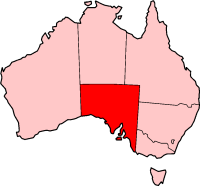
Lake Blanche is a broad, saline flat in the arid north‑eastern corner of South Australia. Most of the time it exists as a dry salt pan; during rare heavy rains or floods it can hold shallow water fed from regional channels and creeks. The lake covers a very large area — about 170,000 hectares (roughly 420,079 acres) — and is an obvious feature in aerial and satellite images of the region. Because of its flatness and high salt content it behaves like other ephemeral playa lakes in Australia’s interior, alternating between hard salt crust and shallow pools.
Image gallery
2 Images
Physical characteristics
Lake Blanche is classified as a salt lake or playa: an enclosed, low‑lying basin where evaporation commonly exceeds inflow, leaving salts at the surface. When water is present it is usually very shallow; accounts from nineteenth‑century explorers describe ankle‑deep flooding even many kilometres from the shore. The lake bed supports a crust of evaporite minerals when dry and, after filling, becomes temporary habitat for aquatic invertebrates and visiting waterbirds. Flood pulses that bring water into Lake Blanche typically come from local runoff and from channels such as the Strzelecki system, and these events are episodic rather than annual.
History of exploration and naming
European knowledge of Lake Blanche dates to early inland expeditions. Edward John Eyre encountered the feature in 1840 and at first thought it formed part of a larger horseshoe‑shaped lake near the end of the Flinders Ranges. Subsequent explorers reinforced the impression of a complex of interconnected salt pans: Captain Charles Sturt visited the shoreline in 1845 and likewise observed the extensive salt country. In 1858 Augustus Charles Gregory located a track between Lake Blanche and neighbouring Lake Callabonna, clarifying part of the local geography. The name Lake Blanche commemorates Blanche McDonnell, the wife of Sir Richard Graves McDonnell, Governor of South Australia. Earlier usage of the surrounding plain is recorded as 'Blanchewater Plains' by the surveyor Benjamin Herschel Babbage in the mid‑1850s.
Notable nineteenth‑century accounts
Several early visits illustrate how shallow the water typically is when the lake does flood. In August 1857 Captain Freeling attempted to navigate the inundated surface by boat; he found the water too shallow to float his vessel and reported walking more than 5 km into the flooded flat — still only about 3 mi of shallow water in that expedition’s account — which highlights how deceptive a wet salt plain can appear to visitors unacquainted with interior Australian landscapes.
Human uses, mineral interest and conservation
The Lake Blanche region has long been part of pastoral and exploration activity in arid South Australia and more recently has attracted interest for mineral exploration. In particular, areas near the lake have been investigated for uranium and other resources, prompting scrutiny over environmental impacts, cultural values and water dependency. Because ephemeral lakes like Blanche provide crucial but brief habitat for waterbirds and other native species when they flood, proposals for mineral development are often weighed against conservation priorities and the rights and interests of traditional owners and local communities.
Significance and distinguishing features
Lake Blanche exemplifies the ephemeral saline lakes of Australia’s interior: large in area, typically dry, and transformed intermittently by flood waters into shallow wetlands. Its historical role in early inland exploration and its continuing place in discussions about resource use and ecological management make it a notable landscape in South Australia’s arid zone. Readers seeking further maps, ecological studies or historical accounts can consult regional resources and archives for detailed surveys and expedition journals.
- Location: north‑east South Australia, inland salt plain
- Area: ~170,000 ha (420,079 acres)
- Hydrology: episodic inflow, shallow flooding, high evaporation
- Human context: explored in the 19th century; subject of mineral exploration
For maps, historical expedition narratives and contemporary environmental assessments, consult local government and heritage resources and specialist publications on Australia’s inland salt lakes.
Related links: salt lake, Charles Sturt, 5 km.
Related articles
Author
AlegsaOnline.com Lake Blanche — ephemeral salt lake in north-east South Australia Leandro Alegsa
URL: https://en.alegsaonline.com/art/55466
Sources
- bonzle.com : "Map of Lake Blanche in South Australia"
- sahistorians.org.au : "29 August 1857 Captain Freeling and Lake Blanche"
- cameco.com : "Cameco - Australia"