
Benjamin Herschel Babbage (1815–1878) — English scientist and Australian explorer
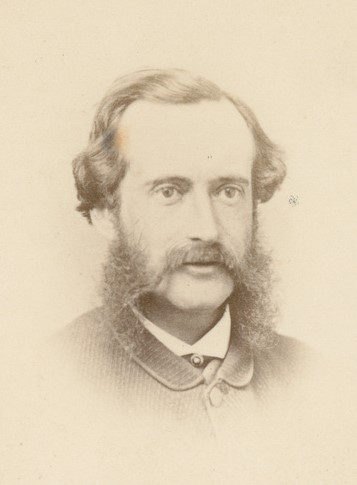
Benjamin Herschel Babbage (1815–1878) was an English scientist, engineer and explorer who surveyed parts of South Australia, advised on the Overland Telegraph and later retired to a vineyard at St Marys.
Benjamin Herschel Babbage (1815–1878) was an English scientist, engineer and explorer best known for survey work in colonial South Australia and later involvement in infrastructure planning. He was a son of the prominent Victorian mathematician Charles Babbage and is frequently mentioned in accounts of that family; some contemporary notices also refer to the family name as Charles Babbage in descriptions of their background. Surviving letters, reports and sketches by Benjamin are preserved in several archives and are used by historians studying colonial surveying.
Image gallery
4 Images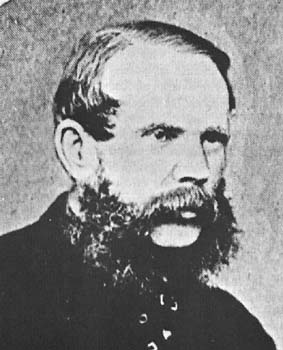


Early career and move to Australia
Babbage, born in 1815 in England, trained and worked in fields that combined practical engineering with scientific observation. In the mid‑19th century he emigrated to the colony of South Australia, where he undertook official survey and exploration work. His tasks emphasized careful mapping of local geography and the search for economically important minerals, matters of immediate interest to a growing colony seeking arable land and mineral resources.
Field methods and expedition equipment
Babbage was noted for a methodical, evidence‑based approach. He and his parties prepared for long periods away from settlements, often in remote and arid country that contemporary sources describe as desert or semi‑desert. Official returns and expedition lists record unusually large and careful provisioning. Examples cited in contemporary reports include:
- stores sufficient for extended travel, listed in some returns as about four and a half tonnes of food;
- a preserved‑food allowance including roughly 20 kilograms of chocolate;
- a substantial water allocation recorded at roughly 5000 litres to support party members and stock;
- a flock of around 150 sheep taken with an expedition as a mobile supply, which had practical benefits but restricted travel speed.
These choices reflect a balance between self‑reliance, scientific collecting and the practical limits of moving people and animals across difficult country. Babbage documented routes, geological observations and specimen locations in detailed returns that were intended to stand up to later examination.
Controversy and administrative tensions
Although his reports were thorough, colonial officials sometimes judged progress too slow for the pressing needs of settlement. The urgency to identify arable land and mineral prospects led to friction between Babbage and authorities. On one notable campaign he was removed from command and replaced by Major Peter Warburton, a decision recorded in official correspondence and later accounts. Historians note this episode as an example of the tension between careful scientific survey work and governmental demands for rapid practical results.
Later work and retirement
After active survey work Babbage contributed to broader planning efforts for colonial infrastructure, offering technical and logistical advice in relation to the route and support arrangements for the Australian Overland Telegraph Line. In later life he pursued agricultural interests, establishing and managing a substantial vineyard at St Marys where he experimented with grape growing and viticultural practices of the period. He died on 20 October 1878 and was buried at St Marys.
Legacy
Benjamin Herschel Babbage is remembered less for dramatic discoveries than for a careful, systematic approach to colonial surveying. His inventories, field diaries and formal returns provide historians with detailed evidence about Victorian‑era expedition preparation, equipment choices and the practical difficulties of inland travel. Though he never achieved the public renown of his father, his work illustrates the role of technically trained professionals in mapping and developing settler colonies in the 19th century.
- Roles: scientist, engineer, explorer.
- Family: son of Charles Babbage (Charles Babbage).
- Main region of work: South Australia; focus on geography and minerals in arid country (desert).
- Noted provisions on some expeditions: 20 kilograms of chocolate; 5000 litres of water; about four and a half tonnes of food; a flock of about 150 sheep.
- Replacement and colleagues: Major Peter Warburton; involvement with the Australian Overland Telegraph Line.
Questions and answers
Q: Who was Benjamin Herschel Babbage?
A: Benjamin Herschel Babbage was an English scientist, engineer and explorer.
Q: Whose son was Benjamin Herschel Babbage?
A: Benjamin Herschel Babbage was the son of the famous mathematician, Charles Babbage.
Q: Where did Benjamin Herschel Babbage go to map the geography and the location of minerals?
A: Benjamin Herschel Babbage went to South Australia to map the geography and the location of minerals.
Q: Did Benjamin Herschel Babbage carry a lot of equipment during his expedition?
A: Yes, Benjamin Herschel Babbage carried a lot of equipment during his expedition.
Q: How long was Benjamin Herschel Babbage's food supply enough to last in the desert?
A: Benjamin Herschel Babbage's food supply was enough to last 18 months in the desert.
Q: Why did the government replace Benjamin Herschel Babbage with Major Peter Warburton?
A: The government became frustrated with Benjamin Herschel Babbage's slow progress and replaced him with Major Peter Warburton.
Q: What was Benjamin Herschel Babbage interested in after his expedition to South Australia?
A: Benjamin Herschel Babbage was interested in growing grapes and retired to his large vineyard at St.Marys.
Related articles
Author
AlegsaOnline.com Benjamin Herschel Babbage (1815–1878) — English scientist and Australian explorer Leandro Alegsa
URL: https://en.alegsaonline.com/art/10545
Sources
- adbonline.anu.edu.au : "Babbage, Benjamin Herschel (1815 - 1878)"