
Lake Chad: geography, ecology, history and human significance
Lake Chad is a shallow, variable endorheic lake in the African Sahel. It supports millions of people, has experienced dramatic shrinkage and partial recovery, and is important for ecology and human history.
Lake Chad is a large, shallow, seasonally variable inland lake on the southern edge of the Sahara Desert. It is an endorheic body of water — meaning it has no outlet to the sea — and lies within the broad Sahelian belt of Africa. Over centuries the lake’s area has expanded and contracted in response to climate cycles, river inflows and human water use, so its size at any given time can differ markedly from historical maps. The technical nature of its closed basin is summarized in sources about endorheic lakes and the wider Sahel region.
Image gallery
10 Images
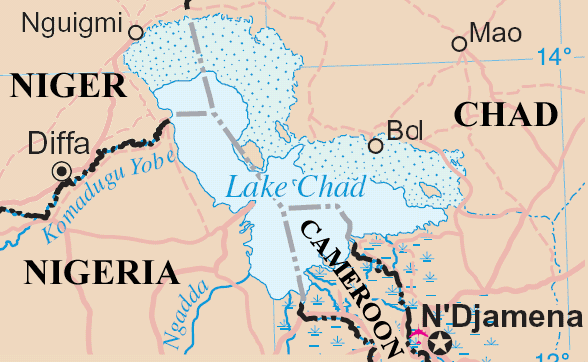


Characteristics and hydrology
Lake Chad is shallow and sits in the low-lying Chad Basin, the largest drainage basin in that part of Africa. Its principal feeders are seasonal rivers and floodplains that deliver water in the rainy months, creating marshes and extensive wetlands when levels are high. The lake’s configuration can shift between a single water body and a system of separate pools and swamps. Much of its behaviour reflects the inflow from tributaries, rainfall variability, evaporation and groundwater interactions across the Chad Basin.
Human uses and regional importance
The lake and its associated wetlands are central to the livelihoods of many communities. It supplies water for fishing, irrigation, livestock and domestic uses and supports agriculture on its floodplains. Estimates often cited indicate the wider basin supports over 68 million people across several countries bordering the lake. Those countries include Chad, Cameroon, Niger and Nigeria. Typical uses are:
- fisheries that provide food and income for local markets,
- rain-fed and flood-recession agriculture on fertile plains,
- pastoral grazing during dry seasons, and
- transport and cultural practices in lakeside communities.
Decline, variability and recent trends
During the late 20th century Lake Chad underwent a dramatic reduction in surface area. Between the 1960s and the late 1990s the lake diminished sharply — in some accounts by as much as 95% — largely because of reduced rainfall, increased evaporation and rising demands for irrigation and water withdrawal. Satellite imagery and hydrological studies have shown partial rebounds in some years, including imagery around 2007 that indicated increases compared with the driest years. Nevertheless, the lake remains highly sensitive to climatic fluctuation and local land- and water-use decisions.
Paleontology and notable facts
The sediments and dry margins of the lake basin have also preserved important paleontological and archaeological remains. Notably, fossils of an early hominid, Sahelanthropus tchadensis, were discovered in deposits associated with the former lakeshore; these finds are dated cautiously to several million years ago and have been discussed in studies of early human evolution. The basin therefore has significance not only for contemporary livelihoods but also for reconstructing Africa’s environmental and biological history.
Management challenges and outlook
Because Lake Chad sits at the intersection of national borders and supports diverse economic activities, its future depends on cooperative management, sustainable water use and adaptation to climate variability. Policymakers and communities debate options such as improved irrigation efficiency, wetland protection and coordinated water-sharing agreements. Large-scale transfer schemes from other basins have been proposed at times, but they raise technical, environmental and social questions. Maintaining the lake’s ecological functions while sustaining the people who rely on it remains a central, transboundary challenge for the region.
Questions and answers
Q: What is Lake Chad?
A: Lake Chad is a large, shallow, endorheic lake located in the African Sahel.
Q: How has Lake Chad varied in size over time?
A: Lake Chad has varied in size over the centuries, shrinking as much as 95% from 1963 to 1998.
Q: Was there any improvement in Lake Chad's size after 1998?
A: Yes, the 2007 satellite image shows significant improvement over previous years.
Q: Why is Lake Chad economically important?
A: Lake Chad provides water to over 68 million people in the four countries surrounding it: Chad, Cameroon, Niger, and Nigeria.
Q: Where is Lake Chad located?
A: Lake Chad is on the edge of the Sahara Desert and is the largest lake in the Chad Basin, the largest drainage basin in Africa.
Q: What important extinct hominid fossils were found in the dried lakebed of Lake Chad?
A: Fossils of Sahelanthropus tchadensis were found in the dried lakebed of Lake Chad.
Q: When is it thought that Sahelanthropus tchadensis lived?
A: From evidence at the fossil site in Chad, it is thought that Sahelanthropus tchadensis lived about seven million years ago.
Related articles
Author
AlegsaOnline.com Lake Chad: geography, ecology, history and human significance Leandro Alegsa
URL: https://en.alegsaonline.com/art/55472