
Lake Chungará — High Andean lake in northern Chile
Lake Chungará is a high-altitude lake in northern Chile's Altiplano, noted for its volcanic backdrop, endemic fish, and protection within Lauca National Park. It is a scenic and ecologically important Andean site.
Overview
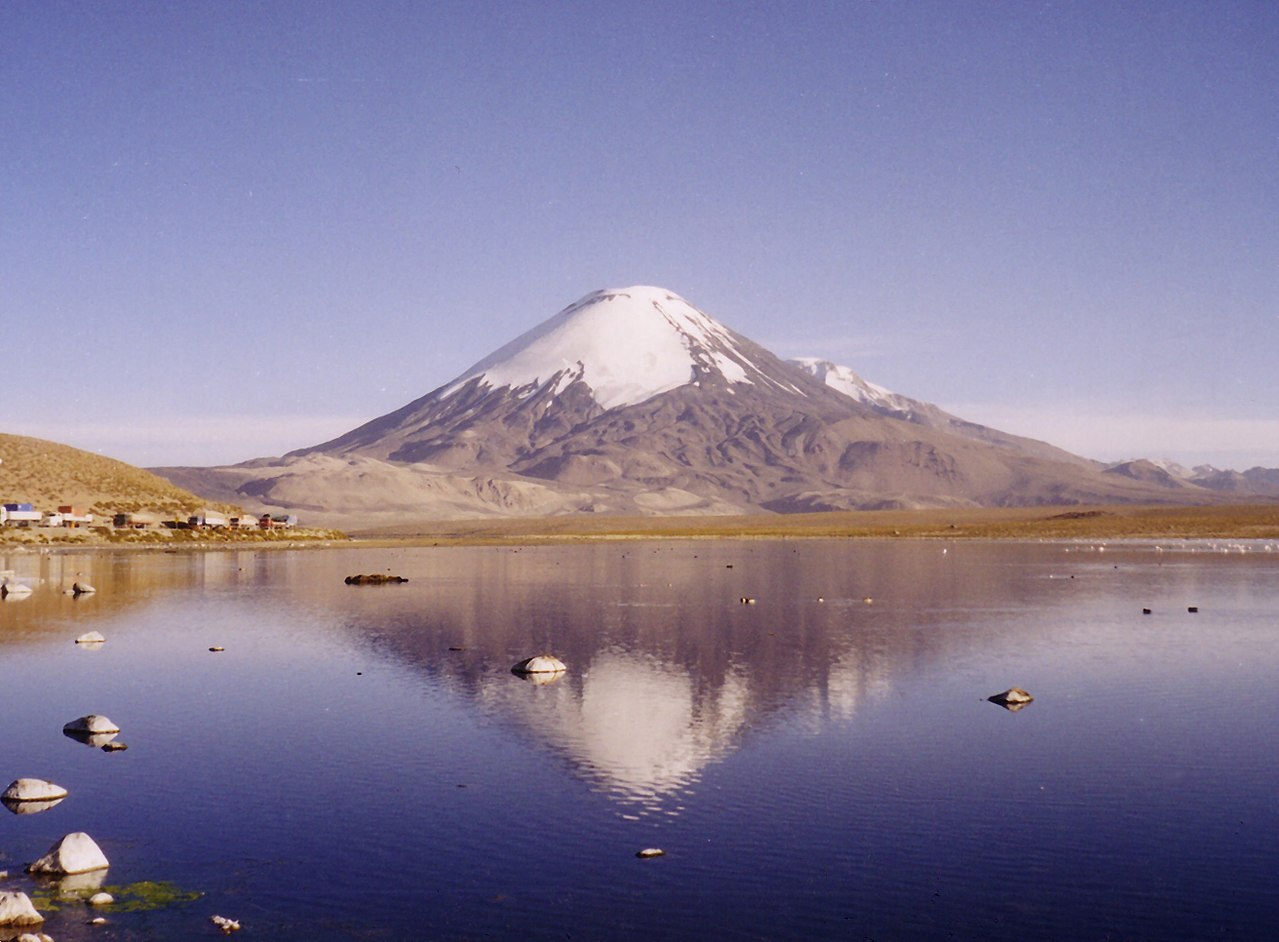
Lake Chungará is a high Andean lake located on the Altiplano in the extreme north of Chile. Its name derives from the Aymara word often interpreted as "moss on the stone" and reflects the indigenous linguistic landscape of the region. The waterbody is widely recognized for its striking setting beneath the snow-capped cones of nearby volcanoes and for being one of the world’s highest sizable lakes. Administratively the lake lies within the Arica y Parinacota region and is managed as part of the protected area network.

Image gallery
10 Images


Geography and geology
Located on the Andean plateau, Chungará sits on the high plain of the Altiplano and occupies a basin shaped by a combination of volcanic activity and high‑altitude glacial and fluvial processes. The lake is set close to the twin volcanic peaks of Parinacota and Pomerape, whose volcanic history and repeated lava and tephra deposits have influenced the local topography and drainage. It is near the small town of Putre and falls within the municipal comuna boundaries; the international frontier with Bolivia lies a short distance to the east, accessible by the highland roads that cross the plateau. Streams and springs feed the basin, and the catchment sustains the lake’s water balance in a region where evaporation rates are high.

Ecology and endemic species
Despite the harsh environment of high elevation, Chungará and its inflowing streams support a specialized ecological community. Cold‑tolerant aquatic organisms and shorebirds exploit the nutrient inputs and sheltered littoral areas. A notable feature is the presence of small fish species that are endemic to the basin and have adapted to low oxygen and cool temperatures. These include the pencil catfish (Trichomycterus) and a high‑altitude killifish of the genus Orestias, both of which are restricted to this drainage and nearby waters.
- Endemic catfish: Trichomycterus chungaraensis
- Endemic killifish: Orestias chungarensis
- Typical high‑Andean fauna: waterbirds, small mammals and camelids
Human use, culture and tourism
Lake Chungará has long been part of the cultural landscape of Aymara communities and today is visited for its scenic value, wildlife observation and high‑altitude trekking. Herding of traditional camelids such as llamas and alpacas occurs on the surrounding puna grasslands, and the presence of picturesque volcanoes makes the lake a frequent subject of photography and nature tours. The lake’s accessibility from regional towns and its location inside Lauca National Park make it a focal point for both local and international visitors.

Conservation and notable facts
Chungará is protected within a national park and is recognized for its ecological and scenic values. Conservation attention focuses on maintaining water quality, preserving habitat for endemic species and managing tourism impacts. Because of its elevation and distinctive setting, the lake is often cited in discussions of high‑altitude limnology and Andean biogeography. It stands as one of the highest major lakes in South America and serves as an accessible example of how life persists in extreme highland environments.
For further context on the lake’s language, geography, ecology and cultural links, see related resources on the local Aymara heritage, regional geography (lake studies), national administration (Arica y Parinacota, region), nearby volcanoes (Parinacota), and municipal information for Putre and the comuna. Local hydrology and tributaries are described in studies of the streams and basin (lake basin). Species lists and conservation status are available under pages for fish groups, including the endemic pencil catfish and Orestias. Cultural and pastoral practices reference traditional livestock such as llamas and alpacas, and the international setting can be explored through materials about the nearby border and neighboring country, Bolivia.
Questions and answers
Q: What is Lake Chungará?
A: Lake Chungará is a lake in the extreme north of Chile, located in the Altiplano of the Arica y Parinacota region. It is part of the Lauca National Park and near two volcanos, Parinacota and Pomerape.
Q: How high is Lake Chungará?
A: Lake Chungará is the 29th highest lake in the world (and 10th highest in South America).
Q: Where is Lake Chungará located?
A: Lake Chungara is located near the town of Putre, about 54 km (34 mi) to its east and 9 km (5.6 mi) to its west from Bolivia's border.
Q: Are there any fish endemic to this area?
A: Yes, there are some small fish that are endemic to this lake basin such as pencil catfish, Trichomycterus chungaraensis, and Orestias chungarensis.
Q: What animals can be found at Lake Chungará?
A: Llamas and alpacas can be found at Lake Chungara.
Q: Is there anything special about mornings on this lake?
A: Yes, mornings on this lake are particularly beautiful with views of both Parinacota Volcano and the lake itself.
Related articles
Author
AlegsaOnline.com Lake Chungará — High Andean lake in northern Chile Leandro Alegsa
URL: https://en.alegsaonline.com/art/55476
Sources
- highestlake.com : "The Highest Lake in the World"
- fishbase.org : "Trichomycterus chungaraensis Arratia, 1983"
- fishbase.org : "Orestias chungarensis Vila & Pinto, 1987"