
Lake Constance (Bodensee): geography, history, and significance
Lake Constance (German: Bodensee) is a large lake on the Rhine between Germany, Switzerland and Austria; notable for its two basins, islands, transport links and unresolved border status.
Overview
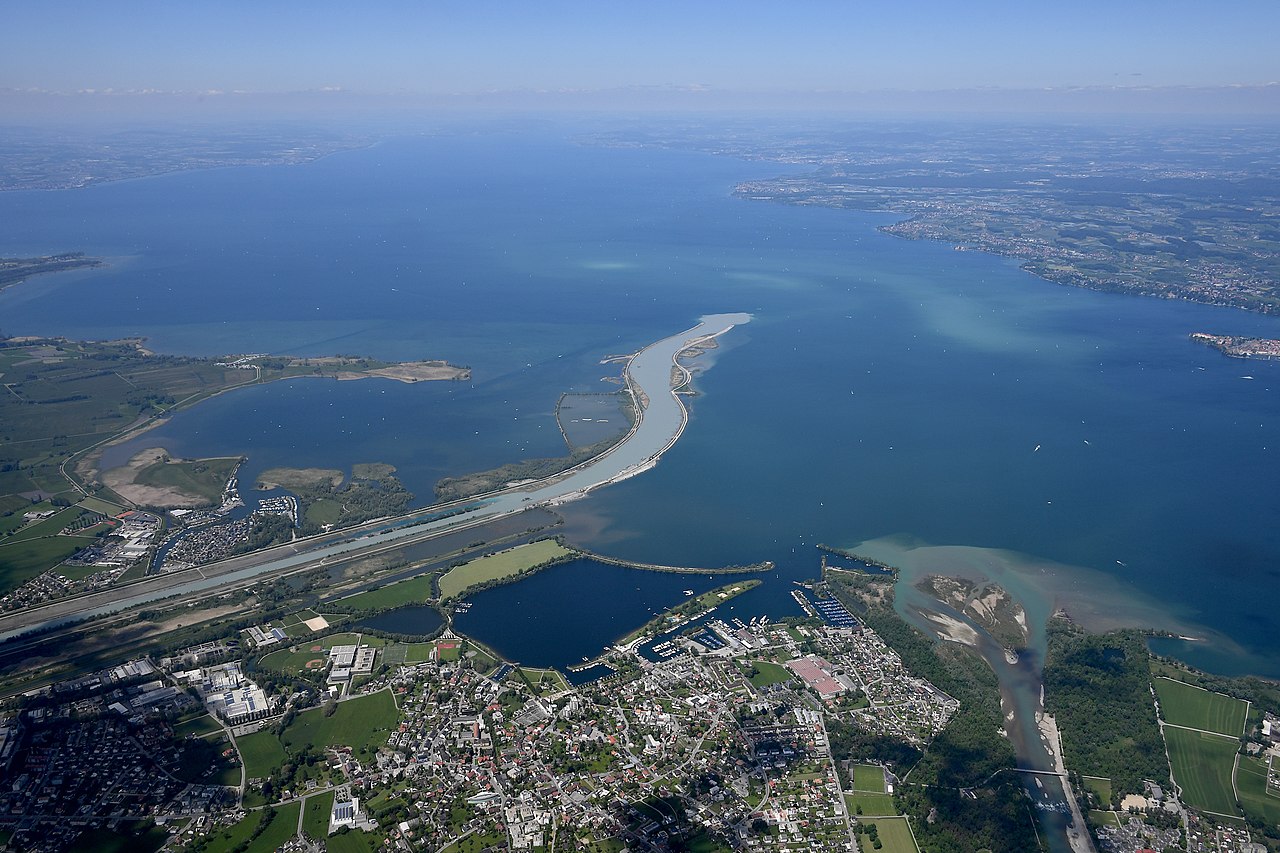
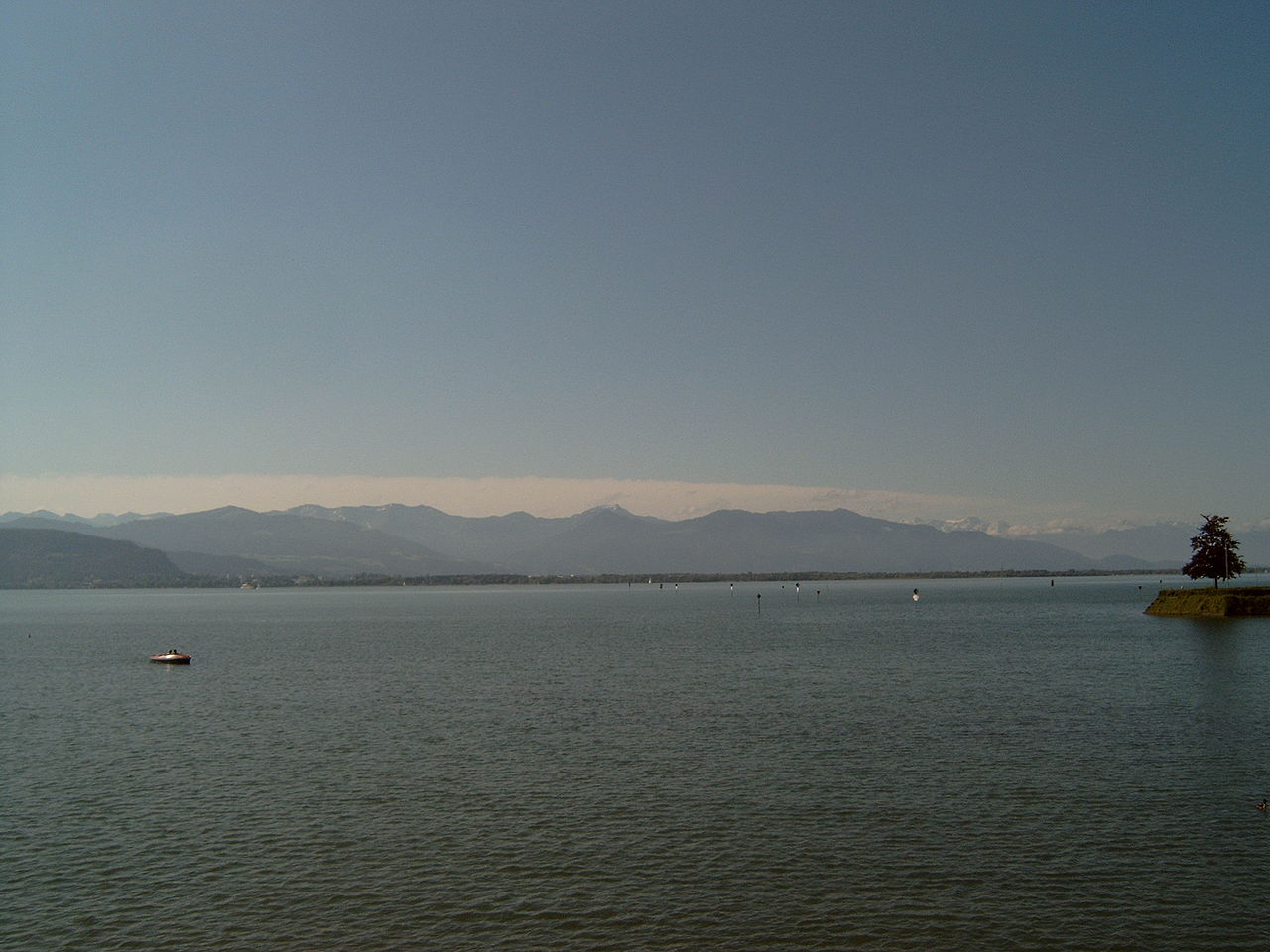
Lake Constance (German: Bodensee) is a major freshwater lake on the course of the Rhine in central Europe. It lies at the intersection of three countries and is commonly cited as one of the largest lakes in Central Europe, after Lake Balaton and Lake Geneva. The body of water is divided into an upper and a lower basin, joined by a short section of river at the town of Konstanz, and serves both ecological and economic roles for the surrounding region.
Image gallery
10 Images




Physical characteristics
The lake consists of two principal parts: the larger Upper Lake (Obersee) and the smaller Lower Lake (Untersee). The Obersee stretches roughly 63 km between Bregenz in the east and Bodman-Ludwigshafen in the west, and reaches about 14 km at its widest point between Romanshorn and Friedrichshafen. Depths reach a maximum of approximately 254 m near Uttwil, or about 833 ft. The total surface area is commonly reported as around 564 km² (about 218 sq mi), though figures vary by source.
Islands and settlements
Several sizable islands and many towns dot the shoreline. Major islands include Lindau, Mainau and Reichenau, the latter known for its medieval monastery and fertile soils. Urban centers around the lake combine tourism, industry and transport services; ferries, pleasure craft and commercial shipping link communities on the German, Swiss and Austrian shores.
Political status and uses
The lake forms part of the borders of Germany, Switzerland and Austria. The precise maritime boundary has never been fully settled: Switzerland favors a median-line division, Austria regards the lake as a joint condominium administered collectively, while Germany has not adopted a single official position. Despite that, operational matters such as navigation, commercial use and fishing are regulated by bilateral and multilateral treaties, and the shoreline distribution is commonly given as roughly 62% German, 33% Swiss and 11% Austrian (shoreline shares).
History, environment and notable facts
Lake Constance has played a role in transport and cross-border trade for centuries and hosts diverse wetland and lake habitats. Human settlement around the lake dates back to prehistoric times and developed through the Roman and medieval eras. The lake also shows notable climatic events: in 1963 it froze over completely, an occurrence that has not repeated since. Conservation and sustainable tourism are ongoing regional priorities to protect water quality and biodiversity.
Quick reference links
- German name: Bodensee
- Lake (general term)
- River Rhine
- Germany
- Switzerland
- Austria
- Central Europe
- Lake Balaton
- Lake Geneva
- Reported area figures
- Square-mile conversion
- Islands of the lake
- Lindau island
- Obersee length
- Mile conversion
- Bregenz
- Romanshorn
- Friedrichshafen
- Deepest point
- Feet conversion
- Uttwil
- Condominium (legal concept)
- Navigation rules
- Fishing regimes
- Relevant treaties
- Shoreline distribution
Questions and answers
Q: What is Lake Constance?
A: Lake Constance, also known as the Bodensee, is a large lake located on the river Rhine at the border between Germany and Switzerland and Austria.
Q: How big is Lake Constance?
A: The total area of Lake Constance covers about 564 km2 (218 sq mi).
Q: How many islands are there in the lake?
A: There are three main islands in the lake; Lindau and Mainau which are located in Obersee, and Reichenau which is located in Untersee.
Q: How long is Obersee?
A: Obersee is approximately 63 km (39 mi) long from Bregenz to Bodman-Ludwigshafen.
Q: What countries does the lake form a border between?
A: The lake forms a border between Austria, Germany, and Switzerland.
Q: Who governs legal issues such as navigation or fishing around Lake Constance?
A: Legal issues such as navigation or fishing around Lake Constance are governed by separate treaties.
Q: When was the last time that the entire lake froze over?
A: The last time that the entire lake froze over was in 1963.
Related articles
Author
AlegsaOnline.com Lake Constance (Bodensee): geography, history, and significance Leandro Alegsa
URL: https://en.alegsaonline.com/art/55483