
Flinders Ranges (South Australia)
A rugged, ancient mountain range in South Australia known for dramatic landscapes, Adnyamathanha heritage, Ediacaran fossils, Wilpena Pound, national parks, and tourism centered on geology and outback life.
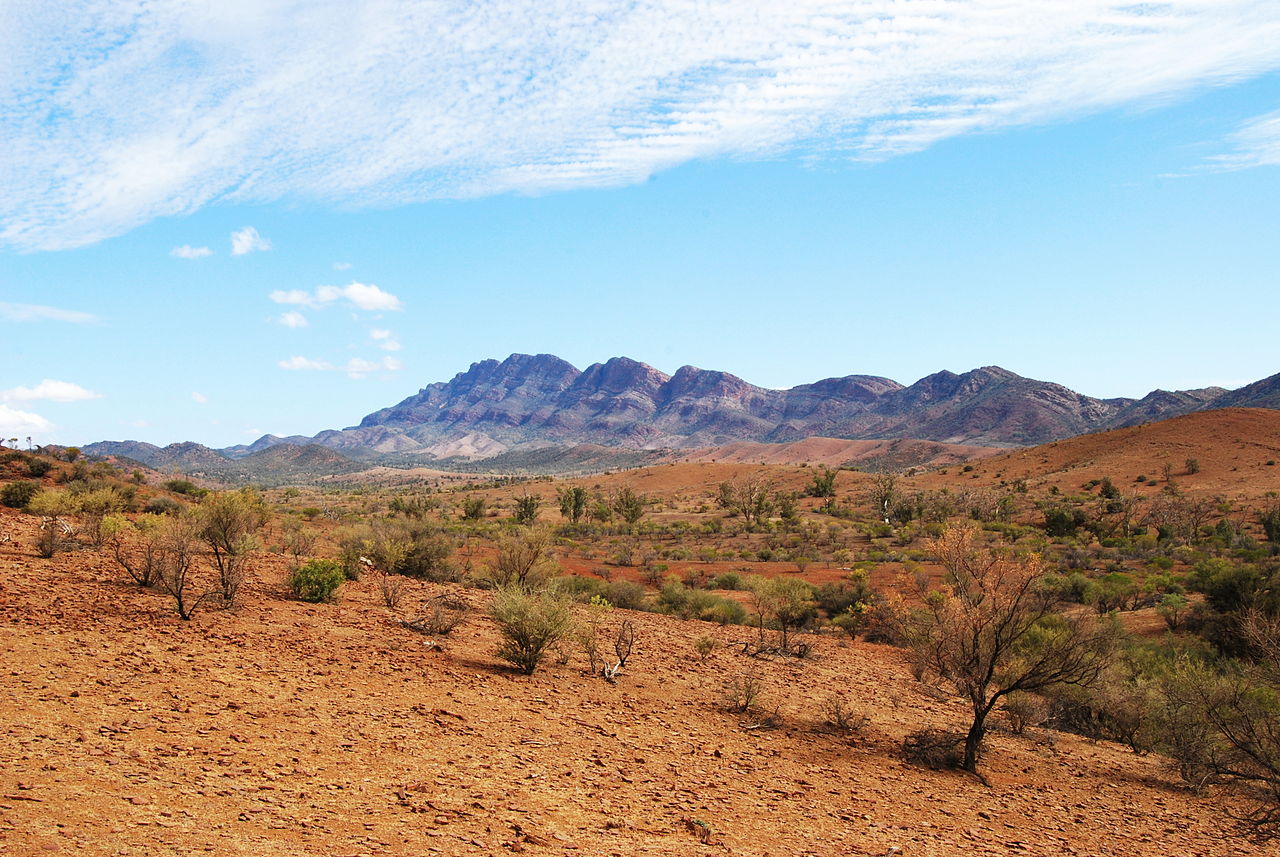
The Flinders Ranges are a prominent series of mountain ranges and valleys in the Australian state of South Australia. Stretching for many hundreds of kilometres, they form one of the continent's most distinctive arid landscapes: steep ridgelines, broad pastoral plains and deep gorges. The area is widely recognised for both its scenic value and its geological and cultural significance.
Image gallery
9 Images




Landscape and geology
The ranges are composed largely of very old sedimentary rocks that have been folded, uplifted and eroded over hundreds of millions of years. Their forms include sharp peaks, escarpments and the famously amphitheatre-like Wilpena Pound, a natural basin that attracts many visitors each year. The region also contains some of the world's earliest large multicellular fossils (the Ediacaran biota), which have been important to the study of early life on Earth.
People and cultural significance
The Flinders Ranges are the traditional lands of the Adnyamathanha people, who have lived in and cared for this country for millennia. Indigenous rock paintings, engravings and other cultural sites are found throughout the ranges. Many places have dual names reflecting both English and Adnyamathanha heritage; for example, Wilpena Pound is known by the name Ikara, and the national park uses the combined name Ikara–Flinders Ranges National Park to recognise that continuing connection.
History of exploration and settlement
European explorers travelled through and named parts of the ranges in the 19th century. The explorer Edward John Eyre is associated with early European journeys in the area during searches for overland routes between settlements such as Adelaide and Port Lincoln. Over time the surrounding plains were used for pastoralism and, in some places, mining developed. Today small towns and service centres provide access to the ranges — notable examples include Hawker and Quorn, while Leigh Creek and Wilpena Pound are also important local hubs.
Uses, tourism and research
The Flinders Ranges attract bushwalkers, geologists, palaeontologists and cultural tourists. Hiking trails, scenic drives and guided tours highlight geology, wildlife and Indigenous culture. Scientific research continues into the region's fossils, rock formations and arid ecosystems, contributing to understanding of Earth's deep past and contemporary land management.
- Key attractions: Wilpena Pound (Ikara), Ediacaran fossil sites, scenic gorges and lookouts.
- Activities: hiking, 4WD touring, cultural experiences, birdwatching and fossil interpretation.
- Local towns and services: Hawker, Quorn, Leigh Creek, and small homesteads.
Conservation and challenges
Large portions of the ranges are protected within national parks and reserves, but the environment faces pressures from invasive species, grazing, mining legacies and the increasing risks associated with climate variability and bushfire. Conservation efforts often combine ecological management with recognition of Adnyamathanha custodianship and cultural heritage protection. These combined approaches aim to preserve both the natural values and the living cultural landscape of the Flinders Ranges for future generations.
Related articles
Author
AlegsaOnline.com Flinders Ranges (South Australia) Leandro Alegsa
URL: https://en.alegsaonline.com/art/35124
Sources
- books.google.co.uk : Britannica Concise Encyclopedia
- southaustralia.com : "South Australia"
- flindersranges.com : "Flinders Ranges of South Australia - Cradock, Hawker, Quorn"