
King vulture (Sarcoramphus papa): appearance, range, ecology, and significance
Large New World vulture of tropical America, notable for its bold head colors, solitary habits at carrion, role as a scavenger, and status as the sole living member of Sarcoramphus.
Overview
The king vulture (Sarcoramphus papa) is a conspicuous scavenger of tropical lowland forests and adjacent open areas in Central and South America. It is widely recognized for its striking bare head and neck, vivid skin tones, and largely white body contrasted with darker flight feathers. The species is the only extant representative of the genus Sarcoramphus, although related fossil forms are known from the fossil record. For general context about vultures as a group, see vulture overview.
Image gallery
10 Images




Description and identification
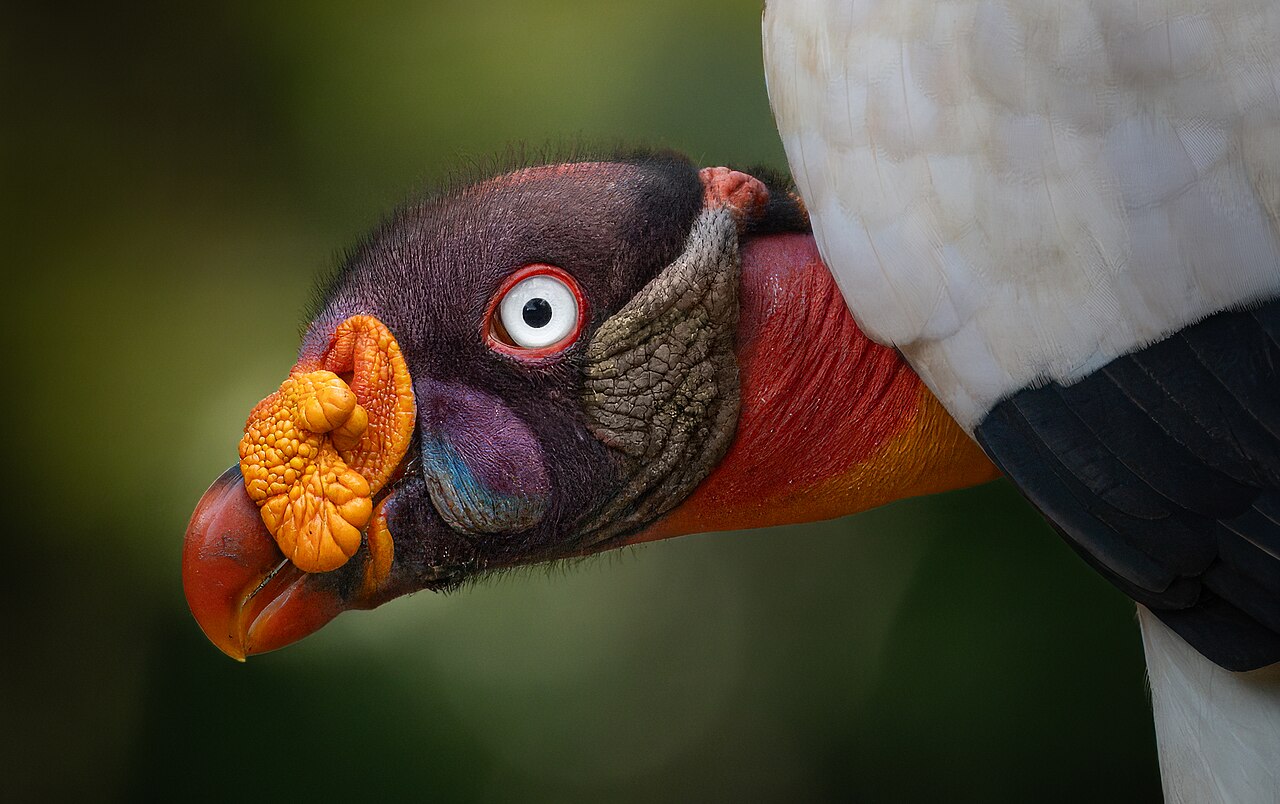
Adult king vultures are large, heavy-built birds with a predominantly white plumage on the body and a gray-to-black ruff, wings and tail. The head and neck are featherless and display a palette of colors — yellow, orange, red, purple and blue — which varies between individuals and ages. A prominent fleshy growth or caruncle sits above the bill and is usually yellow; this feature is one of the species' most distinctive traits. For comparative images and identification notes, consult identification resources.
Range and habitat
King vultures inhabit tropical lowland forests from southern Mexico through Central America and into much of South America, reaching as far south as northern Argentina. They prefer mature forest and forest edges but will also be found in grasslands or savanna-country near forest patches. Regional guides and range summaries: southern Mexico, Central America, South America, northern Argentina.
Behavior and ecology
As obligate scavengers, king vultures feed primarily on carrion. They often locate carcasses by sight or by observing other scavengers; they are known to dominate smaller vulture species at a feeding site and may tear through tough hides, allowing access for others. Although they can fly long distances to find food, they are less gregarious than some other vulture species and are sometimes observed alone or in small groups. For more on their ecological role, see ecosystem role.
Reproduction and conservation
King vultures nest in tree cavities or on large branches and raise a single chick each breeding attempt. Like many large scavengers, they are vulnerable to habitat loss and human disturbance, which can reduce local populations even where they remain relatively widespread. Conservation accounts and species assessments can be found through regional bird conservation resources and monographs: taxonomic notes.
Notable facts and distinctions
- Taxonomy: Sole living species of its genus, with fossil relatives indicating a longer evolutionary history.
- Appearance: The colorful bare head and yellow caruncle make it one of the most visually distinctive New World vultures.
- Ecosystem role: Acts as a clean-up species, helping to dispose of carrion and limit spread of disease.
For further reading and multimedia, consult the linked regional and taxonomic resources above and dedicated ornithological field guides: general resource, vulture overview, and identification resources.
Related articles
Author
AlegsaOnline.com King vulture (Sarcoramphus papa): appearance, range, ecology, and significance Leandro Alegsa
URL: https://en.alegsaonline.com/art/53577