
Kite (bird)
Kites are medium-sized birds of prey in the Accipitridae family, recognized for long, buoyant wings, light bodies, and diets that range from scavenged carrion to active hunting of small animals and insects.
Overview
Kites are a group of medium-sized raptors notable for their light build, long wings and a propensity to soar for long periods. As birds of prey they belong to the broader category of raptors. Many species are highly aerial, using thermals and gliding flight to search large areas with minimal energy expenditure.
Image gallery
5 Images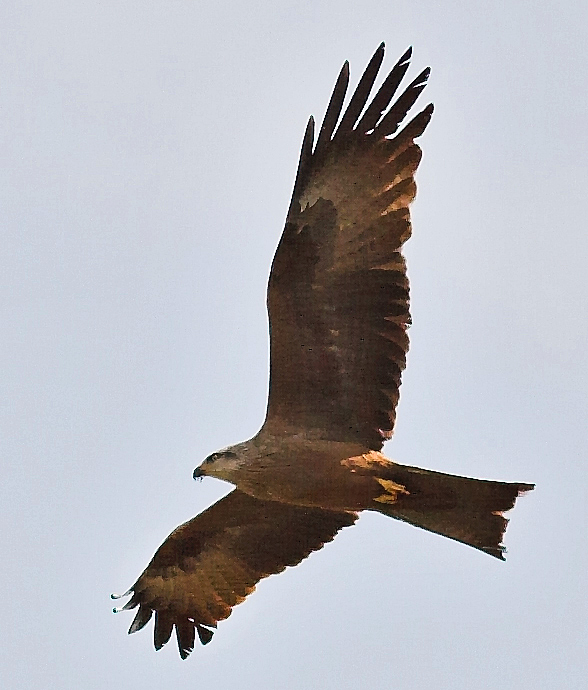



Physical characteristics and flight
Kites typically have elongated wings, often with a somewhat pointed or slightly hooked appearance, and comparatively weak legs adapted more for carrying prey than for dispatching large animals. Some species show forked or deeply notched tails that aid maneuverability. Their flight is usually buoyant and agile, with frequent soaring, gliding and occasional rapid wingbeats.
Diet and feeding behavior
Diet varies across species. Many kites scavenge and feed on carrion, while others take insects, fish, amphibians, small mammals, birds, and reptiles. Some demonstrate aerial feeding on insects, and a few species are known to steal food from other birds or to hunt small live prey actively.
Taxonomy and notable relatives
Kites are part of the hawk-and-eagle assemblage within the family Accipitridae, a group that also includes hawks and eagles. The common name "kite" is applied to several genera rather than to a single monophyletic group; related species differ in habits and appearance but share similar ecological niches.
Examples and distribution
- Black kite (widely distributed; often scavenges and adapts to human environments)
- Red kite (well known in parts of Europe for graceful soaring)
- Swallow-tailed kite (tropical and subtropical; agile hunter of insects and small vertebrates)
- Brahminy kite (coastal and inland waters, often feeds on fish and carrion)
Conservation and human interactions
Status varies by species: some kites are common and adapt well to modified landscapes, while others have declined because of habitat loss, pollution and persecution. Their scavenging habits sometimes bring them into conflict with people, but they also serve an important ecological role by removing carrion and controlling insect populations.
For further general background on raptors and related groups, see resources on raptors and the family Accipitridae. Comparative introductions that discuss relatives such as hawks and eagles may help clarify distinctions in size, flight style and feeding behavior. Specialized information on scavenging behavior can be explored via materials linked under carrion studies.
Questions and answers
Q: What are kites?
A: Kites are raptors, which are birds of prey.
Q: What are some physical traits of kites?
A: Kites have long wings and weak legs.
Q: How do kites spend their time?
A: Kites spend most of their time soaring.
Q: What do kites mostly feed on?
A: Most kites feed mainly on carrion.
Q: Do all kites only eat carrion?
A: No, some kites take live prey as well.
Q: Which family do kites belong to?
A: Kites, along with hawks and eagles, are from the family Accipitridae.
Q: What is the meaning of 'raptors' regarding kites?
A: 'Raptors' means that kites are birds of prey.
Related articles
Author
AlegsaOnline.com Kite (bird) Leandro Alegsa
URL: https://en.alegsaonline.com/art/53850