
Kinkajou (Potos flavus) — arboreal, nocturnal mammal of the Americas
A nocturnal, tree-dwelling mammal of the Procyonidae family native to Central and South American rainforests, noted for its prehensile tail, omnivorous diet, and interactions with people and habitats.
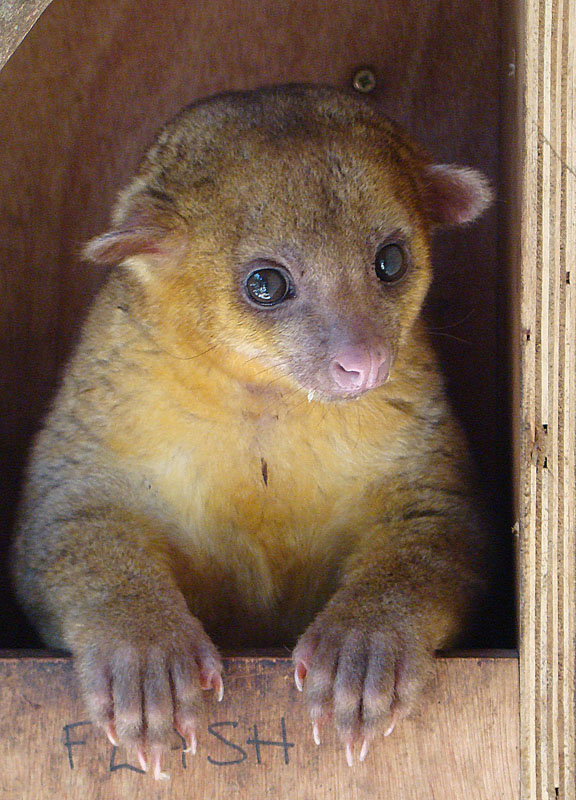
The kinkajou is a small, primarily nocturnal mammal belonging to the family Procyonidae. It is closely related to the raccoon, coati, olingo and cacomistle. Often called a "honey bear" in parts of its range because of its fondness for sweet fruit and nectar, the kinkajou is adapted to life in the trees and shows a number of unusual physical and behavioural traits for a mammal of its size.
Image gallery
10 Images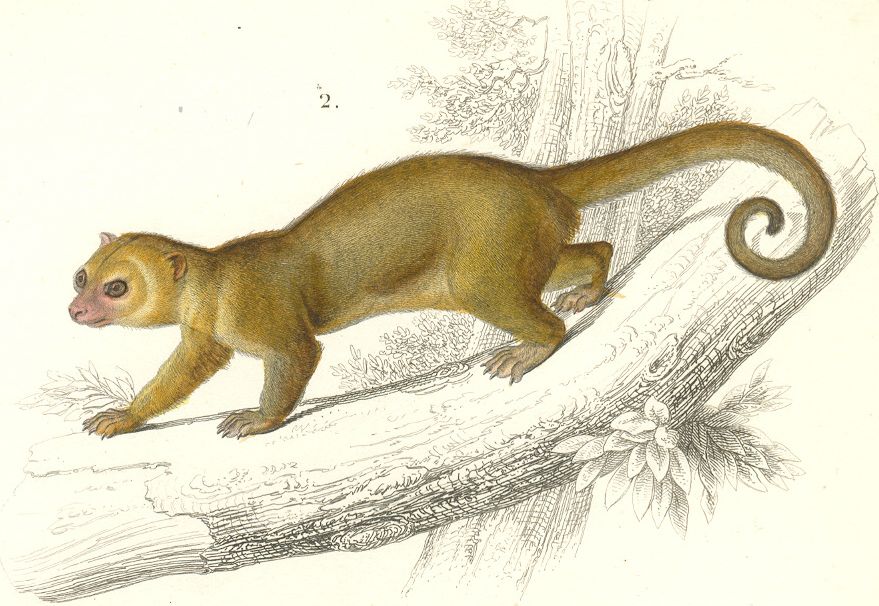




Physical characteristics
Kinkajous have dense, soft fur and a long, flexible body and tail. Their tail is fully or partially prehensile and functions much like an extra limb, helping them grasp branches and stabilise while reaching for food. They possess large eyes adapted for low-light vision, strong limbs, sharp claws for climbing, and a relatively long tongue that helps them extract nectar and manipulate fruit.
Habitat and range
These animals inhabit tropical rainforests and other wooded habitats across South America and Central America. Kinkajous are arboreal and spend most of their time above ground in forest canopies, where they move with agility between trees and forage at night.
Diet and behaviour
Kinkajous are omnivorous and feed on a mix of fruit, nectar, flowers and animal prey. They routinely consume ripe fruit and sometimes raid beehives or take small vertebrates and invertebrates. Their nectar-feeding can make them incidental pollinators for certain flowering trees and plants. Generally solitary, kinkajous communicate with a range of vocalisations and scent markings and are more active during the night.
Human interactions and conservation
While not uniformly classified as endangered across their entire range, kinkajous face pressures from habitat loss, hunting for meat and fur, and capture for the illegal pet trade. Keeping them as pets is problematic: they are wild animals with specialised needs and can become stressed or aggressive in captivity. Conservation measures focus on habitat protection, enforcement of wildlife trade regulations, and public education about the species' ecological role.
Notable facts and distinctions
- Prehensile tail acts as a supportive fifth limb when climbing.
- Long tongue and nocturnal habits suit a diet that includes nectar and fruit.
- Belongs to the same family as raccoons but differs in arboreal specialisations.
- Human activities such as deforestation and the illegal pet trade are significant threats.
For more general information and resources see species accounts and regional wildlife guides. Additional references and conservation updates can be found through specialised databases and organisations working in tropical forest preservation and wildlife trade monitoring.
Related articles
Author
AlegsaOnline.com Kinkajou (Potos flavus) — arboreal, nocturnal mammal of the Americas Leandro Alegsa
URL: https://en.alegsaonline.com/art/53683
Sources
- species.wikimedia.org : Potos flavus
- iucnredlist.org : "Potos flavus"