
Arch bridge
A bridge whose primary load path follows a curved arch, transferring forces into abutments; historically built in masonry and today made in steel or concrete for viaducts and long spans.
Overview
Arch bridges are structural forms that carry loads primarily through compression along a curved profile. The curved elements direct vertical forces into compressive stresses within the arch and into a horizontal thrust at the ends that must be resisted by firm abutments or by ties. Repeating arches can form viaducts or aqueducts, enabling long crossings with a series of openings rather than a single long beam.
Image gallery
10 Images






Design and mechanics
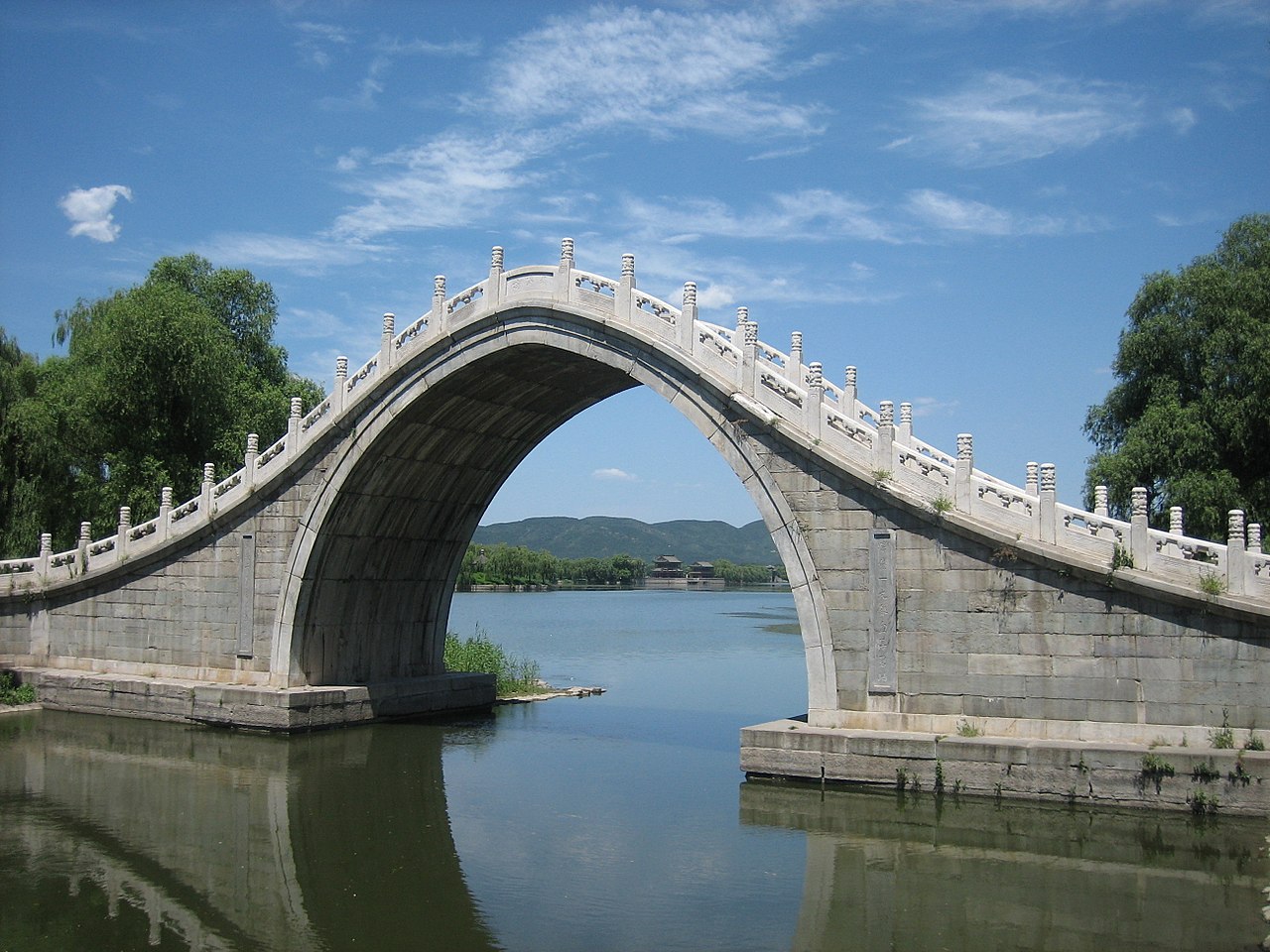
The arch's geometry controls how loads travel: instead of bending into a sagging shape, the arch pushes forces outward and downward. Traditional masonry arches rely on the compressive strength of stone or brick and require precise shaping of wedge-shaped units (voussoirs). Modern variants — such as tied-arch or bowstring bridges — introduce tensile elements to absorb the horizontal thrust, allowing lighter supports or limiting foundation loads.
Types and materials
- Masonry arches: stone or brick forms that have proven extremely durable when foundations are stable.
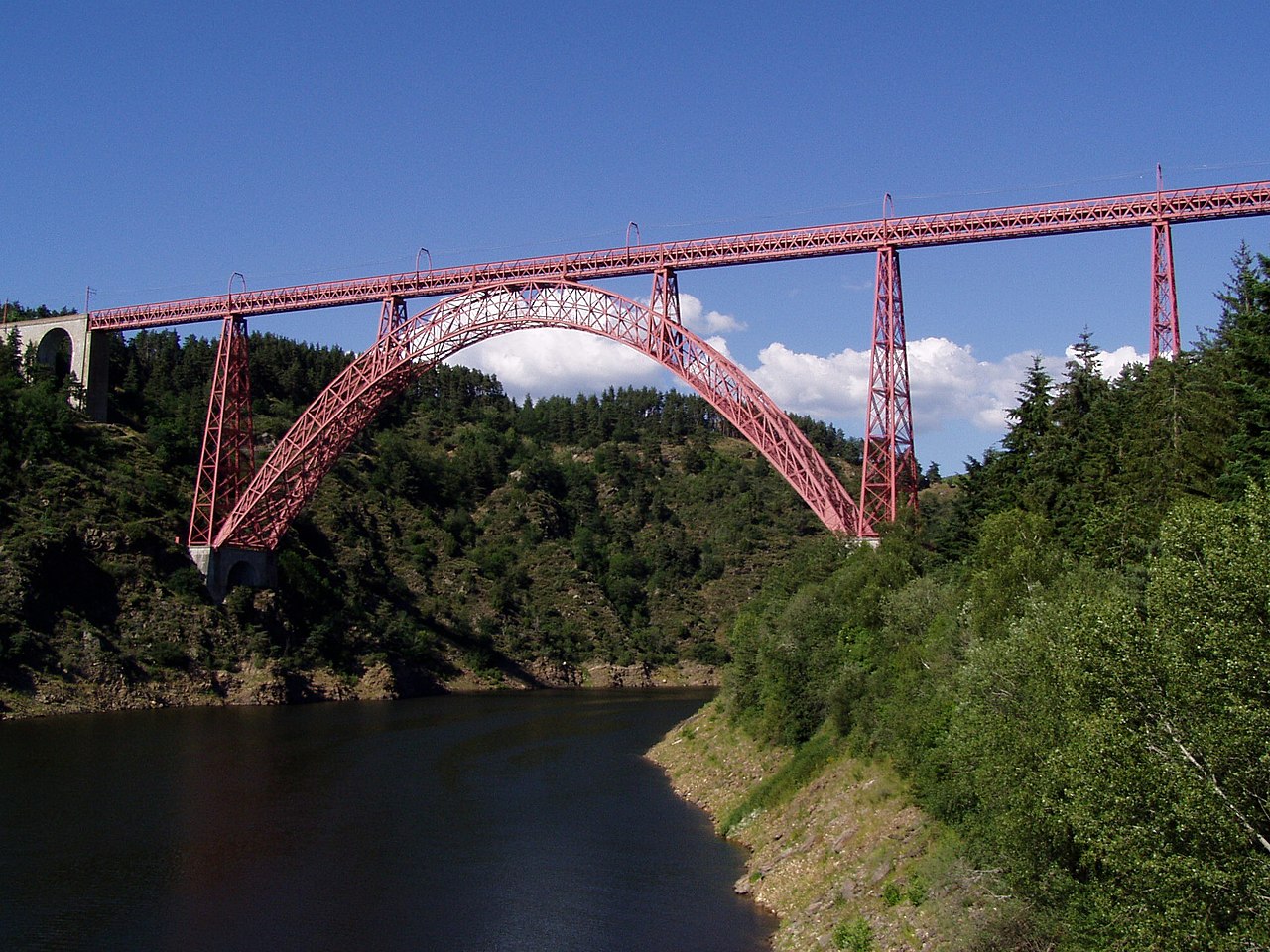
- Iron and steel arches: developed during the industrial era to achieve much longer spans.
- Reinforced and prestressed concrete arches: a flexible modern choice for shapes and aesthetics.
- Configurations: semicircular, segmental, through-arch, deck-arch, continuous and tied-arch are chosen according to span, clearance and site constraints.
Construction and history
Building an arch traditionally required temporary formwork (centering) to hold stones until the keystone locked the shape. Ancient engineers perfected masonry arches in bridges and aqueducts; later centuries extended the form with cast iron, wrought iron and steel to increase span and reduce mass. Contemporary methods use prefabrication, falsework reduction and advanced concrete technology to speed construction and reduce costs.
Uses, advantages and limitations
Arch bridges are valued for strength, longevity and visual character. They perform well where foundations and abutments can resist thrust and where intermediate supports are desirable. Compared with simple girder bridges, arches can be more complex and costly to build, but they remain a preferred option for long, elegant spans, constrained site conditions or heritage restoration.
Further reading
Questions and answers
Q: What is an arch bridge?
A: An arch bridge is a type of bridge with abutments at each end shaped as a curved arch.
Q: How do arch bridges work?
A: Arch bridges work by transferring the weight of the bridge and its loads partially into a horizontal thrust held by the abutments at either side.
Q: Can viaducts be made from arches?
A: Yes, viaducts (long bridges) can be made from a series of arches.
Q: Are other structures typically used for viaducts today?
A: Yes, other less expensive structures are typically used today instead of arches for viaducts.
Related articles
Author
AlegsaOnline.com Arch bridge Leandro Alegsa
URL: https://en.alegsaonline.com/art/5265
Sources
- odysseus.culture.gr : Hellenic Ministry of Culture: Mycenaean bridge at Kazarma
- fhwa.dot.gov : Questions and Answers on National Bridge Inspection Standards