
Kata Tjuta (The Olgas): geology, cultural importance and visitor guide
Kata Tjuta (The Olgas) is a cluster of large domed rock formations in Australia's Northern Territory, part of Uluru‑Kata Tjuta National Park, notable for its geology, Anangu cultural significance and walking trails.
Overview
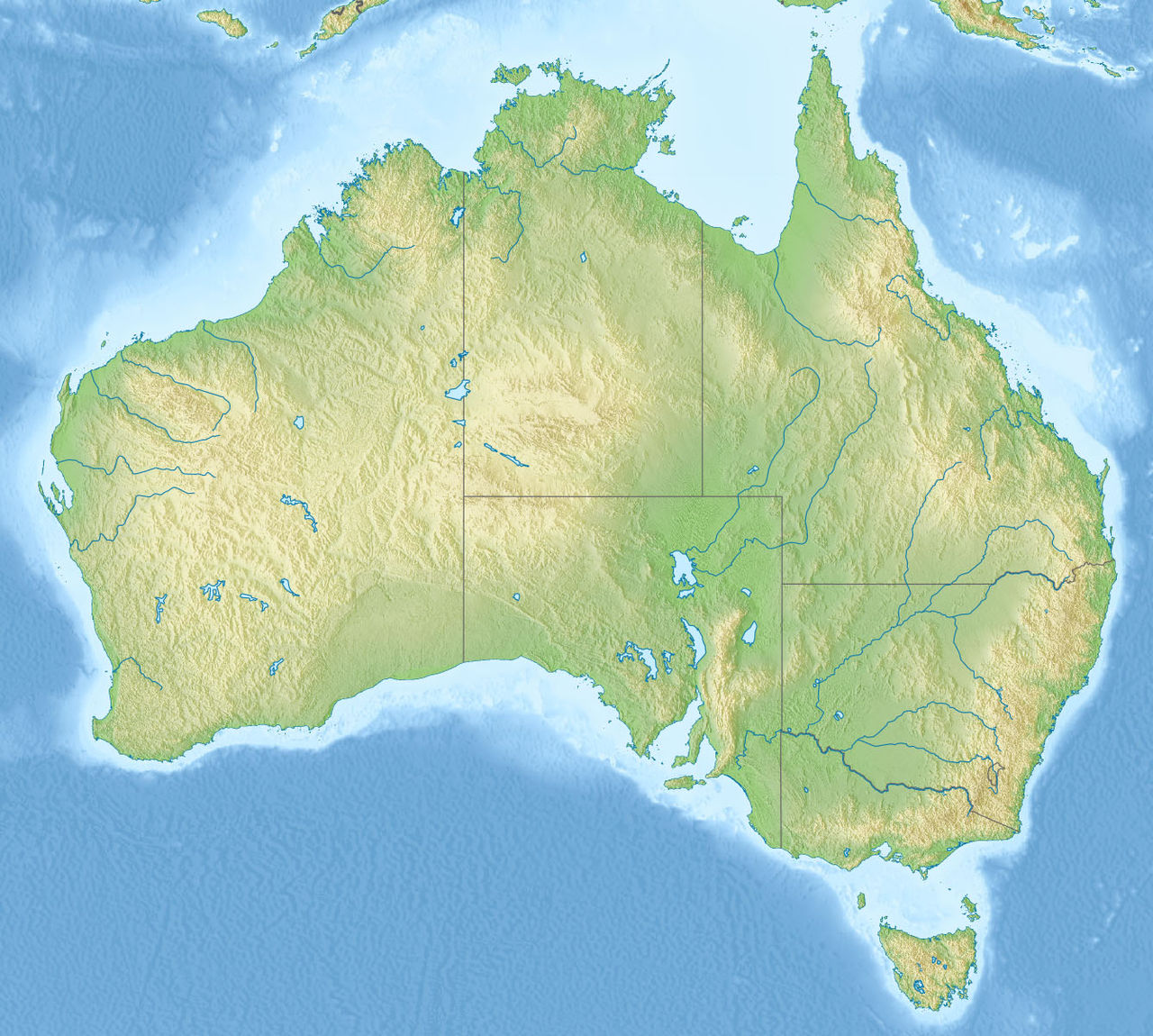
Kata Tjuta, also called The Olgas or Mount Olga, is a group of large, domed rock formations located in central Australia. It sits within Uluru‑Kata Tjuta National Park in the Northern Territory, roughly 365 km southwest of Alice Springs. About 25 km west of Uluru, the site and Uluru together form the park's principal natural and cultural landmarks.
Image gallery
10 Images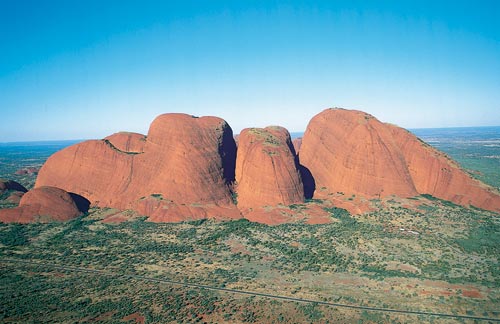



Physical characteristics and geology
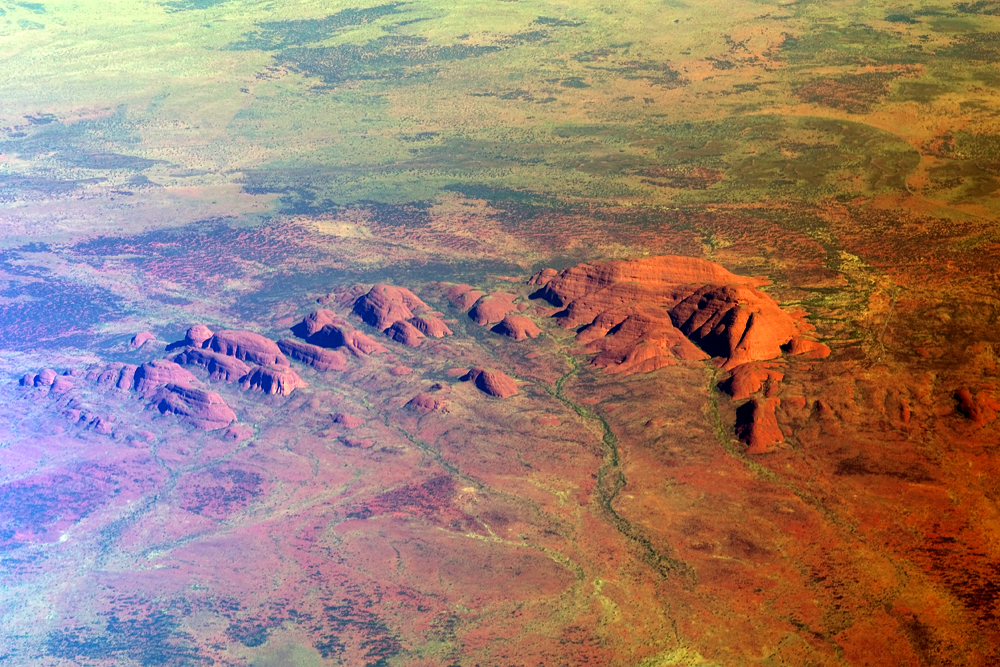
The feature known as Kata Tjuta comprises 36 domes spread across an area of about 21.7 square kilometres. The highest point, commonly called Mount Olga, reaches approximately 1,066 m above sea level and rises roughly 546 m above the surrounding plain, making it about 198 m higher than nearby Uluru.
Geologically, the domes are composed mainly of conglomerate, a coarse sedimentary rock made up of rounded fragments and pebbles cemented in a finer matrix. These fragments include pieces of granite and basalt, among other rock types, with overlying sand-sized particles related to sandstone processes. Weathering and oxidation of iron minerals produce the warm reds and ochres that change hue at sunrise and sunset.
History and cultural significance
For the local Anangu people, Kata Tjuta is a place of deep spiritual meaning and traditional law. The name Kata Tjuta comes from the Pitjantjatjara language and is often translated as "many heads," a reference to the multiple domes. European explorers once called the formation The Olgas or Mount Olga; since the late 20th century the site has been increasingly recognized and managed under its Indigenous name and in partnership with its traditional owners.
Visiting, trails and conservation
Kata Tjuta lies within a UNESCO World Heritage-listed park and is co-managed by the Anangu and park authorities. It is a popular destination for visitors to Central Australia and is best experienced on foot via established trails. Two well-known walks are:
- Valley of the Winds: a longer, scenic route that passes between domes and offers panoramic views.
- Walpa Gorge: a shorter walk that leads into a narrow, sheltered gorge and reveals distinctive rock textures and plant life.
Visitors are asked to respect cultural protocols and sensitive sites; park signage and guides explain areas that are restricted for reasons of safety or customary law. Park management focuses on conserving fragile vegetation, controlling visitor impact, and protecting cultural heritage.
Notable facts and distinctions
Kata Tjuta differs from Uluru in composition and form: Uluru is a massive sandstone monolith, while Kata Tjuta is an assemblage of rounded conglomerate domes. The pair together create a landscape of high cultural and geological value, often highlighted in studies of central Australian geomorphology and Indigenous heritage. Climatic extremes, occasional heavy rains and long-term erosion continue to shape the domes, making the site an active subject of scientific and cultural interest.
For more information, visitors and researchers can consult park resources and management plans maintained by local authorities and community custodians (Northern Territory park services and national park information), as well as educational material about geology (conglomerate, sedimentary rock) and regional rock types (granite, basalt, sandstone).
Practical visitor details such as access, permits and seasonal considerations are available through regional visitor centres and official park pages (Alice Springs travel information and Uluru park guidance).
Related articles
Author
AlegsaOnline.com Kata Tjuta (The Olgas): geology, cultural importance and visitor guide Leandro Alegsa
URL: https://en.alegsaonline.com/art/52466
Sources
- environment.gov.au : Uluru-Kata Tjuta National Park Visitors Guide
- tools.wmflabs.org : 25°18′S 130°44′E / 25.300°S 130.733°E / -25.300; 130.733