
Juniper (Genus Juniperus): Characteristics, Uses, and Ecology
Junipers (genus Juniperus) are evergreen coniferous plants of the Northern Hemisphere. This article covers their taxonomy, appearance, distribution, uses (culinary, ornamental, timber), and ecological roles.
Overview
Junipers are members of the conifer genus Juniperus, a group of woody plants that range from ground-hugging shrubs to sizable trees. Commonly called junipers, they belong to the broader group of conifers and are closely related to members of the Cupressaceae family, the cypress group. Botanists recognize roughly 50–70 taxa in the genus; exact numbers vary with taxonomic treatment. Junipers are predominantly evergreen and occur across much of the Northern Hemisphere.
Image gallery
10 Images


Identification and morphology
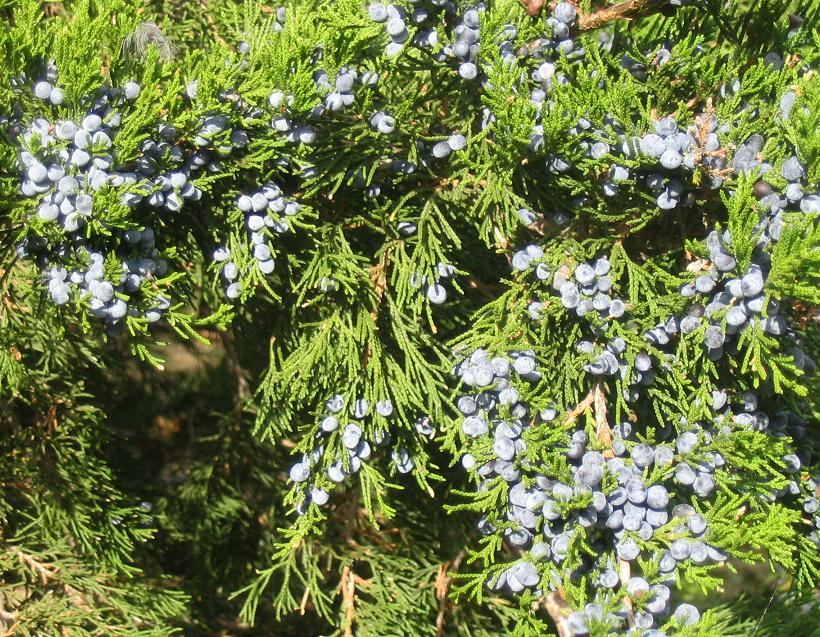
Junipers show two basic leaf forms: juvenile needle-like leaves and adult scale-like leaves. Many species retain a mix of these forms on the same plant. The reproductive structures are also distinctive: female cones are fleshy and berry-like, often called "juniper berries," while male cones are small and pollen-bearing. Wood is typically aromatic and dense, valued for its durability. The plants vary greatly in stature—some are mat-forming shrubs, others become tall trees.
Taxonomy, species and distribution
The genus contains numerous species adapted to a wide range of climates, from Mediterranean scrub and high-altitude alpine zones to temperate woodlands and semi-arid steppes. Junipers are native across North America, Europe, Asia, and North Africa. Their ecological breadth has led to many locally adapted forms and regional varieties.
Human uses and cultural importance
Junipers have long been useful to people. The fleshy cones of some species are used as a spice and flavoring—most famously in gin production—and appear in traditional cuisine and herbal remedies. The aromatic timber has been used for fence posts, furniture, and small crafts. Many species are popular in horticulture for erosion control, bonsai, and ornamental planting. Examples of common uses include:
- Flavoring and culinary uses: dried cones for meats and spirits.
- Wood products: small-scale construction, smoking, and craftwork.
- Landscaping: windbreaks, groundcover, and decorative shrubs.
Ecology, cultivation and concerns
Junipers play important ecological roles: their dense foliage provides shelter and nesting sites for birds; their cones feed wildlife and aid seed dispersal. They tolerate poor soils and drought, making them effective pioneers on degraded sites. However, in some regions over-expansion of juniper stands—driven by changes in grazing and fire regimes—has altered grassland ecosystems. Certain species can be toxic to livestock if consumed in large quantities, and pollen or fragrant oils may cause allergic reactions in sensitive people.
Notable distinctions and practical notes
When identifying or using junipers, it helps to note leaf type (needle vs. scale), cone appearance, and growth habit. Gardeners choose species carefully, since some remain small and compact while others can become large trees. For further taxonomic or horticultural details consult specialist sources on cypress relatives, general plant guides, or specific conservation pages. For practical identification and gardening advice, see resources on evergreen care and regional plant lists. More detailed species accounts and range maps are available through authoritative databases and floras referenced by experts in botany and horticulture.
Related reading and databases often cross-reference junipers with other conifers; for example, comparative accounts will cite both the genus Juniperus and its position near other Cupressaceae members. Whether encountered as a windswept shrub on a mountain slope or as an avenue tree in a park, junipers are a widely recognized and ecologically significant group of plants.
Related articles
Author
AlegsaOnline.com Juniper (Genus Juniperus): Characteristics, Uses, and Ecology Leandro Alegsa
URL: https://en.alegsaonline.com/art/51669